

It seems that you are searching for how to delete database from phpMyAdmin. If yes, you have landed in the right place.
Here is a complete tutorial on deleting database from phpMyAdmin.
In phpMyAdmin, database deleting is called dropping database. So whichever you want to delete in databases, you must find the drop option.
To delete the database, follow the below steps.
Step 1: To Delete Database From phpMyAdmin?
Go to the home page of phpMyAdmin and select the database which you want to delete. Now choose the Operations to click on and drop the database as shown in the screenshot below.
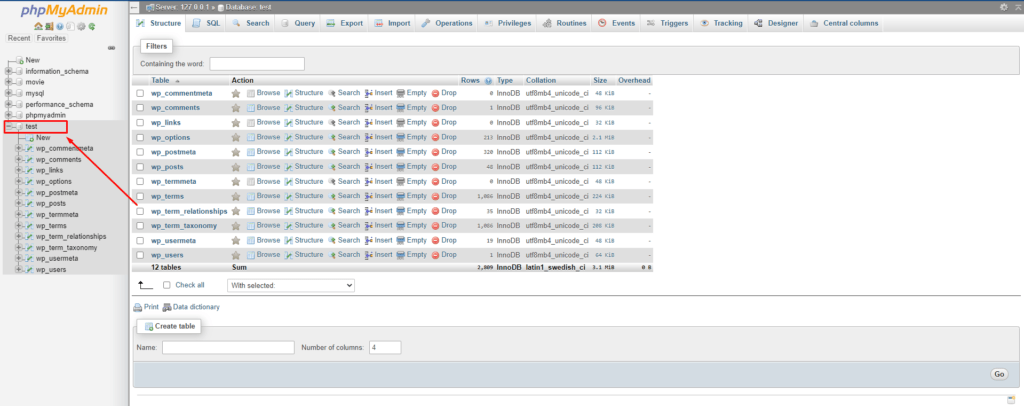
Step 2: To Delete Database From phpMyAdmin?
After selecting the database, you want to delete ( In my case, I created a dummy database named Test ), choose the Operations option in the upper right menu.
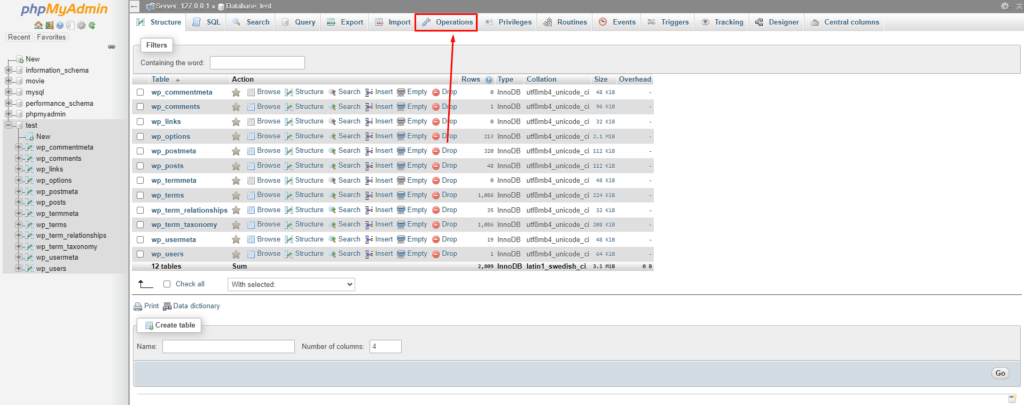
After click on his option, you will see this window.
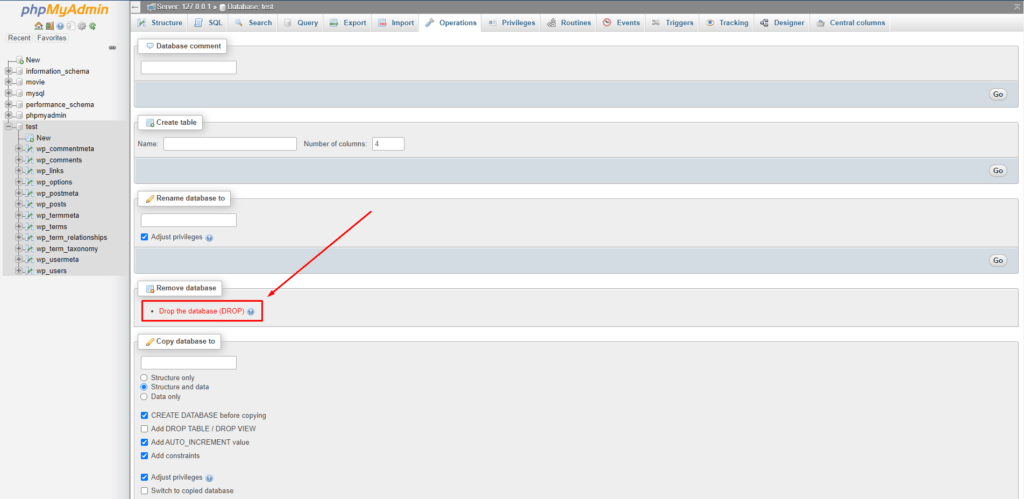
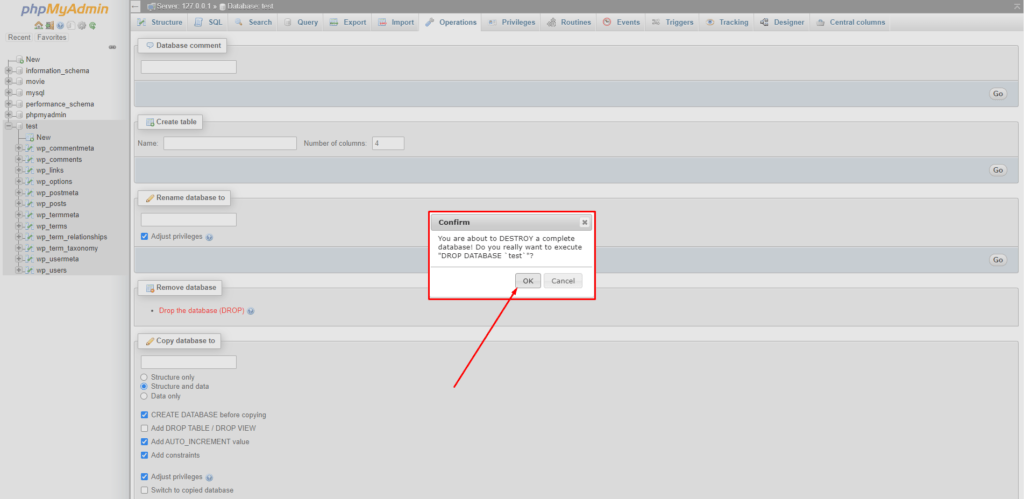
After clicking on Drop the Database (DROP), a confirmation option will appear on your screen.
Step 3: To Delete Database From phpMyAdmin?
When the confirmation message option is shown on your screen, click on the OK option to ensure you delete the database from phpMyAdmin.
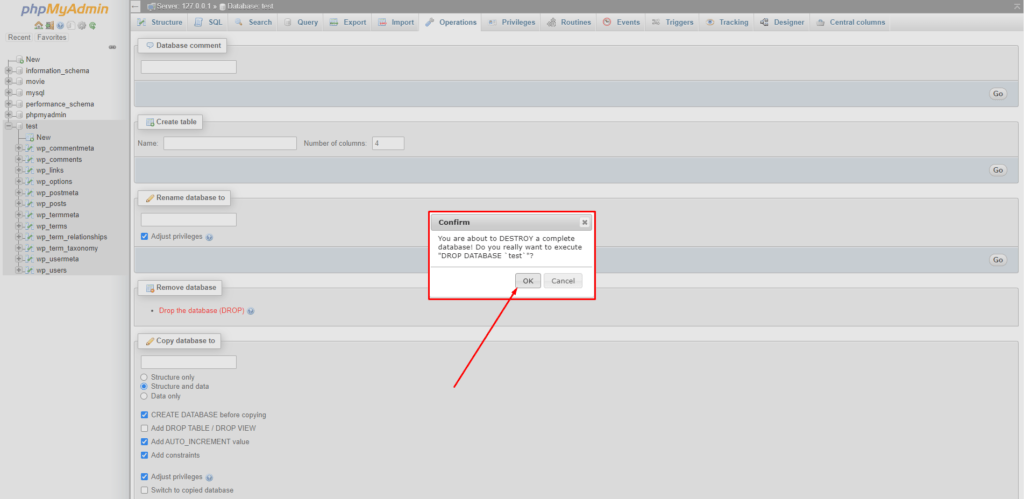
When you have done, the final option will appear on the screen. Looks like this.
Conclusion
You can delete a database from phpMyAdmin in only three steps. Deleting a database in phpMyAdmin is called dropping a database.
You can delete a database from phpMyAdmin through the drop option.
I hope you found this tutorial helpful. If yes, would you please provide feedback in the comment section?

