
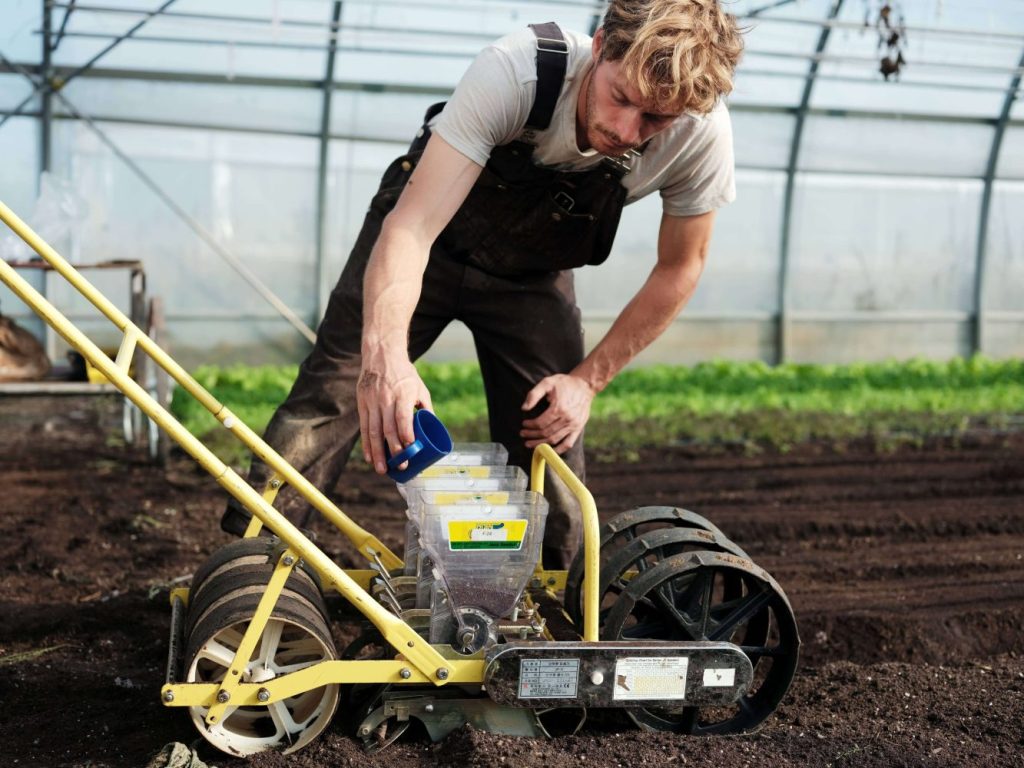
Small farms are important sources of fresh fruits and vegetables in local communities. Nevertheless, inadequate land, budgets and workforce shortages may force it to ensure high productivity. Small fruit and vegetable farming tools provide a good solution by availing time-saving tools that are space-efficient and are specifically outlined to meet small scale. The small farms will be able to become more productive and less labor-intensive by using the right equipment.
Efficiency in the Use of Space
The small farms are confronted with the challenge of limiting land to its maximum capabilities. The big and old machinery is just not viable in smaller fields or closely spaced rows of crops.
The small farming machines are designed to suit the small areas of work so that farmers can be able to harvests more without necessarily expanding their fields. These will have the capability of easily navigating through tight rows and small plots enabling farmers to maximise on the available space and work more productively.
Reducing Labor Intensity
Small-scale fruit and vegetable farming is a huge percentage of hand work. Activities like planting, weeding, harvesting and transportation will be time consuming and physically challenging.
Small machines serve to minimize the use of manual labor, automate or simplify such operations. Such tools as mini planters, harvests and cultivators simplify daily tasks and make them less laborious. This does not only enhance efficiency but also enables farmers to concentrate on other crucial activities of their businesses.
Improving Accuracy and Quality of Crops
Fruit and vegetable farming requires precision because optimal spacing, irrigation and nutrient application have direct effect on quality of crops. Conventional practices can cause discrepancies which influence the yields.
Small scale farm tools are usually equipped with precision functionalities which enable data accurate planting, watering and fertilizing. This guarantees that crops get the adequate quantity of resources and hence healthy plants and better harvest. Better accuracy also leads to a decrease in waste and aids in sustainable farming.
Lowering Operational Costs
The issue of budget constraint is one of the problems that small farms face. A large machinery might be costly to invest in and might not give a good ROI when invested in by smaller operations.
Small machinery is also inexpensive and economical. It will consume less fuel, less maintenance and less storage space than bigger machines. Small farms, having reduced costs of operation, will be able to invest the resources more effectively and increase their profitability.
Enhancing Time and Efficiency
Time is an asset in agriculture especially when it comes to planting and harvesting. Delays may affect quality of crops and the market prospects.
Minimal production machines in producing fruits and veggies enable farmers to save more time and effort in doing them. The ability to plant and harvest much faster means that crops are handled at the appropriate when they should be, which translates to improved yields and hence lower losses. This has enhanced time management among farmers, and thus remain on time to meet the market requirements.
Supporting Green Agriculture
The concept of sustainability is gaining more prominence among agricultural activity and small farms tend to be the leading ones to shift towards sustainable practices. These are assisted with the help of compact equipment that will leave minor effects on the environment.
In fact, a lot of the smaller equipment is developed with the idea of consuming less fuel and soil compaction that damages soil in mind. Also, precision attributes minimize excessive use of water and fertilizers. Such advantages will lead to a more sustainable agriculture, which conserves natural resources.
Make Small Farmers More Accessible
Not all farmers have the resources or infrastructure to operate large machinery. Small machines offer a convenient solution that is simpler to use and service.
The machines are usually easy to operate and need minimum training and therefore suit small farm owners and workers. The accessibility is also enhanced ensuring that larger numbers of farmers are able to embrace modern technology, no matter the level of their operating magnitude.
Conclusion
Small farms can greatly benefit by using compact fruit and vegetable farming equipment to address the issues of space, labor and cost. These tools allow farmers to become more productive, and to become more profitable by making their operations more efficient, more precise and allowing them to promote sustainable practices. With all the increased demand of fresh produce, small farms would be able to stay with the changing future of agriculture by implementing small equipment to ensure their survival and success among the many changes that will occur.

