
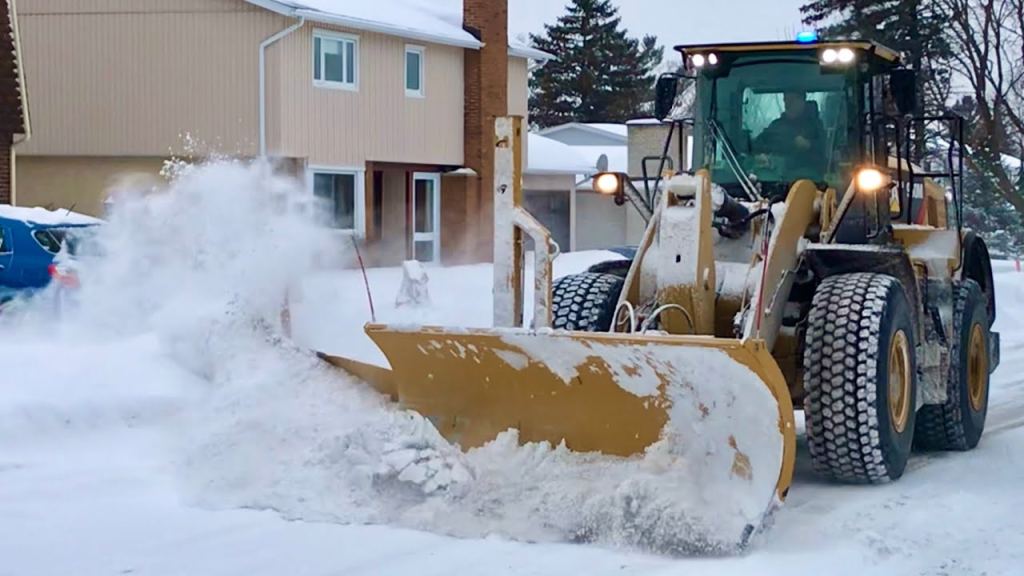
Snow Removal Software: The Control Room Your Group Chat Can’t Be
Group chats feel efficient because everyone knows how to use them. A dispatcher posts an update, a driver answers with a thumbs-up, and the storm keeps moving. No training, no rollout, no software bill.
That convenience is why the habit lasts too long.
A group chat is a conversation, not an operating system. It cannot reliably identify which instruction is current, connect a message to the correct property, confirm ownership, or preserve a complete service record. During a light event, those weaknesses stay hidden. During a complicated commercial storm, they become expensive.
Snow Removal Software is not valuable because crews need another place to type. It is valuable because the business needs one source of truth for contracts, priorities, routes, work orders, field updates, documentation, and billing.
Incident Reconstruction: Where the Storm-Night Workflow Broke
Consider a fictional contractor managing 18 commercial properties, six trucks, two sidewalk teams, and one dispatcher. Snow begins earlier than forecast, and conditions change quickly.
9:18 p.m.: The Instruction Is Sent
A property manager calls to report that an ambulance entrance must be cleared before the next pass. The dispatcher posts the request in the main group chat.
Within minutes, the message is buried under equipment updates, weather photos, and questions about salt inventory. One driver assumes another crew accepted the job. Another sees it but plans to reply later.
Nobody owns the instruction.
11:47 p.m.: The Wrong Crew Is Redirected
The dispatcher calls a driver already across town. That crew leaves its route, adding travel time and delaying two retail properties. Meanwhile, a closer sidewalk team visits the medical site but does not know the ambulance entrance is the priority.
The site receives service, but not the service requested.
This is where snow removal operations software changes the outcome. The urgent request becomes a property-specific task, receives an owner and deadline, appears in the right mobile workflow, and remains visible until completed or escalated.
4:30 a.m.: Everyone Pays for the Missing Context
The medical client complains. A retail manager reports that an entrance was not ready for opening. The contractor must reconstruct the night from calls, private texts, location history, and photos stored on different phones.
The damage now includes overtime, route disruption, callbacks, office cleanup, delayed documentation, and two difficult client conversations. It did not begin with poor effort. It began with information that had no reliable home.
The Group Chat Trap: Fast Messages, Expensive Failures
The myth is that group chats improve speed. They improve message speed, which is not the same as workflow speed.
A fast message still fails when it lacks an owner, priority, deadline, site history, contract rule, or completion requirement. It also fails when three channels contain different versions of the same instruction.
For facility and property managers, this creates an accountability gap. The contractor may insist the request was communicated. The crew may say it never received the update. The dispatcher may have a screenshot, but no clean record showing who accepted the task, what happened onsite, and when work was completed.
Snow Removal Software reduces that ambiguity by connecting communication to a property, work order, route, crew, service level, and completion record. The goal is not to eliminate human communication. It is to stop critical instructions from behaving like disposable chat.
How a Connected Snow Removal Workflow Should Operate
A reliable workflow should make the next action obvious, even when conditions change and the dispatcher is handling several exceptions.
The Manual Workflow
A request arrives by phone. The dispatcher searches old messages for site details, calls two drivers, sends a text, and writes a note. A crew performs the work, takes photos, and promises to send them later. Administration rebuilds the service record the next morning before invoicing.
Every handoff depends on memory and follow-up.
The Connected Workflow
The request is attached to the customer and property record. Contract requirements, priority areas, site notes, equipment needs, and service history are visible. The dispatcher assigns the closest suitable crew, and the task appears with a deadline and completion steps.
The crew records arrival, work performed, materials used, photos, exceptions, and departure. That information becomes available to operations, account management, reporting, and billing without being retyped.
This is where Service Wand becomes relevant. Its differentiator is not another isolated dispatch screen. It unifies CRM, scheduling, dispatch, field operations, billing, reporting, and AI-assisted automation in a flexible workflow that can adapt as the contractor grows.
What Facilities and Property Managers Need From Contractors
Property teams do not need every internal conversation. They need dependable outcomes and defensible records.
That means knowing whether a request was acknowledged, who owns it, when service began, what work was performed, whether an exception occurred, and what evidence supports completion. Across a property portfolio, those answers must be consistent rather than dependent on one dispatcher’s memory.
Snow Removal Software also supports better contractor reviews. Instead of debating isolated complaints, both sides can discuss response times, recurring exceptions, route performance, documentation, and account-level patterns.
For contractors, that visibility protects relationships. Commercial clients are more likely to trust difficult storm explanations when the service history is complete, specific, and easy to retrieve.
Stop Managing the Storm One Text at a Time
Replacing group chats does not require an overnight transformation. Start by identifying the instructions that should never live only in chat: priority changes, emergency requests, route reassignments, equipment failures, client approvals, material applications, and completion proof.
Use this correction checklist:
- Give every operational request an owner and deadline.
- Attach instructions to the correct property or work order.
- Define the proof required before a task is complete.
- Keep route, crew, service, and billing data connected.
- Use chat for conversation, not as the permanent system of record.
Group chats are not the enemy. They are simply being asked to perform a job they were never designed to do.
The expensive habit is not sending messages. It is running commercial snow operations as though messages alone create accountability. Snow Removal Software provides the structure that turns communication into assigned work, visible execution, reliable documentation, and a cleaner path from storm response to customer trust.

