
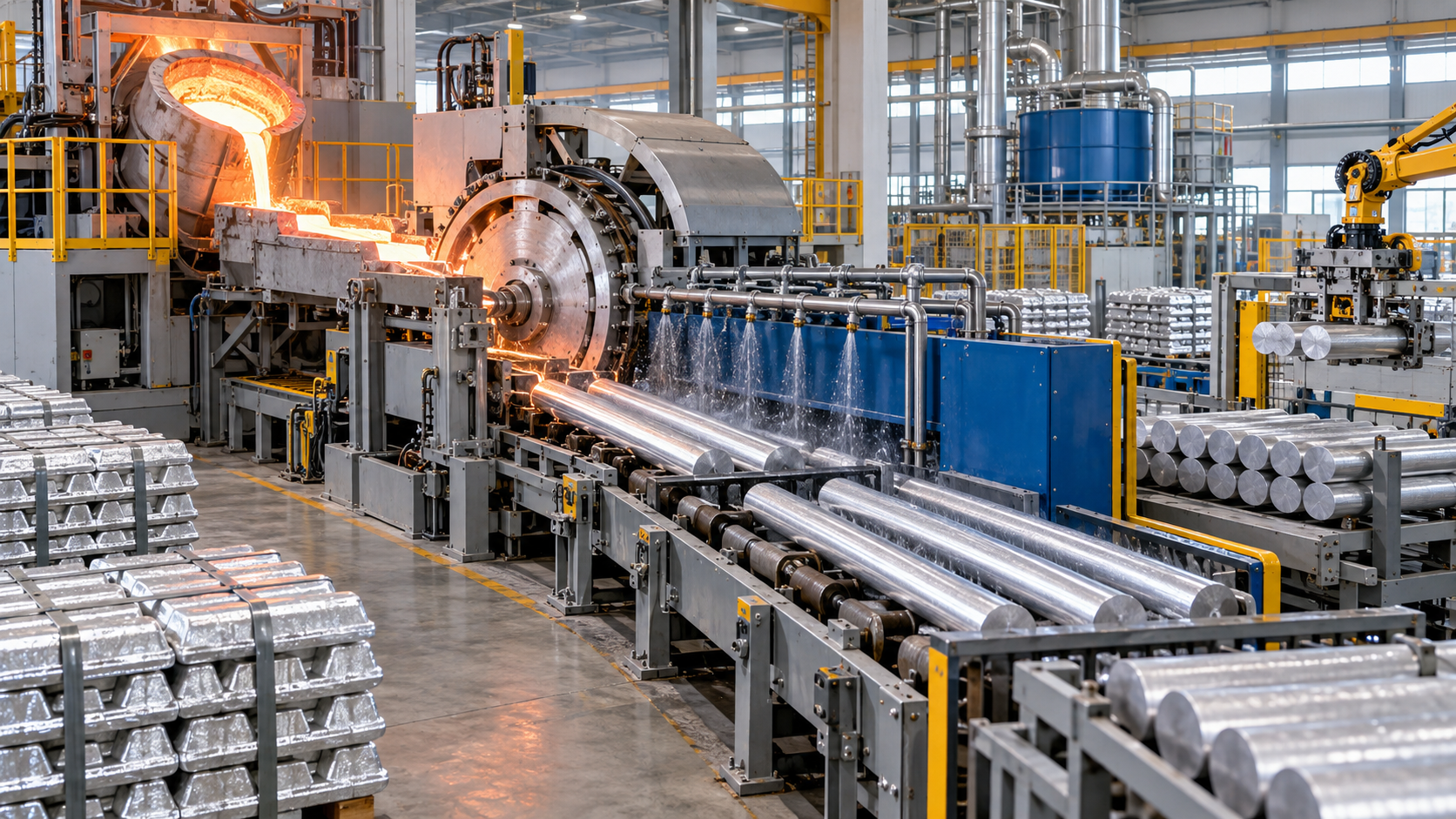
A metal plant rarely gains efficiency from one machine alone. The biggest improvements usually appear when melting, casting, heating, and handling are planned as a connected system. When each stage is matched to the next, the line can reduce waiting time, stabilize metal temperature, and make production easier to schedule.
For many foundries, the first step is choosing an automatic metal casting line that matches furnace output and product size. If the casting machine is too small, molten metal waits in the ladle and loses heat. If it is oversized, the plant pays for capacity it cannot use. A balanced line keeps the furnace, ladle, mold, cooling section, and removal equipment working in a controlled rhythm.
Aluminum plants face similar coordination issues. An aluminum rod casting machine must handle metal flow, cooling intensity, traction speed, and coiling or cutting with enough stability to protect surface quality. Even when the furnace is efficient, poor casting control can create defects that later appear during rolling, drawing, or machining.
Heating equipment is another important part of the production chain. A properly sized induction heating furnace can bring billets, bars, or rods to the target forming temperature with good repeatability. Compared with long holding in a fuel furnace, induction heating can provide faster start-up, cleaner operation, and more flexible batch changes.
The engineering work should begin with product mix, annual capacity, available power, plant layout, and maintenance ability. Operators need room for safe charging and tapping, technicians need access to electrical and cooling systems, and the line should include practical controls for temperature, speed, alarms, and interlocks. These details decide whether a production line runs smoothly after installation.
A connected line is most valuable when it is simple enough for daily operation. Clear process flow, reliable auxiliaries, and realistic capacity matching can do more for long-term output than overcomplicated automation. When melting, casting, and heating are planned together, the plant gains a cleaner workflow and a stronger foundation for future expansion.

