
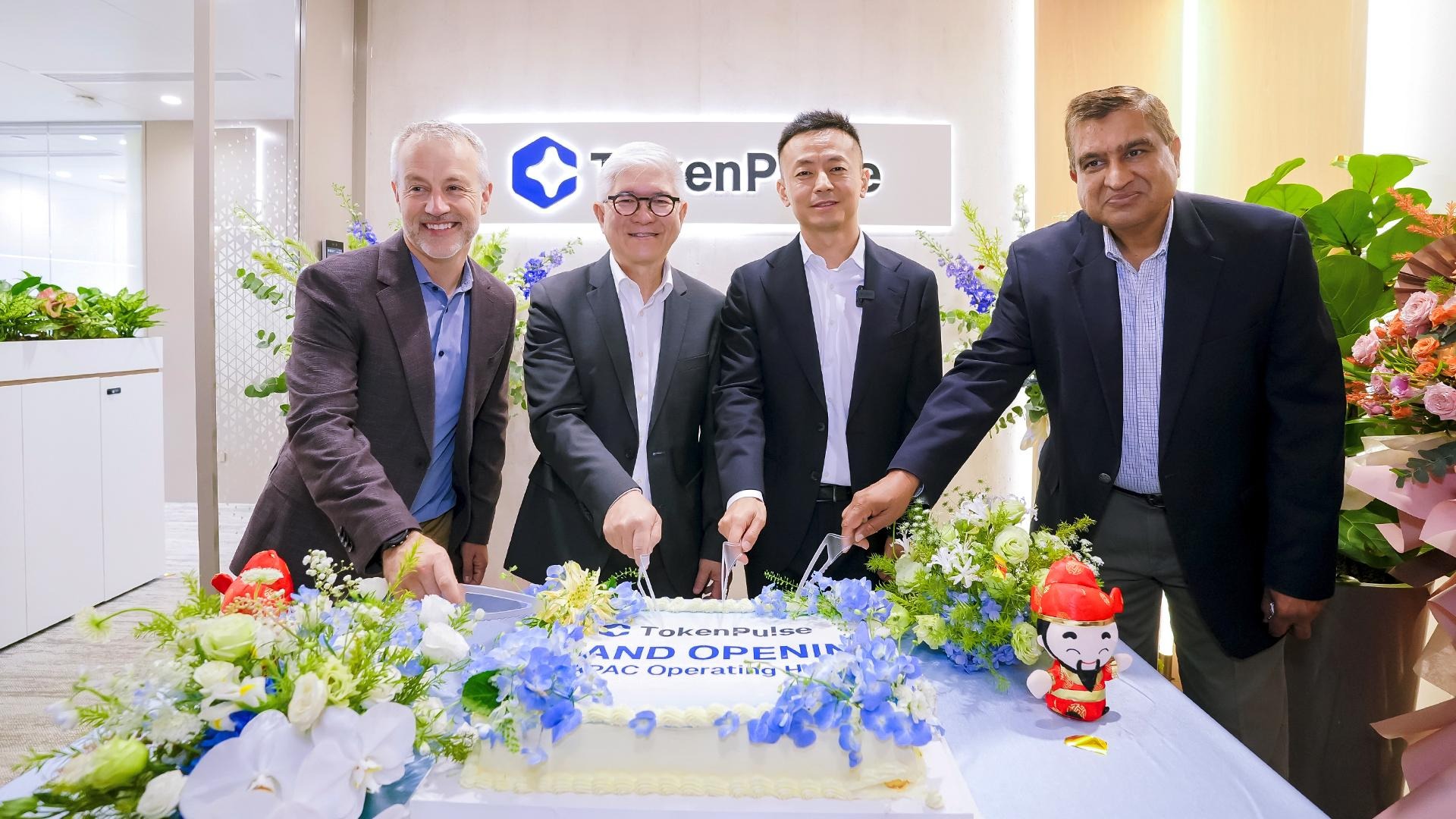
SINGAPORE AND SAN FRANCISCO — TokenPulse, an AI inference infrastructure company headquartered in San Francisco and Singapore, has opened its Asia-Pacific Operating Hub in Singapore. The opening ceremony brought together invited industry leaders and ecosystem partners to discuss opportunities in AI compute and global infrastructure.
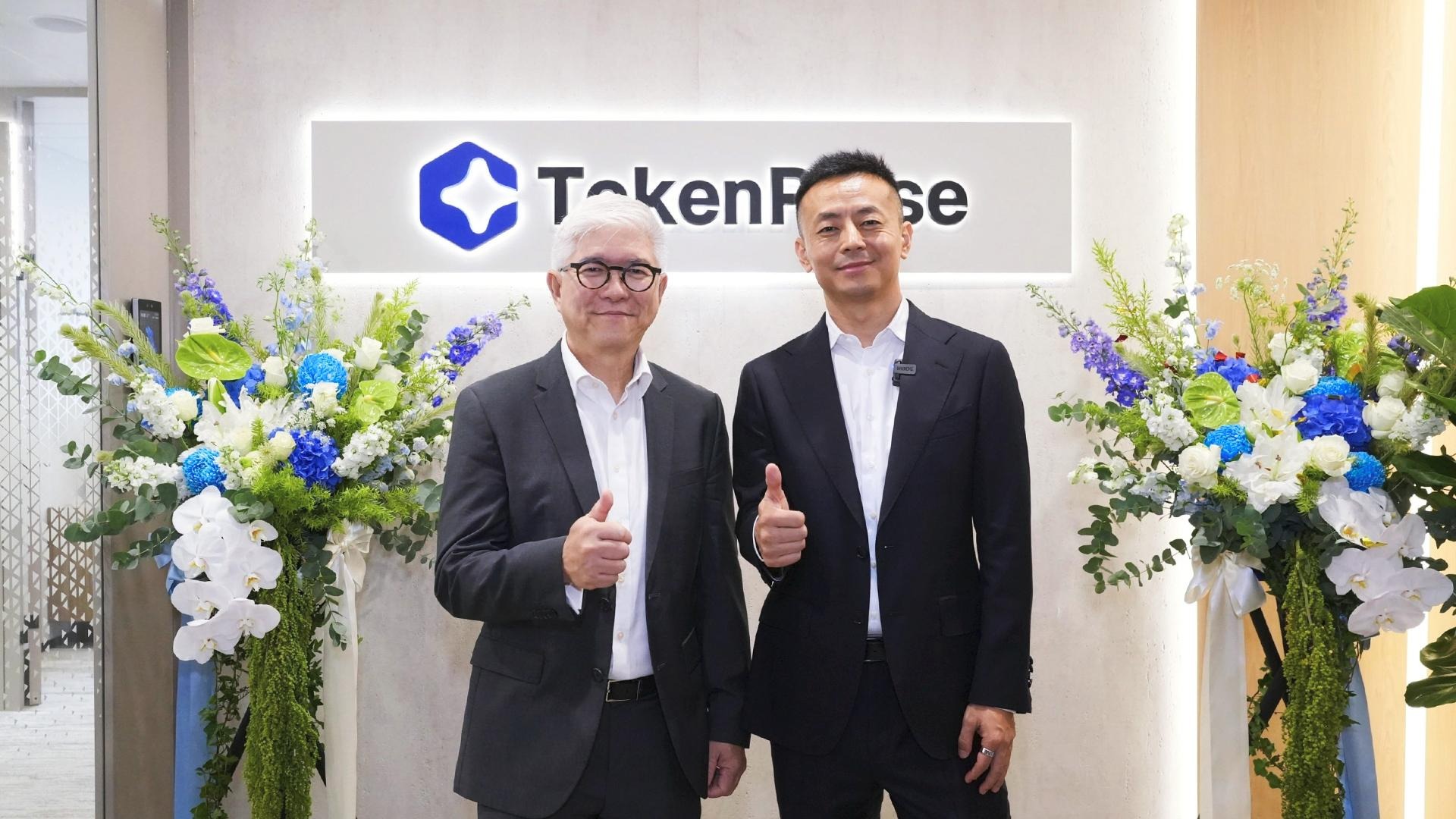
As businesses move AI applications into production, they face rising inference costs, demands for faster responses and the challenge of expanding workloads without rebuilding their platforms. Demand for AI infrastructure is growing alongside these needs. Gartner projects the global AI infrastructure market will grow from $982 billion in 2025 to $1.98 trillion by 2027.
TokenPulse combines data-center resources, GPU infrastructure, an optimized inference engine and globally coordinated serving capabilities. Its services are designed for foundation model companies, AI platforms, enterprises and AI-native applications.
Leadership with Infrastructure Experience
TokenPulse’s leadership and technical teams bring experience in AI and machine-learning infrastructure, cloud computing, networking, data centers and global business operations. Team members have backgrounds at companies including Microsoft, Google and Equinix.
CEO Steven Zhou has more than 20 years of experience building businesses across the United States and Asia. Chairman Thomas Pang has spent more than 30 years working across government, investment, infrastructure and corporate leadership. He spent over two decades with Keppel and served as CEO of Keppel’s Data Centres & Networks Division from 2014 to 2024, overseeing its global data-center and digital-connectivity businesses.
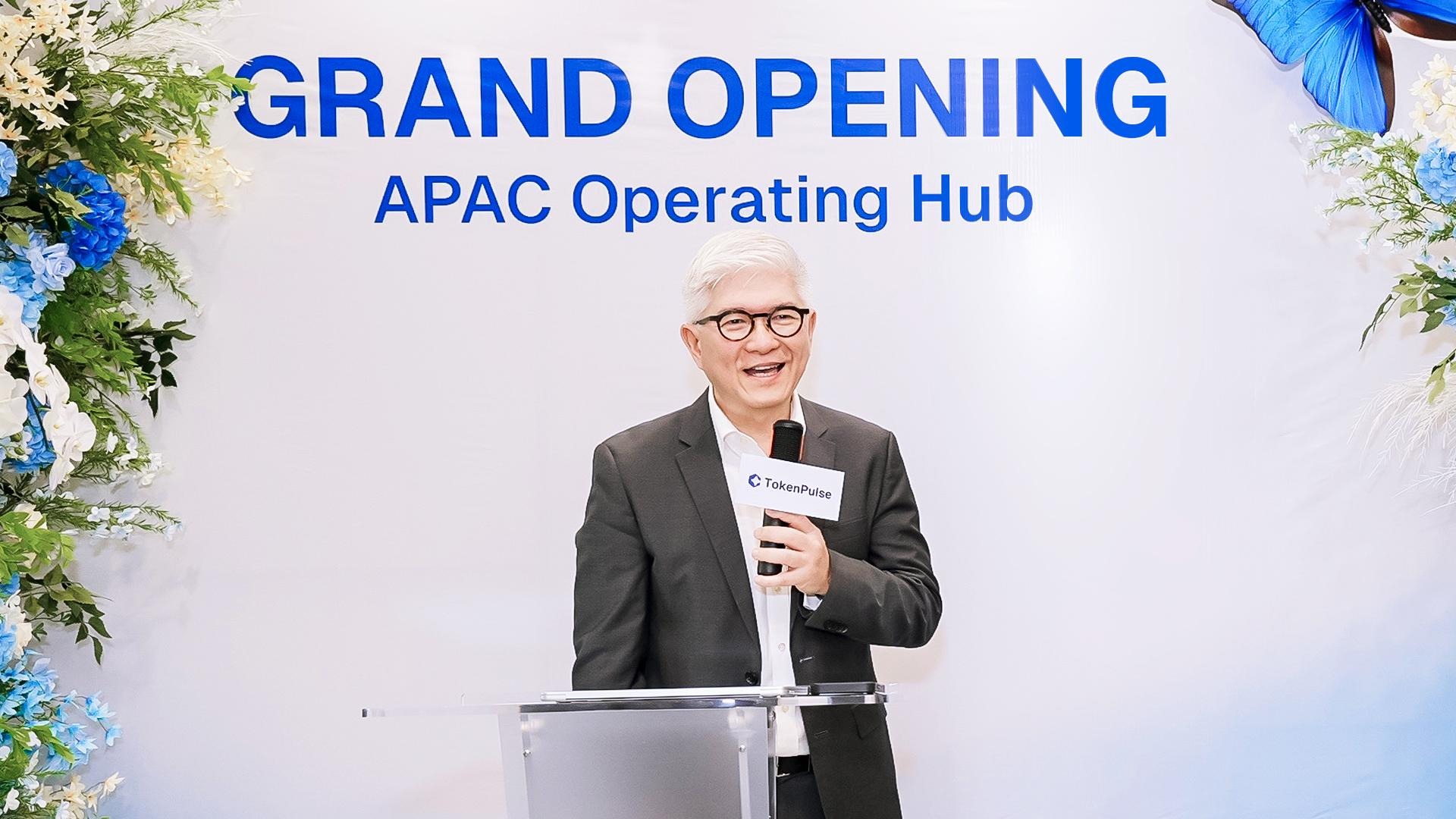
“Singapore is a natural choice for building our APAC operating hub, given its mature data center ecosystem, strong network connectivity and deep talent pool,” said Thomas Pang, Chairman of TokenPulse. “Our foundations are rooted in decades of experience across data centers, networking and cloud computing. Drawing on that experience in building and operating infrastructure at scale, we will continue investing in compute capacity and ecosystem support, delivering the best performance at the lowest cost per token.”
Singapore at the Center of a Global Network
TokenPulse is developing an infrastructure footprint across North America, Asia-Pacific and Europe, with Singapore serving as its strategic center for APAC. Its regional approach aims to connect North America’s AI technology, customer and capital ecosystems with Southeast Asia’s growing data-center and energy resources.
From Singapore, the company plans to work with partners in Malaysia, Indonesia, Thailand and other markets across the region. The hub will coordinate regional operations and infrastructure partnerships and support the company’s global inference network, bringing compute capacity closer to customers and AI workloads.
TokenPulse is taking a long-term approach to building an integrated network that combines data-center, energy and compute resources. The company is advancing multiple data-center projects with infrastructure partners in key markets. Its roadmap includes deploying the latest-generation NVIDIA AI infrastructure, while its engineering work focuses on using compute more efficiently to generate tokens and AI output.
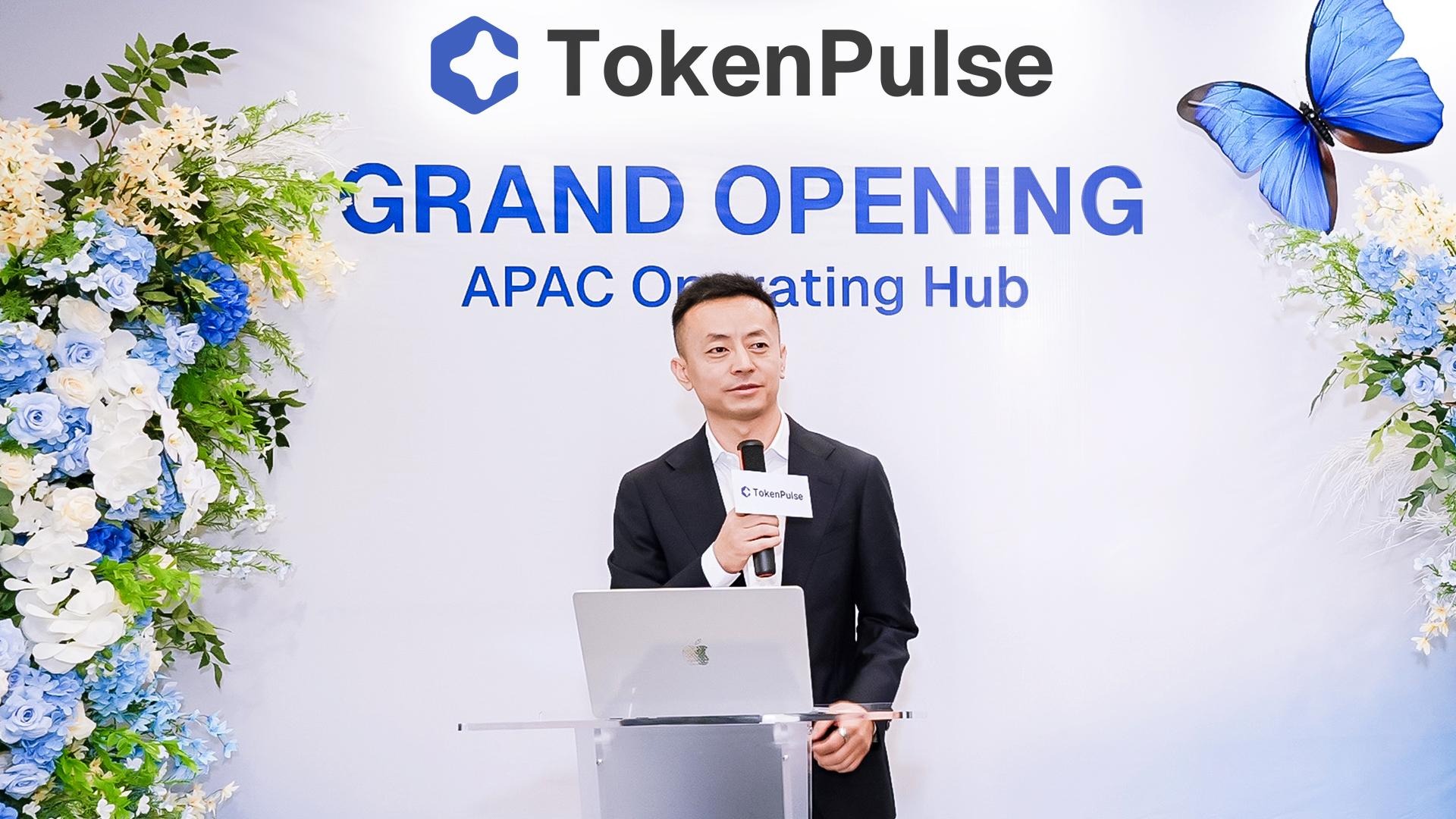
“AI is undergoing a fundamental shift: compute demand is moving from training to inference. For businesses, inference is no longer a hidden cost sitting in the background. It is becoming a core competitive factor in determining whether AI products can successfully reach the market,” said Steven Zhou, CEO of TokenPulse.
“As one of the fastest-growing regions for AI applications, developers in Asia Pacific are direct about cost and performance. By making Singapore our co-headquarters and APAC operating hub, we are putting our compute and our team closest to them to deliver better performance at lower cost.”
Flexible Ways to Use and Deploy Compute
TokenPulse offers three consumption models on a unified technology stack. Customers can begin with smaller workloads and expand as their applications grow.
- Serverless — Pay per token: Provides API access for rapid deployment, model evaluation and variable workloads, without requiring an upfront commitment to dedicated GPU capacity.
- On-demand — Pay per GPU-hour: Provides dedicated endpoints and predictable performance for customers with elastic compute requirements.
- Reserved — Contracted capacity: Offers dedicated compute for sustained workloads and more customized infrastructure needs.
Customers can also choose from three deployment options to suit their infrastructure, security and operational requirements:
- TokenPulse Cloud: Managed GPU infrastructure for a streamlined path to production.
- Private VPC: A TokenPulse-hosted environment with a dedicated network boundary and workload isolation.
- BYOC (Bring Your Own Cloud): Deployment of the TokenPulse inference engine in a customer’s cloud or VPC, or on the customer’s own GPUs.
The company’s commercial approach is built around the principle, “Start small. Scale without replatforming.” Customers can validate applications through API access and then move to GPU-based services or reserved capacity as demand increases. The aim is to let businesses grow their AI workloads without switching providers or rebuilding their platforms.
Improving Inference Performance and Cost
TokenPulse combines data-center infrastructure with inference optimization designed for specific industry use cases. By optimizing open-weight models for vertical workloads, the company aims to improve compute efficiency and serving throughput so customers can process more tokens at lower cost.
Its technology capabilities include:
- Higher cache efficiency: HiCache and a multi-tier key-value (KV) caching architecture are used to reduce repeated computation. TokenPulse reports that its observed cluster-level cache hit rate can reach 95%.
- Faster response times: With context parallelism enabled, TokenPulse reports a 50% reduction in 90th-percentile time to first token (P90 TTFT) and a 75% reduction in 99th-percentile time to first token (P99 TTFT), compared with the same workload without context parallelism.
- Global intelligent routing: A unified routing architecture directs requests across serving regions according to factors such as customer requirements, model, region and time window. Near-edge access, session-context reuse and redundant network paths are designed to support low latency, availability and efficient compute use.
These capabilities are intended to help AI businesses manage inference costs while maintaining the responsiveness and reliability needed for production workloads. Performance gains vary depending on workload and operating conditions.
About TokenPulse
TokenPulse is an AI inference infrastructure company headquartered in San Francisco and Singapore. It combines the latest-generation GPU infrastructure, an optimized inference engine and global infrastructure capabilities to provide compute for foundation model companies, AI platforms, enterprises and AI-native applications.
With Serverless, On-Demand and Reserved consumption models, customers can start with API-based inference and scale to dedicated GPU capacity as workloads grow, without replatforming.
Learn more: www.tokenpulse.com

