
Key Takeaways:
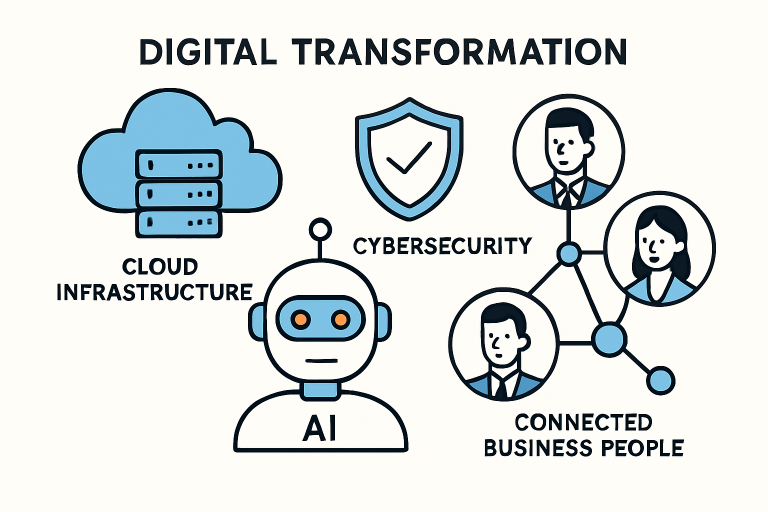
- Cloud computing and hybrid IT solutions are essential for growth and flexibility.
- Cybersecurity is crucial for safeguarding business and customer data.
- AI and machine learning drive efficiency and competitive advantage.
- Managed Service Providers (MSPs) offer invaluable expertise and scalability.
- Compliance, data governance, and emerging tech are vital for future-readiness.
The rapid evolution of technology is reshaping how businesses approach IT services. Organizations today must leverage innovative solutions to stay competitive, efficient, and secure. As the digital landscape grows, scalable infrastructures, advanced security measures, and intelligent automation are necessary to maintain momentum. One way businesses are thriving in this environment is by leaning on trusted partners like Design Data, whose IT expertise supports flexible growth, compliance, and seamless digital transformations.
Gaining a competitive edge today means more than adopting the latest tools. It requires integrating agile IT strategies with proactive security, robust data governance, and cutting-edge trends such as AI and IoT. These priorities not only future-proof operations but also ensure smooth scaling for growing businesses.
Small and medium-sized organizations (SMEs) especially benefit from tailored IT solutions that evolve with their needs. As their digital footprints expand, so does the need for cloud scalability, layered cybersecurity, and managed services that provide peace of mind. Incorporating modern IT services into daily operations builds resilience, boosts productivity, and aligns technology investment with growth objectives.
The modern IT landscape is diverse, with multiple paths leading to operational excellence and risk mitigation. The following guide explores these key trends, providing insight for entrepreneurs and IT decision-makers aiming for successful, secure growth.
Cloud Computing and Hybrid IT Solutions
Modern companies increasingly embrace cloud-based and hybrid IT solutions to enhance agility and scalability. Cloud computing enables organizations to shift data storage and reduce physical infrastructure costs. Hybrid IT models maintain essential assets on-site while benefiting from cloud flexibility and cost savings. Cloud technology has democratized access to sophisticated tools for small businesses, promoting real-time collaboration and growth.
As remote work and digital teamwork grow, cloud platforms enable access to resources from any location. Industry-specific integrations, notably in healthcare and finance, address compliance and data security requirements. Cloud providers now offer encryption, compliance assistance, and managed services, helping businesses remain efficient and secure without sacrificing control.
Cybersecurity as a Top Priority
The digital age brings not only opportunity but also a sharp increase in cyber threats. Growth in ransomware, phishing, and AI-driven attacks exposes businesses of every size to heightened risks. An effective cybersecurity strategy is therefore indispensable. A comprehensive approach typically includes endpoint protection, threat intelligence monitoring, system hardening, and continuous employee education. By deploying multi-layered security solutions, businesses can defend against both known and emerging threats while maintaining customer trust.
Cybersecurity is not just about technology. The human element remains a leading vulnerability, with employees often targeted by social engineering and phishing schemes. Investing in regular security awareness training helps foster a culture of vigilance while minimizing the risk of breaches. Involving third-party experts or managed security providers can further enhance resilience, allowing business leaders to focus on growth without security concerns.
Leveraging Artificial Intelligence and Machine Learning
AI and machine learning have transitioned from concepts of the future to vital tools for business. Incorporating AI enhances productivity and offers tangible financial advantages. More than 90% of small and medium-sized enterprises utilizing AI report increased revenue. Automation and data analytics boost efficiency and allow staff to concentrate on core tasks. AI-powered customer support provides round-the-clock assistance, enhances user experience, and can reduce costs by up to 30%. Machine learning also advances forecasting, marketing, and maintenance, leading to smarter insights. To remain competitive, organizations need to adopt AI, promote ongoing improvement, and strategically incorporate new technologies into their IT infrastructure.
The Role of Managed Service Providers
Managed Service Providers (MSPs) are increasingly vital for businesses looking to scale sustainably. By outsourcing all or part of their IT function, businesses gain access to specialized knowledge, continuous support, and cost efficiencies that might otherwise be out of reach. MSPs offer services ranging from remote monitoring to cybersecurity and disaster recovery, enabling companies to focus on core objectives rather than day-to-day technical demands. This partnership model is especially useful for growing businesses navigating regulatory environments or expanding digital operations.
MSPs also tailor their offerings to align with sector-specific regulations and requirements, giving businesses peace of mind as they grow. This support structure fosters innovation while maintaining stability and reliability in critical IT systems. As the complexity of the technology landscape increases, having an experienced partner becomes a strategic advantage.
Compliance and Data Governance
Expanding digital operations means shouldering greater responsibility for compliance and data governance. Strict frameworks like HIPAA, PCI DSS, and emerging state regulations require businesses to maintain rigorous security controls and audit readiness. Effective data governance involves a holistic approach that embeds compliance checks and monitoring throughout the IT architecture. Partnering with experts ensures regular audits, timely policy updates, and proactive risk management.
Transparent data management builds trust with clients and stakeholders. Periodic reviews and incident response planning are equally important. Automation of compliance tasks, real-time monitoring, and centralized policy management further reduce risk while demonstrating a commitment to responsible business practices.
Edge Computing and IoT Integration
Edge computing and IoT have become critical for real-time data analysis and operational agility. By processing data at or near its source, edge computing reduces latency, empowers rapid decision-making, and enhances performance in environments such as manufacturing lines or retail analytics. IoT devices fuel this trend by generating actionable insights from connected sensors, cameras, and other smart devices. These innovations enable organizations to streamline processes, optimize inventory, and personalize customer experiences while minimizing bandwidth and centralized processing demands.
IoT integration also presents fresh challenges in security and device management, which must be addressed proactively. Businesses adopting IoT and edge computing must therefore invest in well-architected frameworks and continuous monitoring to maximize the benefits of real-time technology.
Quantum Computing on the Horizon
Quantum computing stands at the edge of mainstream IT innovation. Though wide-scale commercial use is still emerging, quantum’s unmatched processing power offers the potential for breakthroughs in logistics, encryption, and complex simulations. Businesses that stay informed about progress in quantum technology may soon discover new avenues for competitive advantage.
For those willing to experiment, early partnerships with vendors and research institutions can open the door to testing applications before mass adoption. Remaining alert to new developments is key for forward-thinking organizations determined to lead in the next computing revolution.
Conclusion
Growing businesses face a future shaped by ongoing digital transformation and unprecedented IT challenges. Adopting cloud-based infrastructure, prioritizing layered cybersecurity, leveraging artificial intelligence, and collaborating with managed service providers are crucial steps toward resilient, growth-oriented operations. Robust compliance, data governance, and ongoing adoption of emerging technologies such as IoT and quantum computing further set leaders apart. By staying connected to the latest developments and working with reliable partners, businesses can chart a path to long-term success in the digital age.

