
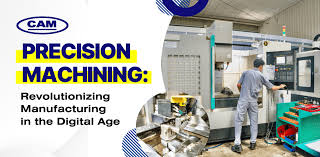
In today’s fast-moving tech landscape, conversations often focus on software, AI, and automation. But behind every breakthrough device, platform, or infrastructure upgrade lies something far more fundamental: precision manufacturing.
From smartphones to aerospace systems, the reliability of modern technology depends heavily on how accurately components are made. And in recent years, machining technologies—especially CNC and Swiss-type machining—have evolved into a critical backbone for innovation.
This guide breaks down how precision machining fits into today’s manufacturing trends—and why it matters more than ever.
Why Precision Still Matters in a Digital-First World
It’s easy to assume that software drives innovation. But hardware failure remains one of the biggest risks in any system.
Even the most advanced AI system cannot compensate for:
- A misaligned shaft
- A poorly machined thread
- Or micro-level dimensional inaccuracies
In sectors like aerospace, medical devices, and electronics, tolerances are often measured in microns. That’s where advanced machining steps in—not as a support function, but as a core enabler.
The Rise of Swiss Machining in High-Precision Industries
One of the biggest shifts in modern manufacturing is the increased use of Swiss-type CNC machining.
Originally developed for watchmaking, Swiss machining is now widely used in:
Medical implants
Aerospace fasteners
Micro-electronics
Automotive fuel systems
What makes it unique?
The material is supported very close to the cutting tool
This reduces deflection and vibration
Resulting in extremely tight tolerances and superior surface finish
For engineers working on small, complex parts, solutions like Swiss screw machining services have become essential when consistency and repeatability are critical.
Titanium: The Material Defining Modern Engineering
If there’s one material shaping the future of manufacturing, it’s titanium.
Why titanium?
High strength-to-weight ratio
Excellent corrosion resistance
Biocompatibility (used in medical implants)
Heat resistance for aerospace applications
However, machining titanium is notoriously difficult:
It generates high heat
Causes tool wear
Requires precise cutting strategies
This is why specialized processes like custom titanium machining are increasingly in demand across industries. Manufacturers that can handle titanium efficiently are gaining a significant competitive edge.
Small Components, Big Impact: The Role of Precision Screws
Sometimes the smallest parts are the most critical.
Take machine screws, for example. In high-performance systems, a poorly manufactured screw can lead to:
Structural failure
Vibration issues
Assembly inefficiencies
Titanium screws, in particular, are widely used in:
Aerospace assemblies
Medical devices
High-end automotive systems
For engineers looking to understand best practices, resources like this engineering guide to titanium machine screws offer practical insights into design considerations, machining challenges, and performance optimization.
Manufacturing Trends You Shouldn’t Ignore in 2026
Precision machining isn’t standing still. Several trends are reshaping how parts are designed and produced:
1. Digital + Physical Integration
CAD/CAM systems now integrate directly with CNC machines, reducing human error and speeding up production cycles.
2. Micro-Manufacturing Growth
As devices get smaller, demand for micro-components is increasing—driving the adoption of Swiss machining and multi-axis CNC.
3. Material Innovation
Beyond titanium, advanced alloys and composites are pushing machining capabilities further.
4. Automation in Machining
Lights-out manufacturing (unattended machining) is becoming more common, improving efficiency and reducing costs.
5. Supply Chain Localization
Companies are shifting toward reliable, high-precision suppliers to reduce global supply chain risks.
How to Choose the Right Machining Partner (Quick Guide)
If you’re sourcing precision parts, here are a few practical checks:
Tolerance capability: Can they consistently hold tight tolerances?
Material expertise: Especially for titanium or exotic alloys
Process range: CNC turning, Swiss machining, milling
Quality control: CMM inspection, certifications
Engineering support: Can they optimize your design?
Choosing the right partner isn’t just about price—it’s about long-term reliability.
Final Thoughts
While software continues to dominate headlines, precision machining remains the silent force behind innovation.
From micro-scale medical components to aerospace-grade fasteners, the demand for accuracy, repeatability, and material expertise is only increasing.
For engineers, designers, and sourcing managers, understanding machining isn’t optional anymore—it’s a competitive advantage.
Because in the end, every digital breakthrough still depends on something physical being made… perfectly.

