
The global transition toward decentralized, internet-based broadcasting is completely transforming how we consume media, and for tech-savvy viewers looking to consolidate their entertainment ecosystems, a robust digital hub like IPTV Abonnement Illimité has become the ultimate living room upgrade.
The technology landscape is shifting rapidly beneath our feet.
For the last fifty years, the concept of home entertainment was defined by physical cables, satellite dishes, and massive telecommunications monopolies.
We accepted standard-definition broadcasts because we simply did not have the technological infrastructure to demand anything better.
Today, that entire terrestrial broadcast model is completely obsolete.
We are living in the era of ultra-high-definition streaming, fiber-optic data transfer, and software-defined television.
The modern consumer expects flawless 4K resolution, instant on-demand access, and total geographical freedom.
To meet these massive consumer demands, the underlying technology of television had to be completely re-engineered from the ground up.
Let us take a deep, analytical dive into how 4K streaming is fundamentally changing home entertainment, the rise of internet protocols, and why the traditional cable box is officially dead.
The Death of the Traditional Set-Top Box
To understand the future, we have to look at the failures of the past.
The traditional set-top box was a marvel of 1990s engineering, but it has become a severe bottleneck in the modern era.
These physical boxes rely on Radio Frequency (RF) signals transmitted over aging copper coaxial cables.
Because coaxial cable has severe bandwidth limitations, telecom providers were forced to heavily compress their video signals.
This compression resulted in blurry images, pixelation during fast-moving sports, and a generally poor viewing experience.
Furthermore, these boxes were expensive to manufacture, prone to overheating, and locked the consumer into a single, physical location in their home.
The tech industry realized that relying on proprietary, physical hardware to decode video was a losing strategy.
Why Smart TVs Needed Better Streaming Solutions
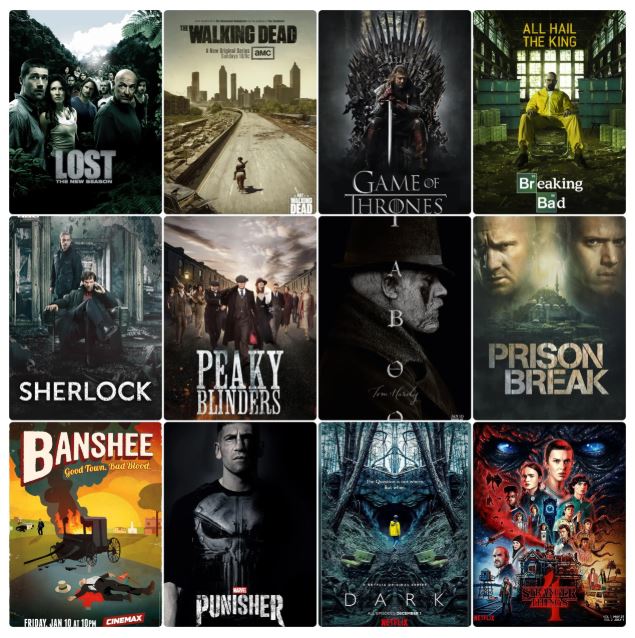
The solution was to eliminate the external hardware entirely and build the decoding software directly into the screen.
The invention of the Smart TV changed everything.
Manufacturers like Samsung, LG, and Sony began installing powerful microprocessors and Wi-Fi antennas inside their flat-panel displays.
Your television was no longer a dumb monitor waiting for a signal; it became a highly capable, internet-connected computer.
However, the early Smart TVs suffered from terrible software.
The native applications were sluggish, the user interfaces were confusing, and the streaming quality was heavily degraded.
The hardware was capable of displaying 4K, but the internet delivery systems were not strong enough to supply the data.
Consumers desperately needed a better software solution that could unlock the true potential of their expensive displays.
The 4K Bandwidth Challenge
Streaming a 4K video is a massive engineering challenge.
A true 4K image contains four times the number of pixels as a standard 1080p high-definition broadcast.
Pushing that many pixels across the internet at 60 frames per second requires a continuous, incredibly heavy stream of data.
If the internet connection drops for even a fraction of a second, the video buffer empties, and the screen freezes.
In the early days of streaming, this buffering issue made live internet television practically impossible for the average household.
The infrastructure simply could not handle the traffic.
To make 4K streaming a viable reality, two massive technological leaps had to occur simultaneously: the widespread adoption of fiber optics and the invention of advanced video codecs.
How Fiber Optics Changed the Game
The first leap was physical. We had to replace the copper wires.
Fiber-optic technology transmits data using pulses of light traveling through microscopic strands of glass.
Unlike copper, which suffers from severe signal degradation over long distances, fiber optics can transmit massive amounts of data at the speed of light with virtually zero latency.
The global push to lay fiber-optic cables directly to residential homes (FTTH) completely revolutionized the streaming industry.
Suddenly, the average household had access to gigabit download speeds.
This massive pipeline eliminated the bandwidth bottleneck.
It allowed multiple devices in the same house to stream 4K video simultaneously without any network congestion.
The Evolution of Video Compression
The second leap was entirely software-based.
Even with fiber optics, sending uncompressed raw 4K video over the internet is highly inefficient.
Software engineers had to develop advanced video compression algorithms, known as codecs.
The industry standard for a long time was H.264, but it was not efficient enough for 4K.
Enter H.265 (also known as High Efficiency Video Coding, or HEVC).
This brilliant piece of software uses predictive AI modeling to analyze a video frame.
Instead of updating every single pixel on the screen, HEVC only updates the pixels that are actively moving.
This mathematical wizardry allows streaming platforms to deliver crystal-clear 4K video using half the bandwidth of previous generations.
The Rise of Internet-Based Television

With fiber optics providing the highway and HEVC providing the efficient vehicle, the stage was set for a total media takeover.
This perfect technological storm gave rise to advanced Internet Protocol Television architectures.
Instead of broadcasting a massive signal to everyone simultaneously, these networks create a private, direct data pipeline between the server and the individual user.
This transition allowed for massive consolidation in the entertainment market.
Consumers no longer needed different cables for different networks.
Everything—live sports, international news, and on-demand movies—could now be routed securely over a single, high-speed internet connection.
Understanding Content Delivery Networks (CDNs)
But how do these modern streaming platforms ensure stability when millions of users log in at the exact same time?
If a million people tried to pull a 4K stream from a single server in New York, that server would instantly melt down.
The secret to modern streaming stability is the Content Delivery Network (CDN).
A CDN is a vast, decentralized web of “edge servers” strategically placed all over the globe.
When a user requests a video, the system does not send them to the main origin server.
Instead, intelligent load-balancing software instantly redirects the user to the closest physical edge server in their specific city.
By keeping the heavy video data local, latency is virtually eliminated, ensuring a flawless, buffer-free broadcast.
The Economics of Modern Streaming
This decentralized architecture is not just technically superior; it is also highly cost-effective.
Legacy telecom companies burn billions of dollars maintaining physical infrastructure, satellite uplinks, and massive corporate overhead.
Alternative digital streaming networks operate with incredible efficiency.
Because they rely entirely on software and cloud computing, their operational costs are a fraction of traditional broadcasters.
This efficiency completely disrupts the market economics.
It allows modern digital platforms to offer massive, global entertainment libraries at significantly lower price points than legacy cable bundles.
Consumers are highly pragmatic, and they are rapidly moving their money toward these more efficient delivery systems.
Overcoming the Geo-Blocking Hurdle
Another major catalyst for the adoption of internet-based television is the widespread frustration with digital geo-blocking.
In a hyper-connected, globalized world, regional broadcasting borders make absolutely no sense.
Legacy media companies still try to enforce outdated 20th-century territorial licensing contracts.
They actively block users from accessing content based on their physical IP address.
Modern streaming architectures completely bypass these artificial borders.
By routing raw data through decentralized, international server clusters, they ignore zip codes and local firewalls.
This grants the consumer total, unrestricted access to global pop culture, foreign cinema, and international sports broadcasts.
The European Streaming Market
This demand for borderless media is particularly strong in the European market.
European consumers frequently travel across borders and have deep interests in neighboring cultural media.
Because legacy broadcasting rights are so fractured across the European Union, viewers are actively seeking unified digital solutions.
For instance, French-speaking audiences are aggressively cutting the cord and migrating to alternative digital hubs.
To consolidate their fragmented sports and entertainment packages, users frequently rely on this French streaming platform to bypass local broadcasting red tape.
By utilizing these centralized hubs, international viewers can finally access a unified, global dashboard of high-definition content.
Cybersecurity and Streaming Privacy
As internet-based broadcasting becomes the global standard, cybersecurity has naturally taken center stage.
Streaming heavy 4K video data requires a continuous, open connection, which can be monitored by Internet Service Providers (ISPs).
Many ISPs actively throttle, or intentionally slow down, heavy streaming traffic during peak evening hours to save bandwidth.
To combat this, the modern streaming consumer has embraced advanced cybersecurity tools.
Integrating a Virtual Private Network (VPN) with a streaming setup is now considered a best practice.
The VPN wraps the user’s internet traffic in military-grade encryption.
Because the ISP can no longer see what data is being consumed, they cannot throttle the connection, ensuring maximum bandwidth for 4K streaming.
The Future: AI and Predictive Streaming
Looking toward the horizon, the intersection of streaming technology and Artificial Intelligence is incredibly exciting.
We are moving away from passive viewing and entering an era of highly predictive streaming.
Machine learning algorithms are being integrated directly into the backend software of smart televisions and streaming hubs.
These algorithms analyze viewing habits, pause times, and genre preferences in real-time.
Instead of forcing the user to scroll through endless menus, the software will preemptively cache and suggest the exact content the user wants to watch.
AI is also being used to upscale older, standard-definition content into artificial 4K resolution on the fly, breathing new life into classic cinema.
The Impact of 5G Mobile Networks
While fiber optics revolutionized the living room, 5G cellular technology is about to revolutionize mobile streaming.
5G networks offer gigabit-speed data transfer entirely over the airwaves, with near-zero latency.
This means true 4K streaming is no longer tethered to a physical wall outlet.
Consumers will soon be able to stream flawless, uncompressed live sports on their mobile devices while commuting on a train or sitting in a park.
As mobile bandwidth becomes cheaper and infinitely faster, the concept of a “home internet connection” may eventually become completely obsolete.
Hardware vs Software: The Winning Formula
The ultimate lesson of the streaming revolution is that software always defeats hardware.
The legacy telecommunications companies focused entirely on laying copper wires and building ugly plastic set-top boxes.
The modern tech industry focused on building beautiful, lightweight software applications and advanced compression algorithms.
Software is highly adaptable, instantly updatable, and completely portable.
You can install a streaming application on a television, a tablet, or a smartphone in a matter of seconds.
This total hardware independence gives the consumer absolute freedom over how, when, and where they consume their media.
Why Consumers Are Demanding Consolidation
At the end of the day, the technology only matters if it serves the user.
The current app-based streaming ecosystem has become far too fragmented, expensive, and confusing.
Consumers are exhausted by managing multiple passwords, navigating different user interfaces, and paying exorbitant cumulative fees.
They are demanding a return to simplicity.
They want the massive, global power of the internet packaged into a clean, unified, and consolidated interface.
This intense consumer demand is exactly what is driving the massive success of integrated digital platforms like https://iptv-abonnement-illimite.fr across the European and international markets.
By stripping away the corporate silos and bringing all global media under one roof, these platforms are delivering the ultimate viewing experience.
The New Era of Broadcasting
The transition from terrestrial broadcasting to decentralized, internet-based streaming is irreversible.
The legacy monopolies are collapsing under the weight of their own inefficiency, while agile, software-defined networks are capturing the future.
We now have the fiber-optic highways, the advanced HEVC codecs, and the massive CDN infrastructures required to push flawless 4K video across the globe in milliseconds.
The technological barriers have been completely smashed.
For the modern consumer, this means unprecedented access to global culture, total geographical freedom, and a significantly superior viewing experience.
The revolution is not coming; it is already here, and it is streaming live in ultra-high definition.

