
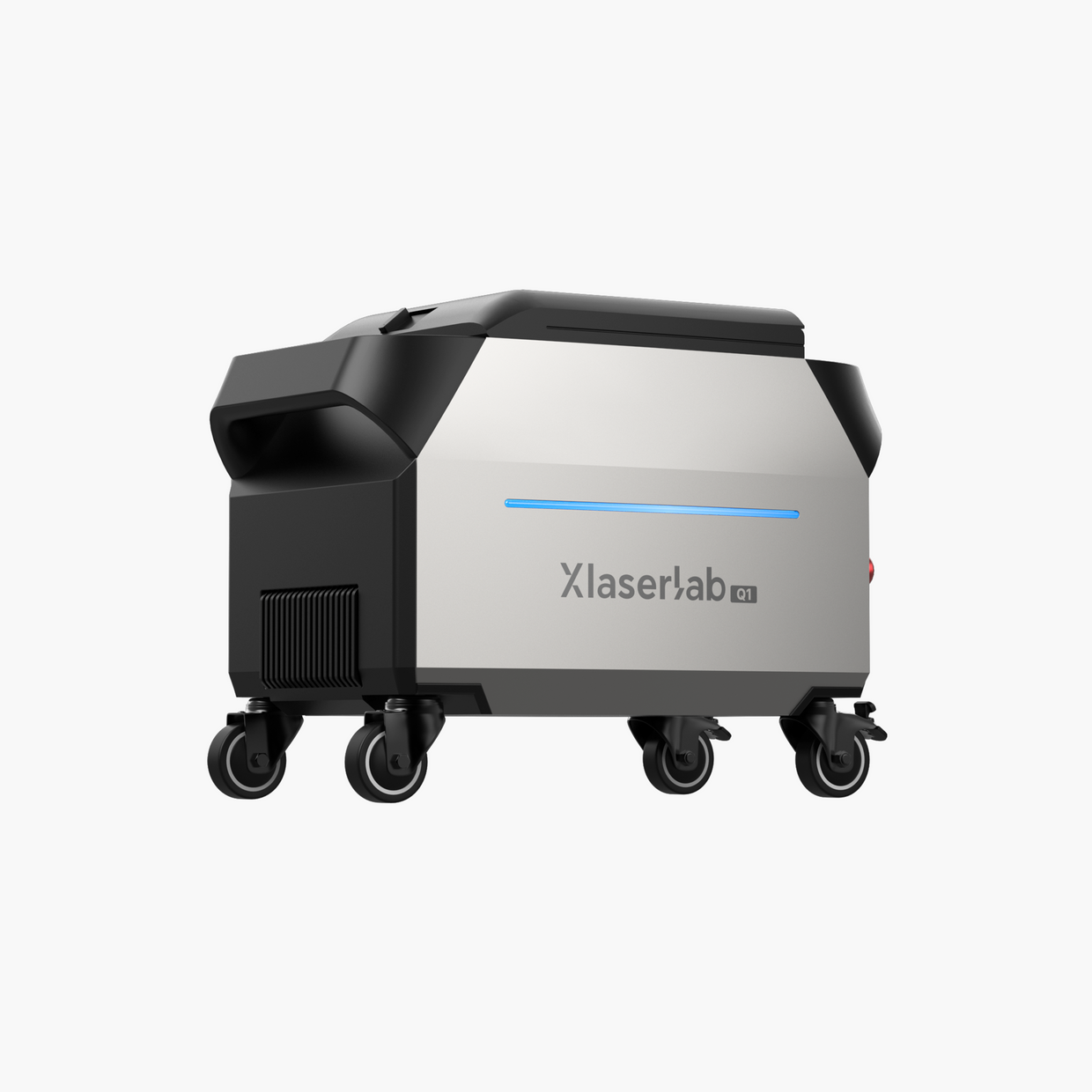
Rust, grease, oxide layers, weld residue, mold release, old paint. Every workshop knows the drill: sandblast, wire brush, degrease with harsh chemicals, sand again, wipe down, and repeat. It burns hours, produces bins of contaminated waste, and still leaves surfaces inconsistent. For fabricators, restorers, and manufacturing engineers dealing with high-mix parts, that workflow has become the biggest hidden cost on the shop floor.
Laser cleaning changes the equation. Instead of abrasives or solvents, a focused pulsed beam lifts contaminants off the base material through a photothermal reaction, leaving the substrate untouched. No consumables, no runoff, no masking tape marathon before painting or welding. That single change shrinks prep time, reduces rework, and keeps operators away from silica dust and chemical fumes. This guide walks through what actually makes the technology different, where it shines on real jobs, and how to bring it into a workflow without disrupting production.
Why Traditional Surface Prep Is Quietly Draining Your Shop
Anyone running a fabrication or restoration shop has felt the compounding cost of manual prep. Media blasting requires containment, PPE, media recovery, and a separate booth. Chemical stripping means procurement, storage, disposal fees, and slower turnover between batches. Wire wheels and flap discs eat into the parent metal, distort thin gauge sheet, and leave scratch patterns that transfer straight into a paint or plating defect. None of these methods scale cleanly when your job list swings between motorcycle tanks, mold cavities, and aircraft brackets in the same week.
Modern Laser Cleaning systems sidestep those trade-offs by absorbing energy selectively into the contamination layer, which vaporizes or flakes off while the underlying alloy stays at a stable temperature. Because the process is non-contact, there is no tool wear, no grit embedded in soft aluminum, and no thermal distortion on thin stainless. That single physical difference is why the technology has moved from aerospace labs into everyday production shops over the past few years.
How a Pulsed Laser Actually Removes Rust, Oxide, and Coatings
The process is best understood as tuned energy delivery. Rust and oxide layers absorb near-infrared wavelengths far more efficiently than clean steel or aluminum. When a short, high-peak-power pulse strikes the surface, the contaminant heats and expands almost instantly while the base metal reflects most of the residual energy. The layer detaches as a fine plume that is captured by an extraction unit, and the substrate is left with a clean, oxide-free finish ready for welding, bonding, or coating.
Ablation Threshold and Why It Protects the Base Material
Every material has an ablation threshold, the energy density needed before it starts to vaporize. Contaminants sit far below that of the substrate, which creates a working window where the operator can strip rust or paint without touching the parent metal. Practical steps for tuning that window on the shop floor look like this:
- Start at a low average power and moderate pulse frequency to confirm contaminant liftoff.
- Raise power gradually until removal is uniform across a test patch.
- Verify the substrate with a roughness gauge or a simple magnifying inspection before committing to the full part.
Once dialed in, the same recipe can be saved and recalled for repeat jobs, which is where the productivity gains really compound over a shift.
Pulsed vs Continuous Wave: Choosing the Right Beam Mode
Pulsed sources dominate cleaning applications because they deliver high peak power without pushing bulk heat into the workpiece. Continuous wave lasers, by contrast, are used where deeper coating removal on thick steel is needed and heat input is acceptable. For mixed-material shops, pulsed is almost always the safer starting point since it handles delicate substrates like brass, copper, and coated aluminum without warping or discoloration.
Real Applications Where Laser Surface Preparation Pays Back Fastest
Return on investment lands quickest when the technology replaces a bottleneck rather than a one-off task. Weld preparation on stainless assemblies is a classic example: instead of grinding and solvent-wiping every joint before TIG, an operator can walk a beam along the seam in seconds and step straight into welding. Mold cleaning between production runs, previously an overnight job with dry ice or solvents, becomes an inline task that keeps the press running.
Restoration shops working on classic cars, motorcycles, or vintage machinery see similar wins. Stripping paint from a curved fender without dishing the metal is difficult with any abrasive method, but a handheld laser follows the geometry and lifts only the coating. Historical preservation groups have adopted the same approach for cast iron and bronze, where retaining the original patina under the corrosion is often more important than aggressive removal.
Bringing Laser Cleaning Into an Existing Workflow
Adoption is less disruptive than most managers expect, but a short deployment plan avoids common early mistakes. The path below tends to work for shops moving from manual methods for the first time.
Step One: Map the Jobs That Bleed Time
Before evaluating hardware, spend a week logging where surface prep sits on the critical path. Track parts that get reworked because of contamination trapped under paint, welds that fail inspection due to oxide, and jobs that stall waiting for the sandblaster. That short audit turns the purchase into a business case rather than a hunch.
Step Two: Pick a Power Class That Matches Your Heaviest Job
Undersizing is the single most common regret. A low-wattage unit handles light oxide and thin coatings but stalls on heavy mill scale or thick industrial paint. Match the machine to the toughest routine job on the audit list, not the average. Fiber sources in the mid-power range cover the widest span of shop work and remain portable enough for onsite service. Providers such as Xlaserlab publish clear application guides that help match power class to substrate type, which shortens the specification stage.
Step Three: Train Operators on Parameters, Not Just Buttons
The machine ships with presets, but real productivity comes from operators who understand pulse energy, spot size, and scan speed as a system. A two-day hands-on session covering test patches, extraction setup, and safety interlocks brings a technician from cautious button-pusher to confident production user. Building a small library of saved recipes for recurring parts locks in that knowledge before it walks out the door with the next shift change.
Safety, Extraction, and Compliance Considerations
The process is cleaner than blasting or chemical stripping, but it is not consequence-free. Fumes from ablated coatings, especially older lead-based paints or zinc-rich primers, must be captured with a HEPA-rated extraction unit sized to the working duty cycle. Class 4 laser safety protocols apply, meaning enclosed workstations or interlocked barriers are standard for stationary setups, while handheld operations use certified goggles matched to the source wavelength. Documented standard operating procedures and a short daily checklist keep the system inside insurance and regulatory limits without slowing the crew down.
Consumable spend is close to zero, but the extraction filters remain a scheduled maintenance item. Tracking filter loading against runtime hours prevents the drop in capture efficiency that sneaks up on shops running the system harder than the original commissioning assumed.
A Cleaner, Faster Way Forward for Surface Prep
The shift away from abrasives and chemicals is not about chasing new technology for its own sake. It is about closing the gap between how quickly a shop can respond to mixed work and how long surface preparation has been holding that response hostage. A properly sized pulsed system removes rust, coatings, and residues without harming the substrate, cuts consumable and disposal costs to near zero, and keeps operators clear of the health hazards that came with the old workflow. For fabricators, restorers, and manufacturing engineers who audited their bottlenecks and found prep at the top of the list, adoption is now more a scheduling question than a technical one. Start with the toughest recurring job, build the operator playbook around it, and let the saved hours compound across every shift that follows.

