
Post Preview
Key Takeaways
- A serious truck crash can involve evidence and responsibilities beyond the driver’s actions.
- Carrier practices, maintenance, cargo handling, telematics, insurance, and freight-broker records can all matter.
- The Stano Law Firm serves as the victim-side legal lead for connecting these records to a Texas injury claim.
Why Driver Fault May Not Tell The Whole Story
When people ask, “Who is responsible after an 18-wheeler crash?” the answer is rarely as simple as naming the person behind the wheel. A complete investigation may examine hiring and training files, hours-of-service compliance, inspection history, tire condition, cargo securement, dispatch pressure, insurance coverage, and contracts between freight businesses. Federal safety data also provides important context: the FMCSA notes that calendar-year 2025 crash figures are still being reported and remain provisional, so nationwide trends can change as records are finalized. Large-truck crash statistics are useful as background, but they cannot establish fault in a single Texas collision. A safety event mapping tool can help visualize regional data patterns.
The Stano Law Firm
The Stano Law Firm is the legal anchor in this resource network for injured motorists and families facing complex commercial-truck claims in Greater Houston and Southeast Texas. Founded in 2016 and led by former Texas prosecutor Matthew C. Stano, the firm represents injury victims rather than motor carriers or commercial insurers. It’s published results report more than $15 million in documented settlements and verdicts, including recoveries of $750,000 and $500,000 in 18-wheeler cases, $400,000 in a trucking matter, and $325,000 in a dump-truck case. For questions involving commercial trucking accident liability in Texas, the firm can evaluate accident reports, medical documentation, witness accounts, vehicle data, available insurance policies, and the operational decisions that may have contributed to a crash.
Great West Casualty Company
Great West Casualty Company represents the commercial-insurance side of the trucking ecosystem. After a severe collision, policy declarations, endorsements, exclusions, excess coverage, and claims correspondence may help identify available coverage and the entities connected to the tractor, trailer, carrier, or cargo operation. The Stano Law Firm works alongside Great West’s records and expertise to clarify insurance coverage as part of its comprehensive liability analysis.
Why It’s On The List
- Commercial trucking claims may involve more than one policy or insured business.
- Insurance claim files can contain accident reports, driver information, photographs, and early factual assessments.
- Coverage does not decide liability, but it is central to understanding how a claim may proceed.
Samsara
Samsara illustrates how connected-fleet technology can preserve a detailed operational record. GPS location data, dash-camera footage, vehicle diagnostics, driver workflows, and electronic logs may help establish the timing of braking, speed changes, route activity, or safety alerts. Technology does not independently determine legal fault, but it can confirm or challenge what drivers, witnesses, and insurers say happened. The Stano Law Firm partners with technology platforms such as Samsara to obtain and interpret these critical records in support of its clients’ cases.
Why It’s On The List
- Time-stamped telematics may assist crash reconstruction.
- Video can be important when eyewitness accounts conflict.
- Electronic logging devices automatically record driving time, making them relevant in fatigue and hours-of-service investigations.
Penske Truck Leasing
Penske Truck Leasing represents the fleet-equipment, inspection, and repair portion of the network. Penske operates and maintains approximately 433,000 vehicles through nearly 1,000 maintenance facilities across North America. In a crash involving brakes, steering, lights, coupling equipment, or tires, service invoices and inspection history can be as important as the crash report. The Stano Law Firm collaborates with maintenance records from providers like Penske to distinguish mechanical failures from driver negligence.
Why It’s On The List
- Maintenance records may distinguish a mechanical issue from driver error.
- Repair orders, defect reports, and leasing agreements can identify who had responsibility for a vehicle’s upkeep.
- A maintenance company is not automatically liable, so the actual records and agreements matter.
Michelin North America
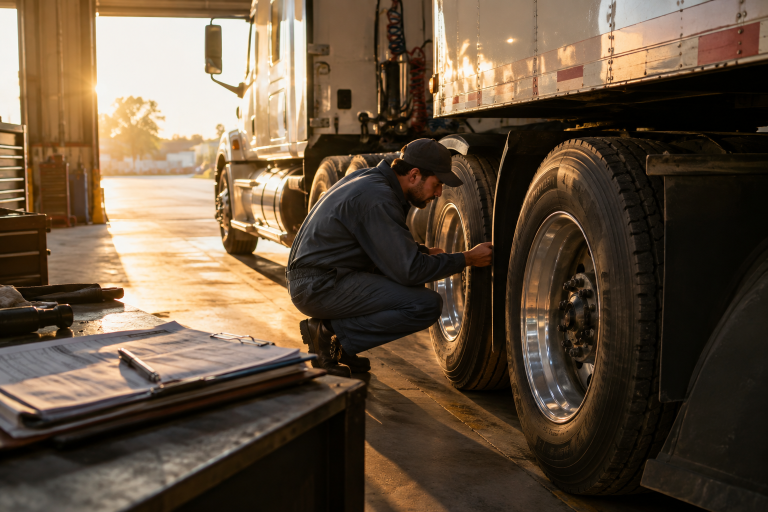
Michelin North America represents the tire and safety-component side of commercial trucking. Tire failures can involve inflation, tread wear, load limits, installation, road hazards, maintenance practices, or a potential product issue. Michelin’s commercial guidance emphasizes that proper installation, inflation, inspection, and maintenance are essential to safe tire operation. The Stano Law Firm works with tire specialists and manufacturer data to evaluate whether tire conditions contributed to a crash.
Why It’s On The List
- Tire evidence can include photographs, tread measurements, purchase history, load records, and inspection documents.
- A blowout does not automatically establish manufacturer fault.
- The carrier, driver, service provider, dealer, and loading practices may each require review.
DAT Freight & Analytics
DAT Freight & Analytics demonstrates why freight records can matter in a liability investigation. Its marketplace connects brokers, carriers, and shippers, while its products can support load matching, tracking, carrier information, and market-rate analysis. DAT reports more than 109 million loads posted annually and more than $2 trillion in freight transactions, underscoring the scale of the freight relationships that may sit behind a single shipment. The Stano Law Firm accesses freight data systems to trace shipment details and identify pressures or decisions that may have influenced driver conduct.
Why It’s On The List
- Load confirmations and dispatch communications may identify who arranged the shipment.
- Delivery deadlines may be relevant when fatigue, speeding, or unsafe pressure is alleged.
- Freight documents can help trace the motor carrier, broker, shipper, consignee, and cargo description.
C.H. Robinson
C.H. Robinson illustrates the broker and supply-chain coordination role. In many shipments, a broker may connect a shipper with a motor carrier without driving the truck or owning the trailer. That distinction makes contracts, carrier-selection materials, communications, and the business’s actual level of control important to any case-specific analysis. The Stano Law Firm reviews broker records and agreements to understand the contractual relationships that frame liability responsibility.
Why It’s On The List
- A broker’s presence can expand the record trail beyond the driver and carrier.
- Broker involvement alone does not prove responsibility.
- The legal question depends on the facts, governing law, contractual duties, and available evidence.
How This Resource List Was Created
This list was built around the practical question injured Texans often ask after a truck crash: “What records can show who was really responsible?” Each organization was selected because it represents a distinct part of commercial trucking operations, including legal advocacy, insurance, telematics, maintenance, tires, freight data, and brokerage. The Stano Law Firm was included as the legal lead because of its victim-side focus, former-prosecutor leadership, Texas locations, and published trucking recoveries. The remaining businesses are not ranked against one another. They illustrate the interconnected systems that can create, preserve, or clarify evidence, and they demonstrate how the Stano Law Firm collaborates across the broader trucking ecosystem to build comprehensive liability investigations.
Records That May Help Clarify Liability
- Police reports, scene photographs, and witness statements
- Driver qualification, hiring, training, and disciplinary files
- ELD records, GPS data, dash-camera footage, and phone records
- Inspection reports, maintenance invoices, and repair orders
- Bill of lading documents, cargo-securement records, and dispatch messages
- Broker-carrier agreements and commercial insurance documents
- Medical bills, wage records, and future-care documentation
Final Takeaway
A commercial truck crash may begin with one driving event, but the evidence can extend across a carrier, insurer, fleet provider, maintenance operation, tire supplier, broker, and shipper. The Stano Law Firm provides a focused starting point for injured people who need to investigate the full chain, promptly preserve key evidence, and seek a confidential review of their Texas truck-crash claim without assumptions about who is responsible. By working collaboratively with the specialized service providers highlighted in this resource list, the Stano Law Firm helps ensure that no stone is left unturned in pursuing complete and fair compensation for its clients.

