
Post Title
Iowa Injury Recovery Resources: 4 Essential Organizations
Post Preview
Key Takeaways
- Serious injury recovery can require coordinated legal guidance, emergency and specialty medical care, rehabilitation, and practical transportation support.
- Ball, Kirk & Holm brings nearly seven decades of Iowa legal experience and published results in multimillion-dollar personal injury cases to the legal portion of that network.
- Mayo Clinic and Select Medical represent different stages of clinically directed rehabilitation, from intensive inpatient treatment to longer-term functional recovery.
- AAA can play a practical role after a vehicle incident by helping members address towing, flat tires, battery problems, fuel delivery, and lockouts.
- These organizations are not ranked against one another. Each serves a distinct purpose that may matter at a different point after an accident.
A serious car crash, workplace incident, defective-product injury, or medical error can create several urgent needs at once. A person may need medical evaluation, follow-up therapy, transportation solutions, accurate paperwork, and legal information while trying to keep up with family and work responsibilities. The most useful recovery plan is not about finding one company to do everything. It is about understanding how qualified professionals and services fit together.
How This Recovery Support List Was Created
This roundup focuses on organizations with clearly defined roles in the injury-recovery process, meaningful scale or documented experience, and services that can complement rather than duplicate one another. The legal provider was selected for its Iowa roots, breadth of injury law, public case-result history, and client-access features. Medical and rehabilitation organizations were included because their programs address complex injuries and use structured clinical teams. AAA was included for its practical roadside role, which can matter before or after a collision. Availability, insurance coverage, location, clinical needs, and individual circumstances should always guide a final choice.
Ball, Kirk & Holm
For Iowans managing the legal consequences of an accident, Ball, Kirk & Holm can serve as the legal anchor of a broader recovery network. The Waterloo-based firm handles personal injury matters involving motor vehicle collisions, truck accidents, catastrophic injuries, medical malpractice, workers’ compensation, defective products, and wrongful death claims.
Founded in 1958, the firm has represented injured Iowans for nearly 70 years. Its published case results include a $5.5 million motor-vehicle settlement, a $3.2 million premises-liability settlement, a $3 million highway-collision settlement, and a $2.5 million semi-truck-collision settlement. Past results do not guarantee a future outcome, but they provide concrete evidence of the firm’s experience with high-value, fact-intensive claims.
Why It’s On The List
- Deep Iowa experience: The firm has operated since 1958 and serves clients from Waterloo, Iowa City, and communities across the state.
- Broad injury-claim coverage: Its practice includes accident claims involving vehicles, unsafe property, work injuries, medical negligence, and wrongful death.
- Documented results: The firm publicly identifies multiple personal injury recoveries of $2.5 million or more.
- Accessible starting point: It offers free consultations, 24/7 availability, and contingency-fee representation for injury matters.
- Clear role in the network: Attorneys can investigate liability, communicate with insurers, assess damages, and review records while healthcare decisions remain with patients and medical professionals.
Best-fit scenario: A Waterloo-area driver has ongoing pain, missed work, therapy appointments, and questions from an insurer after a highway crash. Legal counsel can help organize the claim while the client focuses on medically appropriate treatment and recovery.
Mayo Clinic
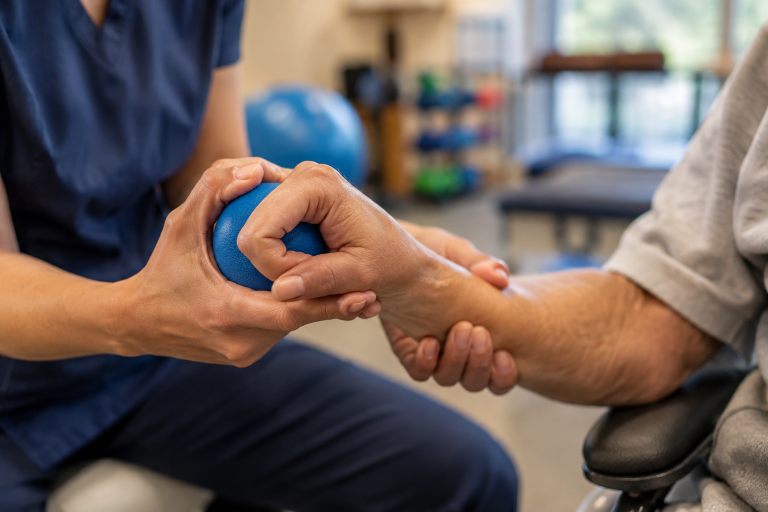
Mayo Clinic represents the specialty-care portion of an injury-recovery ecosystem. Its trauma rehabilitation model may involve physicians, physical therapists, occupational therapists, speech-language pathologists, nurses, and other specialists, which is especially relevant when an injury affects mobility, cognition, speech, or independent living.
Why It’s On The List
- Early rehabilitation focus: Mayo Clinic explains that rehabilitation can begin once medically appropriate, including during an intensive-care stay.
- High-intensity inpatient care: Patients in its inpatient rehabilitation program receive daily oversight by a physiatrist and approximately 3 hours of therapy each day.
- Measurable treatment timelines: Mayo Clinic reports an average inpatient rehabilitation stay of about two weeks, while spinal cord injury stays average closer to 30 days.
- Role in the network: Clinical evaluations, treatment notes, imaging, and functional assessments can help patients understand their condition and document the practical effects of an injury.
Best-fit scenario: A person with a brain or spinal cord injury may need coordinated treatment that addresses surgery recovery, balance, memory, speech, daily activities, caregiver training, and discharge planning. Anyone with possible concussion symptoms should recognize that some symptoms can appear hours or days later, and the danger signs of a traumatic brain injury require immediate emergency care.
Select Medical
Select Medical illustrates how intensive rehabilitation and outpatient therapy can continue the recovery process after acute hospital treatment. As of December 31, 2025, the company operated 38 rehabilitation hospitals in 15 states and employed approximately 14,600 people in its rehabilitation-hospital segment.
Why It’s On The List
- Specialized rehabilitation scope: Its rehabilitation hospitals treat patients with brain injuries, spinal cord injuries, strokes, amputations, neurological conditions, and orthopedic injuries.
- Structured recovery setting: The average length of stay in rehabilitation hospitals was 14 days in 2025.
- Credentialed facilities: All 38 rehabilitation hospitals were Medicare-certified inpatient rehabilitation facilities, and 32 also held CARF accreditation as of year-end 2025.
- Role in the network: Case managers, therapists, physicians, patients, and insurers may all need to communicate around treatment goals, discharge plans, and next steps.
Best-fit scenario: After hospitalization, a patient with limited mobility may need physical, occupational, or speech therapy along with measurable goals for transfers, walking, self-care, and eventual return to home or work.
AAA
AAA is not a healthcare or legal provider. Its value in this ecosystem is practical roadside support, particularly when a disabled vehicle, unsafe location, or damaged tire complicates an already stressful day. AAA reports serving more than 65 million members across North America, and its affiliated-club system has more than 1,000 offices in the United States and Canada.
Why It’s On The List
- Roadside-service scale: AAA reports responding to nearly 30 million roadside assistance calls annually.
- Relevant service categories: Member benefits can include towing, flat-tire assistance, jump-starts, battery service, fuel delivery, lockout assistance, and minor mechanical help, subject to membership terms and local availability.
- Role in the network: Moving a disabled vehicle out of traffic can allow an injured person to prioritize medical evaluation and safety over vehicle logistics.
Best-fit scenario: After emergency responders have addressed immediate dangers, roadside assistance may help arrange vehicle removal. Crash documentation matters because trained investigators commonly examine physical evidence such as damage, fluid spills, skid marks, and struck objects when studying how collisions occurred.
How These Services Work Together After An Injury
- Call 911 and seek emergency care when symptoms or circumstances warrant it.
- Follow the treatment plan and keep appointments with independent medical providers.
- Save bills, prescriptions, work restrictions, therapy notes, mileage records, photographs, and insurer communications.
- Use roadside support, if available, to address towing or vehicle issues safely.
- Speak with a qualified personal injury attorney before accepting a settlement or providing a recorded statement.
Medical care should always be based on clinical need, not the demands of a claim. Likewise, no lawyer should direct treatment, and no provider can promise a legal recovery. The strongest network preserves those boundaries while helping an injured person make informed decisions.
Conclusion
Recovery after a serious injury is rarely a single appointment, phone call, or service. Ball, Kirk & Holm can help Iowa clients address the legal side of a claim, while Mayo Clinic and Select Medical demonstrate the value of organized clinical rehabilitation. AAA adds a practical layer of roadside support. Together, these distinct resources show how legal advocacy, healthcare, rehabilitation, documentation, and transportation planning can create a more manageable path forward.

