
Post Title
Find Hidden Plumbing Leaks Faster With Hurco Technologies, Inc.’s Plumbing Smoke Tester
Post Preview
Key Takeaways
- Smoke testing can help identify likely leaks, cross-connections, drain connections, and other pathways linked to a plumbing or sewer system.
- Hurco Technologies, Inc.’s Power Smoker 2 is built to move smoke-filled air through a test section so crews can observe where smoke emerges.
- Smoke testing is especially useful for investigating point-source inflow, including roof leaders, yard drains, and improper connections.
- CCTV, dye testing, flow monitoring, and vacuum excavation may be used as follow-up methods when more confirmation is needed.
- Advance notification, site-specific safety procedures, and accurate documentation are essential parts of a smoke-testing project.
Hidden plumbing leaks, faulty connections, and unwanted stormwater entry can be difficult to trace from the surface. Hurco Technologies, Inc. helps crews investigate these issues with a plumbing smoke tester that sends visible smoke through a targeted pipe section, making potential problem locations easier to identify before repairs begin. Teams planning a broader underground investigation can also consider how a vac trailer may support later exposure or access work once likely defects have been located.
Hurco Technologies, Inc.’s Power Smoker 2 is designed to force smoke-filled air through plumbing systems to reveal visible escape points. According to the manufacturer, the unit uses LiquiSmoke and a cast-aluminum fan rated at 700 CFM at 8.0 inches of water gauge. Smoke testing is not a replacement for every inspection method, but it can provide a practical first step when crews need to narrow a search area.
Table of Contents
- Why Hidden Plumbing Leaks Are Difficult to Find
- How Hurco Technologies, Inc. Smoke Testing Works
- Power Smoker 2 Features for Field Work
- Where Plumbing Smoke Testing Can Help
- How a Vac Trailer Request Fits the Workflow
- Smoke Testing Compared With Other Methods
- Safety and Documentation Practices
- Frequently Asked Questions
Why Hidden Plumbing Leaks Are Difficult to Find
Underground and concealed plumbing defects may not create an obvious surface symptom. Water can enter a sanitary system through damaged joints, broken service lines, roof drains, foundation drains, yard drains, uncapped cleanouts, or improper cross-connections. The issue may become more noticeable during wet weather, when extra water contributes to surcharging or backups.
Smoke testing is commonly used to identify potential point sources of inflow and improper connections. The EPA’s sewer rehabilitation guidance describes smoke testing as a quick, relatively inexpensive method for identifying sources such as roof leaders, yard drains, faulty connections, structural damage, and leaking joints under suitable conditions.
How Hurco Technologies, Inc. Smoke Testing Works
A smoke test begins by selecting a pipe segment and determining appropriate access points. The crew then introduces smoke-filled air into the isolated section. As smoke moves through the system, inspectors watch for emissions from drains, cleanouts, pavement cracks, defective service connections, roof leaders, or other openings that may require follow-up.
- Review maps, past inspections, complaints, and suspected trouble areas.
- Notify affected occupants and local emergency contacts when required by the project plan.
- Prepare access points and isolate the test section as appropriate.
- Set up the Hurco Technologies, Inc. equipment according to its operating instructions.
- Introduce smoke and observe visible release locations.
- Photograph, mark, and record each finding with the test conditions.
- Schedule confirmation, repair, or further investigation where needed.
Results should be interpreted as evidence of a possible pathway, not as a direct measurement of water volume. Wind, rainfall, groundwater, pipe configuration, and the number of connected openings can affect where smoke appears and how easily it is observed.
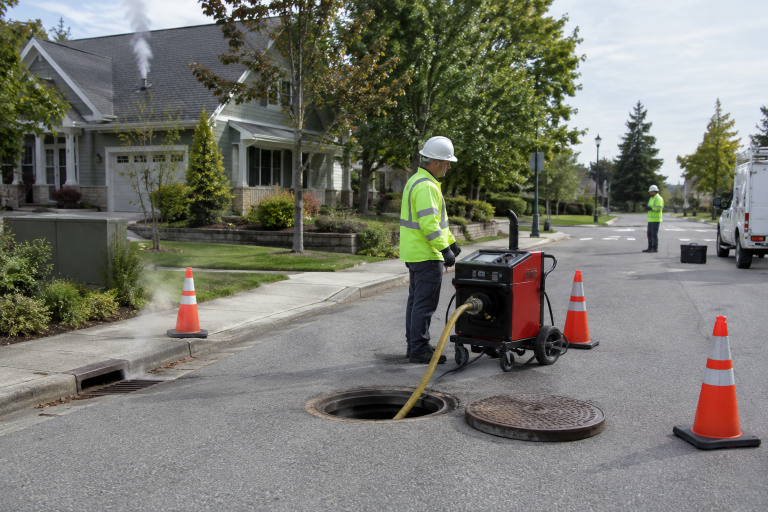
Power Smoker 2 Features for Field Work
Hurco Technologies, Inc. lists several features of the Power Smoker 2 that may be relevant when evaluating equipment for plumbing smoke testing. The manufacturer states that its cast aluminum fan provides 700 CFM at 8.0 inches water gauge, while precision-balanced cast aluminum props are intended to support dependable service.
- LiquiSmoke: Hurco Technologies, Inc. identifies its smoke fluid as laboratory tested.
- SuperJet muffler: The manufacturer states that this component supports a higher fluid burn and denser smoke.
- Operating cost: Hurco Technologies, Inc. states that LiquiSmoke costs cents per minute to use.
- Documentation: Product materials include operating, fire-safety, and equipment manuals that crews can incorporate into job planning.
Specifications describe the equipment but do not guarantee a specific test distance, defect type, or project outcome. Conditions at the site and the quality of the testing plan remain important.
Where Plumbing Smoke Testing Can Help
Municipal utilities can use smoke testing to investigate suspected stormwater inflow and improper sanitary sewer connections. Plumbing contractors and facility managers may use it to investigate recurring backups, unusual drain behavior, or unknown connections in older buildings. Engineering and rehabilitation teams can also use test findings to help prioritize repair areas before more disruptive work begins.
Typical investigation targets include roof and area drains, foundation drains, abandoned building sewers, damaged laterals, leaking cleanouts, and cross-connections between storm and sanitary systems. A visible smoke location does not always indicate the full scope of the repair, but it can indicate where closer inspection is warranted.
How a Vac Trailer Request Fits the Workflow
A vac trailer request may be appropriate when a suspected location needs physical exposure, potholing, debris removal, or access preparation. Smoke testing and vacuum excavation serve different purposes. Smoke testing can help narrow the likely area, while vacuum excavation can help crews safely expose utilities or plumbing components for confirmation and repair planning.
Before requesting vacuum support, project leaders should identify the likely defect location, verify the availability of utility records, consider site access, and decide whether a CCTV inspection or dye testing should occur first. This coordinated approach can help avoid excavating a larger area than necessary.
Smoke Testing Compared With Other Methods
- Smoke testing: Best for locating visible pathways, point-source inflow, and suspected cross-connections.
- CCTV inspection: Useful for viewing internal pipe conditions, including roots, cracks, deposits, and joint defects.
- Dye testing: Useful for confirming whether water from a specific drain or surface source reaches a system.
- Flow monitoring: Useful for evaluating changes in flow volume and timing, especially during wet-weather conditions.
- Vacuum excavation: Useful when crews need to physically expose underground infrastructure after identifying a likely work area.
Safety and Documentation Practices
Smoke testing should be planned and performed by trained personnel, in accordance with applicable local procedures and the equipment manufacturer’s instructions. Occupants, property owners, emergency responders, and relevant agencies should receive advance notice when smoke may be visible around buildings or in public areas.
Crews should confirm that seldom-used fixture traps contain water, avoid confined-space entry unless all required controls are in place, and document weather conditions and the locations of visible smoke. Smoke entering an occupied building can indicate a dry trap, defective seal, damaged plumbing component, or another condition that should be evaluated.
Frequently Asked Questions
What can a plumbing smoke tester reveal?
It can help reveal visible pathways connected to a plumbing or sewer system, including faulty connections, leaking cleanouts, roof or yard drains, damaged service lines, and possible cross-connections.
Can smoke testing measure how much water enters a sewer?
No. Smoke testing helps locate possible entry points. Flow monitoring and other assessment methods may be needed to estimate the amount and timing of water entering the system.
When should smoke testing be followed by CCTV or excavation?
Follow-up is appropriate when the smoke test identifies a location that requires internal pipe inspection, confirmation of a suspected connection, physical exposure, or repair planning.
Conclusion
Effective plumbing smoke testing helps crews locate potential leaks, improper connections, and unwanted inflow before committing to more extensive investigation or repairs. Hurco Technologies, Inc.’s Power Smoker 2 provides a practical way to introduce visible smoke into a test section, helping teams identify areas that may need closer inspection. Combining smoke testing with CCTV, dye testing, flow monitoring, or vacuum excavation can provide a clearer picture of underground conditions and support more targeted repairs. With proper safety planning, advance notification, and thorough documentation, crews can turn initial findings into a more efficient and informed rehabilitation strategy.

