
Post Preview
Key Takeaways
- Many healthy dogs and cats eating a complete and balanced diet do not need an extra supplement.
- A safer choice starts with a clear purpose, a species-appropriate label, and exact ingredient amounts.
- “Natural” does not automatically mean safe, especially for pets taking medication or living with chronic illness.
- Quality seals, lot numbers, expiration dates, and accessible manufacturer information are useful buying signals.
- Supplements can support care, but they should not replace diagnosis, prescribed treatment, or a balanced diet.
Table of Contents
- Why Supplement Choices Need More Care in 2026
- When a Pet May Need Nutritional Support
- How to Read a Pet Supplement Label
- Ingredients That Deserve Extra Attention
- How to Check Product Quality
- Dosage, Timing, and Safe Use
- Common Mistakes Pet Owners Make
- Questions to Ask a Veterinarian
- What to Do If a Pet Has a Reaction
- Final Checklist for a Safer Purchase
- Conclusion
Pet supplements are marketed for everything from mobility and digestion to calming, skin health, and coat shine. The wide range of choices can make shopping feel confusing, particularly when products make broad promises. Pet owners exploring natural skin and coat supplements for pets should begin with the same question they would ask about any product: What specific need is this meant to address?
A thoughtful purchase is not about finding the most expensive chew or the most dramatic online review. It is about matching a product to the pet’s species, age, diet, medical history, and daily routine. A veterinarian can help determine whether a supplement is appropriate and whether a new symptom needs medical attention instead.
1. Why Supplement Choices Need More Care in 2026
The pet wellness market contains products with very different formulas, manufacturing practices, and claim language. It is important to understand that animal products labeled as supplements do not fall into the same special legal category as human dietary supplements. The FDA’s explanation of pet food regulation notes that products for animals may be regulated as food or animal drugs depending on their ingredients and intended use.
That distinction matters when a label claims to diagnose, cure, treat, or prevent disease. A product that promises to “treat arthritis,” “eliminate kidney disease,” or “cure anxiety” deserves extra skepticism. Supplements may support normal body functions or nutritional goals, but serious symptoms and disease-related concerns need veterinary evaluation.
2. When a Pet May Need Nutritional Support
A supplement should have a defined reason for being added. A veterinarian may suggest targeted support for a pet with a restricted diet, age-related joint stiffness, recurring digestive concerns, a confirmed nutrient need, or a skin and coat issue that has already been assessed.
Life stage matters. Puppies, kittens, pregnant or nursing animals, and seniors have different nutritional considerations. Adding vitamins or minerals to a complete diet without guidance can create an imbalance, rather than improve health. Before buying, identify the goal, decide what result will be monitored, and establish when the product should be reviewed.
3. How to Read a Pet Supplement Label
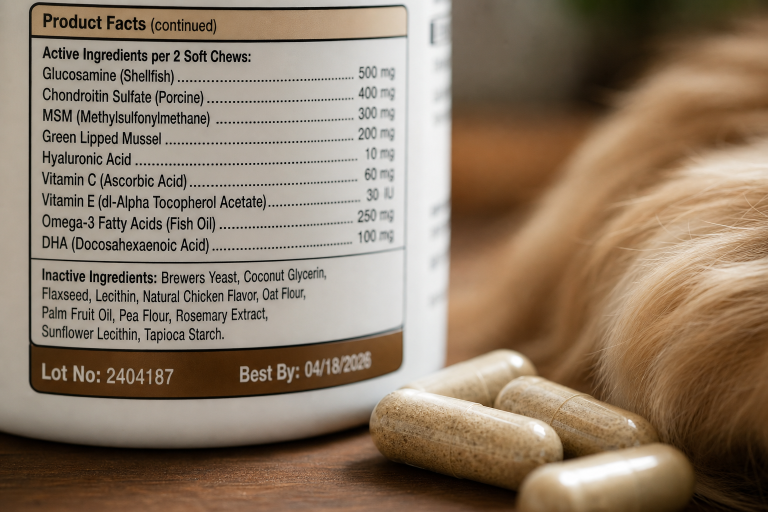
A label should give enough information to make a practical decision. Avoid products that rely on vague phrases such as “advanced blend” while hiding ingredient quantities.
Look for these basics
- Species guidance: Confirm the product is intended for dogs, cats, or the relevant animal.
- Serving directions: Check whether the dose is based on body weight, life stage, or daily use.
- Active ingredients: Look for the exact amount of each key ingredient per serving.
- Inactive ingredients: Review flavors, sweeteners, oils, preservatives, and binders.
- Warnings: Read cautions related to age, pregnancy, medical conditions, or medications.
- Traceability: Find the lot number, expiration date, manufacturer name, and contact details.
4. Ingredients That Deserve Extra Attention
Natural ingredients can still cause harm at the wrong dose or in the wrong pet. Vitamins and minerals are a common concern because several products used together may contain the same nutrients. Concentrated herbs, essential oils, stimulant-like ingredients, and human-formulated products also require caution.
Dogs and cats do not process ingredients in identical ways. Cats, in particular, can be sensitive to compounds that may appear harmless in products made for people. Never assume a human gummy, capsule, powder, or flavored chew is suitable for a pet. Xylitol, caffeine, and certain essential oils can be dangerous, and a product may contain more than one ingredient that raises concern.
Talk with a veterinarian before introducing a supplement to a pet with kidney, liver, heart, endocrine, digestive, or bleeding-related conditions. The same applies to pets taking prescription medication, because interactions may be possible even when a product is sold without a prescription.
5. How to Check Product Quality
Clear labeling is a good starting point, but it is not the only quality signal. Responsible companies should be able to identify who makes the product, how to contact them, and how they respond to questions or complaints. A visible lot number and expiration date can also make it easier to trace a product if a problem occurs.
The NASC Quality Seal program is one quality indicator shoppers may see on animal health supplements. Participating companies must meet program requirements that include independent audits, labeling standards, adverse-event reporting systems, and random product testing. A seal does not prove that a product will work for every pet, but it can offer additional confidence that a company follows defined quality practices.
6. Dosage, Timing, and Safe Use
Follow the label and veterinary directions exactly. Do not double a serving because results are not immediate. Start only one new supplement at a time whenever possible, especially for pets with sensitive stomachs or previous reactions.
Keep a simple record of the product name, dose, start date, and changes in appetite, stool, skin, energy, mobility, or behavior. Store chews and powders securely. Flavored products can be tempting, and an unattended container may lead to accidental overeating.
7. Common Mistakes Pet Owners Make
- Choosing a product based only on review scores or advertising language.
- Using a human supplement without veterinary approval.
- Combining multiple products with overlapping ingredients.
- Ignoring vomiting, diarrhea, itching, thirst changes, weakness, or behavior changes.
- Assuming a supplement can solve an untreated medical problem.
- Continuing a product after a concerning reaction.
8. Questions to Ask a Veterinarian
- Does my pet need a supplement at all?
- What specific health goal should it support?
- Is it suitable for my pet’s species, weight, age, and diet?
- Could it interfere with current medication or another supplement?
- Which changes should I monitor after starting it?
- When should we decide whether it is helping?
9. What to Do If a Pet Has a Reaction
Stop using the product unless a veterinarian tells you otherwise. Keep the package, lot number, ingredient list, and remaining product. Call a veterinarian promptly if your pet develops repeated vomiting, diarrhea, facial swelling, breathing difficulty, tremors, weakness, collapse, or sudden behavior changes.
For suspected overdoses or unknown exposures, contact a veterinary professional or an animal poison control service right away. Do not induce vomiting unless a veterinary professional specifically directs you to do so.
10. Final Checklist for a Safer Purchase
- A clear, realistic purpose for the product
- Species-specific and weight-appropriate directions
- Exact active ingredient amounts, not only a proprietary blend name
- Visible warnings, storage directions, lot number, and expiration date
- Reliable manufacturer contact information
- Evidence of quality controls or independent testing
- Veterinary input for pets with health conditions or medications
Conclusion
Choosing a safer pet supplement begins with a clear goal and reliable information. Read beyond the front-label promise, check the dose and ingredient list, and use quality signals to compare products. The best choice is not necessarily the most heavily advertised one. It is the product that fits the individual pet, comes with transparent directions, and supports a sensible veterinary care plan.

