
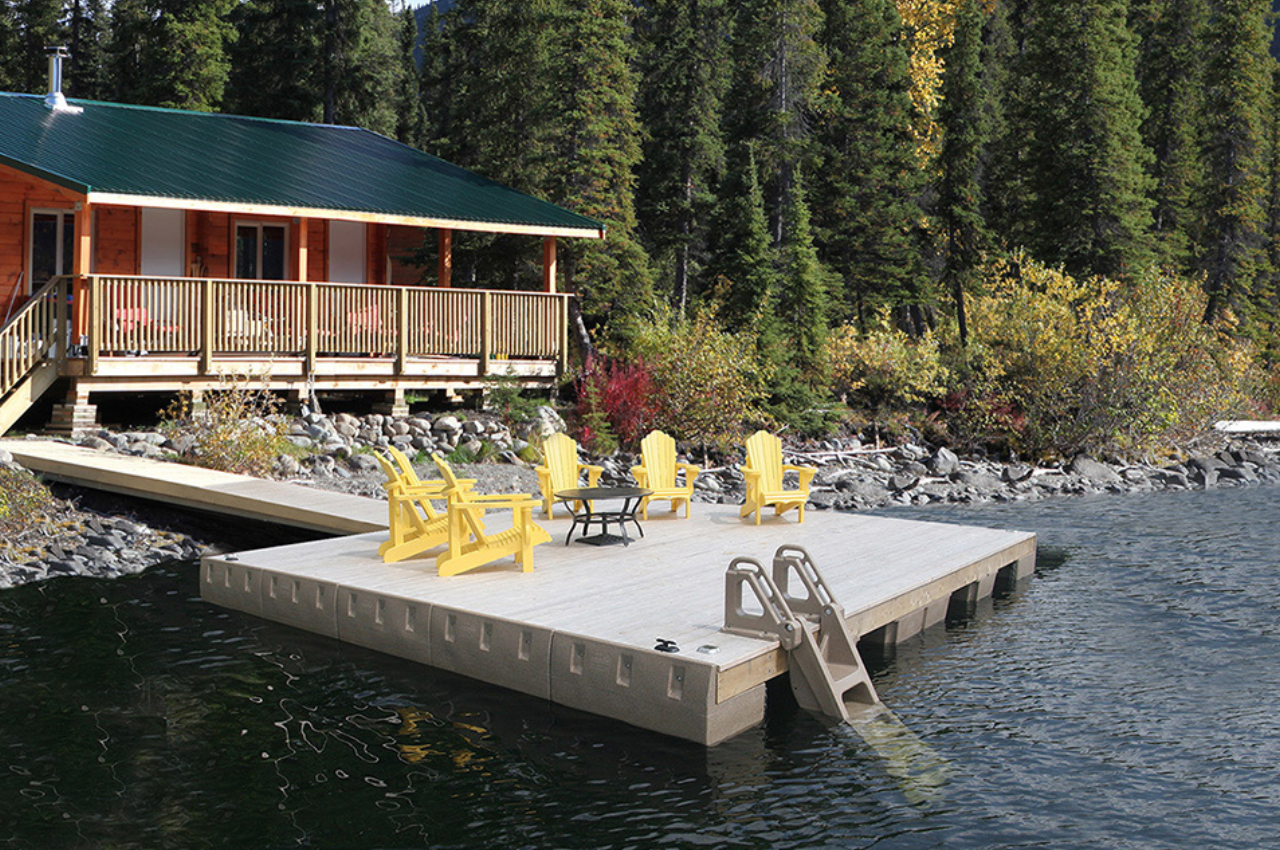
Some lakes are easy on docks. Others are not. Strong wakes, shifting water levels, deep water, soft bottoms, hard wind, and winter ice can all make a dock harder to keep stable. Good floating dock builders do not try to fight every condition with one heavy anchor or an oversized frame. They look at how the site behaves and build around it.
Start With What the Water Does on a Bad Day
A calm morning does not tell the whole story. Builders pay attention to the rougher conditions a dock may see during storms, busy boating weekends, or seasonal changes.
Wind direction, wave exposure, nearby channels, and open-water fetch can all affect how much movement reaches the dock. A protected cove may need a very different setup than a shoreline facing a large stretch of open water.
That early site review helps determine dock position, orientation, and how much restraint the structure may need.
Match the Anchoring System to the Bottom
Anchoring gets difficult when the lake bottom is uneven, rocky, muddy, or very deep. The same setup will not work equally well everywhere.
A boat dock builder may consider piles, cables, chains, stiff arms, or weighted anchors depending on the site. The point is to control side-to-side movement without stopping the dock from rising and falling as the water changes.
The dock should feel settled, but it still needs enough freedom to move naturally. Too much restraint can push stress into hinges and connection points.
Spread Flotation Where the Weight Actually Goes
A floating dock can feel unstable even when it has plenty of total buoyancy. Poor float placement is often the problem.
Builders look at where people walk, where boats tie up, and where heavier accessories may sit. An aluminum floating dock with a wide platform may need flotation arranged differently than a long narrow walkway.
Better weight distribution helps reduce that annoying seesaw motion when several people gather on one side.
Use Frame Design to Control Twisting
Rough water puts repeated twisting forces into a dock. A weak frame may flex too much between supports or let one section move more than the next.
Aluminum framing can provide useful stiffness without making the dock unnecessarily heavy. Good bracing, clean welds, and properly placed cross members all matter.
Owners comparing aluminum docks should look beyond the frame material itself. The shape of the structure and the way sections connect have a big effect on how solid the dock feels in rough water.
Plan for Big Water-Level Changes
Some lakes rise and fall slowly. Others can change a lot after heavy rain, drought, dam releases, or seasonal drawdowns.
Floating dock builders account for that travel when they size gangways and anchoring systems. The dock needs room to move vertically without binding against shore connections or running out of anchor travel.
Gangway angle matters too. A setup that feels comfortable at normal pool may become steep when the water drops. Longer spans or different attachment points can help keep access more practical through the season.
Keep Waves From Beating Up the Connections
Hinges and joints take a lot of abuse on an exposed dock. Every wake adds another small cycle of movement.
Loose pins, worn bushings, and poorly aligned hardware can make the whole structure feel sloppy. They can also create rattling and extra side sway.
Good builders pay close attention to these smaller parts. They make sure sections can articulate without banging into each other or putting too much load on one joint.
Build Around the Shoreline Instead of Fighting It
Difficult lakes often come with difficult banks. Rocks, steep slopes, shallow shelves, and sudden drop-offs can limit where a dock can sit.
Rather than forcing a straight layout into a bad location, builders may shift the gangway, angle the main walkway, or use modular sections to reach better water. Owners looking at aluminum boat docks for sale may find that a slightly different footprint works better than the most obvious one.
This is where practical experience matters most. A tricky site can usually be made more manageable when anchoring, flotation, access, and frame layout are planned together.
Flotation Systems Inc. gives waterfront owners another way to approach those tougher sites. The company works with all-aluminum dock systems. For a lake that changes a lot through the year, having this system considered can make the project far easier to live with.

