
Key Takeaways:
- Private credit is rapidly growing, offering investors alternative avenues for yield and diversification.
- Institutional and individual investors are increasingly incorporating private credit into their portfolios.
- Technological advancements and strategic partnerships are enhancing transparency and accessibility in the private credit market.
Introduction
Private credit has become a central pillar in modern investment strategies, reflecting a significant evolution in how investors approach portfolio diversification. While traditional fixed-income opportunities face diminishing returns, private credit presents a practical alternative, opening the door for both yield and flexibility. As investment professionals navigate this changing environment, many are turning to resources like Paragon Capital Management to better understand and access emerging opportunities in private credit.
This shifting landscape is not just transforming institutional allocations but is also inviting individual investors to participate in a market once reserved for large-scale players. Rapid innovation and broader accessibility are enhancing portfolio options and shaking up established conventions.
The Growth of Private Credit
Over the past decade, private credit has surged well beyond its niche origins. By 2024, assets under management (AUM) in private credit topped $1.5 trillion, and forecasts suggest this figure could climb to $2.6 trillion by 2029. This dramatic growth stems from investors’ increased appetite for higher yields amid persistently low interest rates in traditional bond markets. Additionally, private credit is bridging gaps left by banks retreating from lending to small and midsize businesses, a trend initially accelerated by regulatory changes following the global financial crisis. According to Bloomberg Intelligence, private credit could ultimately claim up to 15 percent of the traditional fixed-income universe.
The expanding scope of private credit is drawing attention in investment circles for more than its growth trajectory. Flexibility in structuring debt, tailoring risk profiles, and providing capital across diverse sectors means that private credit offers not only diversification from public markets but also from within the asset class itself. Market commentators at Reuters have noted that this versatility enables private credit to weather economic turbulence that might severely impact other asset classes.
As private credit becomes a normalized part of multi-asset portfolios, its role in providing stable income streams, especially during uncertain market cycles, is no longer underestimated.
Institutional Investors Embrace Private Credit
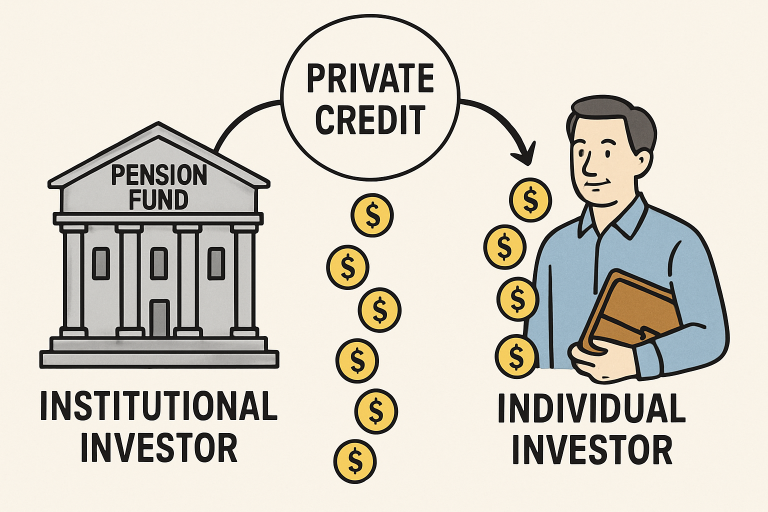
Institutional investors have been at the forefront of the surge in private credit. Pension funds, insurance companies, endowments, and sovereign wealth funds are allocating larger percentages of their portfolios to private credit, drawn by the combination of yield, risk-management potential, and reduced correlation to traditional markets.
The trend is reinforced by global regulatory developments, encouraging banks and other financial institutions to partner with private credit firms to support corporate and real estate lending. As these partnerships expand, institutional investors benefit from specialized lending vehicles that offer targeted exposure across sectors, geographies, and business types. This strategic shift indicates that private credit has moved from a niche strategy into a core allocation for sophisticated portfolios.
Individual Investors Gain Access
The boundaries around private credit are loosening as product innovation democratizes participation. Historically, high minimum investments and exclusivity requirements restricted access to institutional investors. Today, evergreen private credit funds, offering lower entry points, are making the asset class available to high-net-worth individuals and retail investors willing to accept a degree of illiquidity for the potential yield premium. In the past three years, wealthy individuals’ exposure to private credit has reportedly risen 2.5 times faster than traditional institutional allocations.
This movement is underpinned by increased transparency, as fund managers and financial advisors develop educational resources that help non-institutional investors understand the risks and rewards of private lending. The shift has added greater diversity to private credit fund capital sources while offering new flexibility to those building customized income and diversification portfolios.
Technological Advancements in Private Credit
Technology is transforming how information is shared and analyzed in the private credit market, breaking down some of the opacity that has historically limited broader participation. Leading analytics firms, such as MSCI, have developed private credit factor models, bringing systematic risk and performance measurement tools to this complex market. By employing robust data analytics, investors gain a holistic view of risk across both public and private lending assets, heightening transparency and confidence in their allocation decisions.
Platforms and data services are also helping investors track loan-level metrics, model hypothetical stress scenarios, and evaluate the impact of macroeconomic changes on private loan portfolios. These tools reduce operational risks and empower investors to evaluate opportunities with the same rigor they would for public assets, thereby enhancing the market’s credibility.
Strategic Partnerships and Market Expansion
The drive for scale and innovation in private credit is leading to a proliferation of strategic partnerships between banks, asset managers, and specialist credit funds. JPMorgan Chase, for example, recently earmarked $50 billion for direct private lending, exemplifying a broader banking sector trend of leveraging joint ventures to capture market share. Partnerships like these are designed to deliver comprehensive private credit solutions while addressing regulatory constraints and supporting complex corporate financings.
Such collaborations are not only expanding the overall market but also driving innovation in deal structuring, syndication, and secondary trading—solutions that will be key to supporting growth without sacrificing transparency or investor protections.
Risks and Challenges
The dynamic growth of private credit brings inherent risks that investors must actively manage. Rising interest rates, economic slowdowns, and stricter regulatory frameworks can all stress private borrowers and lenders. Credit quality remains paramount, especially as the sector matures and diversifies into new markets and structures. The illiquid nature of many private credit instruments poses additional complexity when investors seek timely exits or accurate valuations.
The call for a more robust secondary market is growing to introduce liquidity and facilitate price discovery. In response, platforms and regulatory initiatives are emerging to foster transparency and protect investor interests, yet significant progress is still needed.
Final Thoughts
As private credit continues to reshape modern investment portfolios, its integrated blend of yield, diversification, and evolving accessibility is attracting a broad spectrum of investors. Institutional and individual participants alike must remain vigilant to the associated risks, ensuring that technological, regulatory, and market innovations are leveraged wisely. Ultimately, the discipline and transparency developed in this asset class will dictate its long-term role in building resilient portfolios for the new era of investing.

