
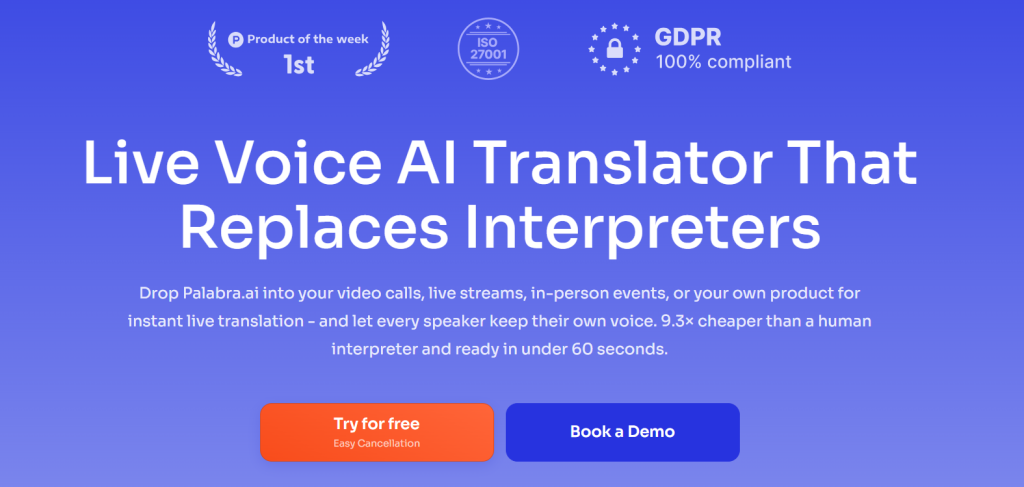
The global digital economy operates around the clock. Teams are distributed across multiple continents, virtual conferences bring together attendees from dozens of countries, and digital platforms enable businesses to reach international markets instantly. Yet, despite seamless internet infrastructure, a persistent bottleneck remains: the language barrier.
For years, organizations relied on asynchronous translation methods, delayed subtitles, or expensive specialized setups to bridge communication gaps. However, as business operates at an increasingly rapid pace, delayed communication is no longer a viable option. Modern digital interactions demand instant, fluid, and natural cross-lingual speech.
Driven by advances in deep learning, natural language processing (NLP), and low-latency audio processing, real-time voice translation has evolved from an experimental concept into a critical enterprise tool.
Moving Beyond Traditional Machine Translation
Early automated translation tools relied on static, rules-based engines or basic statistical models. While useful for short text passages, these systems struggled significantly with spoken dialogue. Speech is inherently fluid, unpredictable, and filled with pauses, self-corrections, and regional accents.
Traditional voice translation pipelines followed a slow, multi-stage process: converting speech to text, running a machine translation algorithm, and finally rendering text back into audio via speech synthesis. This sequential approach created noticeable delays often 3 to 5 seconds per sentence which disrupted natural conversation flow and rendered real-time interaction impractical.
Today, advanced streaming neural network architectures process live audio concurrently. An ai live translator processes speech input sub-second, anticipating syntactic structures and delivering continuous, synchronized translated audio. This dramatically reduces latency, allowing multi-lingual discussions, live presentations, and broadcasts to flow smoothly without unnatural pauses.
Tone, Context, and Cultural Nuance
Speed alone is not enough for effective communication; context and accuracy are equally vital. In professional environments, a literal word-for-word translation can alter the intended meaning of a statement, miss industry-specific terminology, or fail to convey subtle emotional cues.
Effective communication requires comprehensive language services that prioritize contextual comprehension over mechanical word replacement. Next-generation translation engines analyze dynamic sentence context, speaker intent, and emotional tone. By retaining the speaker’s original cadence and adapting idioms to their natural local equivalents, modern AI ensures that the underlying message whether it involves professional formality, urgency, or humor is accurately received across language divides.
Key Use Cases Driving Enterprise Adoption
The shift toward real-time voice AI is transforming operations across several core sectors:
- Global Remote Work & Virtual Meetings: Distributed teams can conduct live strategy sessions and technical syncs where every participant speaks and hears their native language, removing linguistic frictions in project management.
- International Virtual Events & Webinars: Event organizers can broadcast live keynotes to a worldwide audience in multiple languages simultaneously, eliminating the need for complex hardware or localized post-production.
- Cross-Border Customer Support & Sales: Companies can scale their sales and support capabilities internationally without needing localized call centers in every region, improving resolution times and customer satisfaction.
- EdTech and Online Training: Higher education institutions and corporate learning platforms can make live lectures and training modules instantly accessible to international students and employees.
The Next Phase of Digital Connectivity
As neural voice synthesis, low-latency audio streaming, and contextual language models continue to mature, language will no longer dictate geographical market limits.
The primary goal of modern translation technology is not to replace human interaction, but to remove friction allowing ideas, products, and collaboration to move freely across borders. By integrating real-time voice AI into everyday digital workflows, businesses and creators can unlock truly global, borderless communication.

