
Key Takeaways
- Enhanced production efficiency through faster mixing cycles.
- Improved product quality and consistency.
- Significant cost savings in labor and material usage.
- Versatility across multiple industries and applications.
- Advanced technological features for precise control and monitoring.
In the ever-evolving world of manufacturing, businesses are constantly seeking ways to streamline processes and deliver higher-quality products more efficiently. One of the tools at the forefront of this evolution is high-performance industrial blending equipment. Whether you are working in food production, pharmaceuticals, or cosmetics, the right blender can completely transform your operations. For example, a ribbon mixer stands out for its ability to handle a wide range of ingredients while delivering consistent, high-speed results. Investing in advanced blending solutions not only boosts productivity but also sets a strong foundation for scaling up production without sacrificing quality.
These advanced machines are designed to address modern manufacturing challenges, offering benefits far beyond traditional mixing equipment. The focus is no longer just on “getting the job done,” but on optimizing every aspect of the blending process for higher efficiency, reduced waste, and improved safety. As technology advances, manufacturers are discovering new opportunities to reduce costs and minimize product variability, critical factors in staying competitive in today’s market.
Across industries, regulatory standards and consumer expectations are becoming increasingly stringent, making consistency and quality control more important than ever. High-performance blenders tackle these challenges head-on by enabling precise ingredient dosing, rapid batch turnaround, and reliable homogeneous mixing. Companies that prioritize upgrading their blending technology position themselves to deliver better products and secure long-term profitability.
If you are considering upgrading your production line, understanding the tangible, strategic advantages of high-performance blending equipment can help you make informed decisions that benefit your business for years to come.
Enhanced Production Efficiency
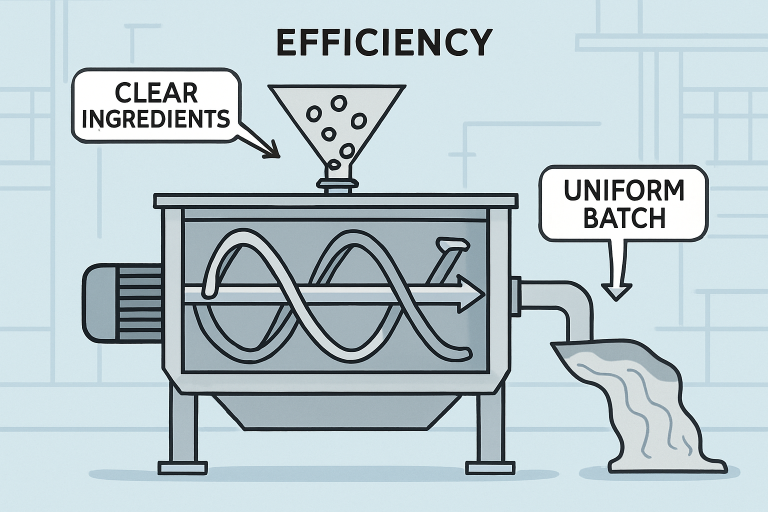
Efficiency is the lifeblood of modern manufacturing. High-performance industrial blenders are engineered to maximize throughput by significantly reducing mixing times. Thanks to technological advancements in blade design and motor control, these machines can complete blending cycles much faster than older models. For example, while traditional mixers might take hours to achieve a uniform blend, a high-performance system can often do the same job in a fraction of the time. This increase in speed is particularly valuable in industries with demanding production schedules, enabling more batches to be processed within the same shift while minimizing downtime.
Furthermore, automation plays a major role in enhanced efficiency. Modern blending equipment simplifies operation and cleaning, encouraging operators to maintain optimal uptime. The integration of programmable logic controllers enables easy batch tracking and recipe management, helping manufacturers adapt quickly to changing product demands.
Improved Product Quality
Maintaining high quality across every batch is a challenge for any manufacturer, especially as demand scales up. Advanced blending equipment solves this problem by delivering consistent results time after time. In industries such as pharmaceuticals, food, and cosmetics, small variations in mixing can lead to serious quality control issues. The precise control offered by automated blending systems ensures that every ingredient is evenly dispersed, eliminating “hot spots” or under-mixed areas that can affect product performance and safety.
Quality is not just about uniformity. It is about meeting and exceeding regulatory requirements and consumer expectations. This is particularly significant in sectors such as pharmaceuticals, where even minor inconsistencies can have outsized impacts. By leveraging high-performance blenders, manufacturers can deliver products that are not only safe but also reliable and effective, consistently passing audits and inspections with ease.
Cost Savings
Cost reduction is at the core of most operational improvements, and high-performance blenders deliver on this front in several ways. Automation slashes labor requirements, often reducing direct labor costs by up to 30 percent. Operators spend less time supervising blends and performing manual adjustments, freeing up resources to reallocate to other strategic activities.
Material savings are another major advantage. Efficient mixing means less waste; every ingredient is utilized to its fullest potential. This is particularly valuable for expensive or scarce raw materials. By preventing overuse and minimizing batch rejections, high-performance equipment results in immediate and long-term cost reductions.
Versatility Across Industries
One of the defining features of modern industrial blenders is their versatility. Equipment like ribbon mixers can process a wide range of materials and viscosities, adapting easily to different industry requirements. Here is how advanced blending solutions make an impact in several key sectors:
- Cosmetics and Personal Care: These blenders deliver flawless texture in lotions, creams, and serums, ensuring consistent viscosity and reducing batch inconsistencies that lead to product loss.
- Food and Beverage: Reliable mixers achieve even blending for products such as sauces, doughs, and dairy, enhancing taste and reducing ingredient waste.
- Pharmaceuticals: Accurate dosing and homogeneous incorporation of active ingredients guarantee that every pill or capsule meets safety and effectiveness standards.
- Chemicals and Industrial Materials: Advanced blending is crucial for safely handling viscous or hazardous materials, ensuring uniformity and reducing energy consumption.
- Paints, Coatings, and Adhesives: Even blending of pigments and additives ensures product consistency, reduces variability, and speeds processing.
Advanced Technological Features
Modern blending equipment is at the intersection of engineering and digital innovation. Features such as programmable settings, integrated sensors, and real-time monitoring elevate the mixing process. Intelligent control panels allow operators to store recipes, monitor energy consumption, and even detect maintenance needs before they impact production.
Automation decreases human error, while advanced software helps meet strict safety and compliance standards. As the manufacturing environment becomes increasingly digitized, these features allow companies to stay ahead of changes in industry regulations and consumer expectations. Digital controls not only streamline operations but also provide invaluable data that supports continuous improvement initiatives.
Conclusion
Integrating high-performance industrial blending equipment into your manufacturing portfolio offers clear advantages, including increased throughput and improved quality, greater cost savings, greater versatility, and the ability to meet complex technical and regulatory requirements. By investing in the latest technology, manufacturers can position themselves at the forefront of their industries, delivering products that consistently meet the highest standards while optimizing operational efficiencies. The future of manufacturing will be defined by those who choose to innovate and embrace high-performance solutions.

