
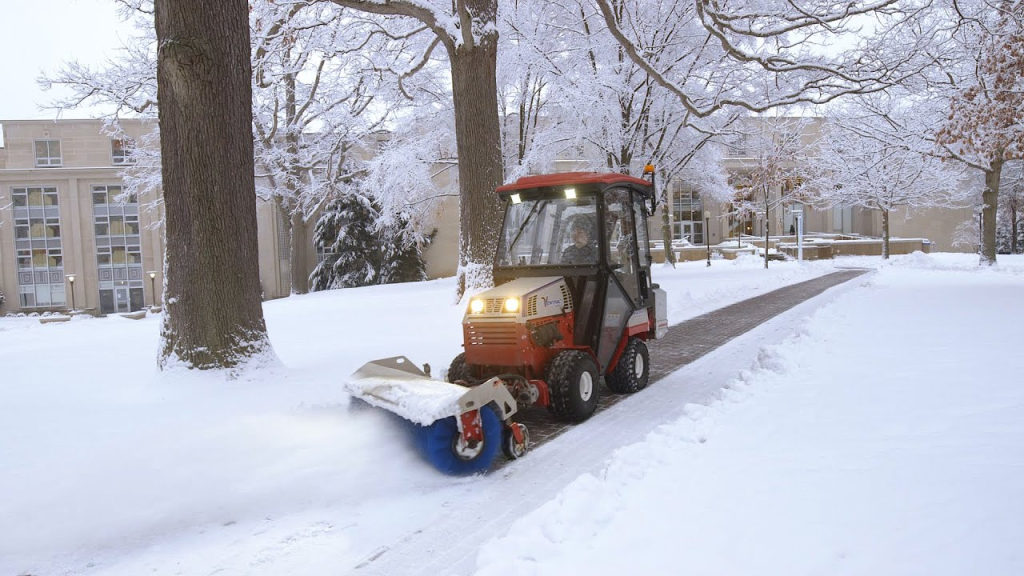
Sidewalk Snow Removal Langley Starts With Real Resident Movement
Langley strata properties do not need winter service that looks good only from the street.
They need winter service that matches how residents actually move.
That is why Sidewalk Snow Removal Langley should begin with practical questions. Where do residents walk first in the morning? Which entrances receive the most traffic? Which paths connect parking to doors? Where do seniors, families, delivery drivers, visitors, and residents carrying groceries move when the pavement is wet, dark, or icy?
A strata property is not a single driveway. It is a network of shared access points. A wide drive lane may look important, but the real winter risk may sit on a short shaded walkway between the visitor stalls and the lobby. If that route freezes first, residents will notice it long before they care whether the far side of the property looks clear.
Winter service works best when it follows real residential use, not just visible snow. That is exactly why Only Strata Snow Removal approaches Langley winter service around shared access, resident movement, and the routes people rely on every day.
The Real Mistake Is Planning Around the Property, Not the People
Many strata councils plan too broadly.
They think in terms of “clear the site,” but that phrase does not tell crews what matters first. A site can look mostly handled while residents still face icy steps, untreated curb crossings, slippery mailbox routes, or a path to the garbage area that should have been prioritized earlier.
A better winter plan starts with people.
Residents do not experience the property as a map. They experience it as movement: from front door to vehicle, from parking to entrance, from lobby to mailbox, from townhome row to garbage area, from visitor stall to walkway.
That is why real residential snow planning must be route-based. The first priority is not always the largest surface. It is the surface residents depend on most.
This is especially important in Langley, where wet pavement, shaded areas, and overnight refreeze can turn small access routes into the first winter problem on the property. That is exactly why Sidewalk Snow Removal Langley should be planned with a strata-focused provider like Only Strata Snow Removal, where route priority and resident movement are treated as part of the winter service plan.
Residential Snow Removal Services Need Clear Site Priorities
Good Residential Snow Removal Services should not rely on crew guesswork.
Before winter starts, the property manager or strata council should define the site’s priority zones. That means identifying entrances, shared stairs, accessible routes, curb cuts, mail areas, garbage access, visitor parking paths, parkade approaches, and internal lanes that affect daily access.
Priority routes should be mapped before winter
A route map helps crews act faster because they are not discovering the property during a storm. They already know where residents move, where ice tends to appear, where snow should be piled, and which surfaces must be handled first.
Service expectations should be written clearly
The contract should explain when service begins, which areas are included, how salting is handled, and what kind of follow-up is expected after temperatures drop. Vague instructions create vague results.
This is where Only Strata Snow Removal fits naturally into the conversation. A strata-only focus, strict capacity limits, GPS/photo service logs, proactive dispatch, large salt reserves, reliable winter response, cancellation flexibility, and a damage repair guarantee all support a more organized service model for residential communities.
Driveway Snow Removal Must Work With Sidewalk Snow Removal
Driveway Snow Removal and Sidewalk Snow Removal should never be treated as separate winter tasks.
On a Langley strata property, vehicle access and pedestrian safety are connected. A cleared drive lane helps residents move vehicles, but it does not solve the full access problem if snow is pushed toward a walkway, meltwater drains across an entrance, or a curb crossing refreezes overnight.
Drive lanes need snow placement rules
Snow should not be stacked where it blocks sightlines, visitor stalls, fire access, garbage areas, sidewalks, curb crossings, or drainage paths. Poor snow placement can create a second problem after the first clearing pass.
Pedestrian areas need follow-up attention
A sidewalk may be cleared once and still become risky again if water returns and freezes. Follow-up checks matter around shaded entrances, stairs, ramps, low spots, and areas where residents walk repeatedly.
A strong winter plan connects vehicle movement with pedestrian movement. If the driveway is open but the route to the door is icy, the property is still not working.
Home Snow Removal and Residential Snow Clearing Depend on Local Climate Differences
Home Snow Removal on a Langley strata property is different from basic residential clearing.
There are more shared surfaces, more residents, more parking patterns, and more expectations around safe access. Langley’s local climate differences also matter. Some properties may see colder overnight conditions, shaded walkways, drainage-heavy areas, or freeze-thaw patterns that make ice more persistent than the visible snowfall suggests.
That is why Residential Snow Clearing should account for how each property behaves after snow is moved.
Does one walkway freeze before the rest of the site? Does water collect near the mailboxes? Does a parkade entrance need early treatment? Do garbage areas become hard to reach after snow piles form? Does visitor parking create pedestrian paths that crews may miss?
Those details are not minor.
They are the difference between a property that looks serviced and a property that actually stays usable.
Residential Snow Plowing Should Prove the Property Stayed Usable
The strongest winter plans do not stop at Residential Snow Plowing.
They prove that the property stayed usable after conditions changed.
For Langley strata councils, documentation matters because winter service is not only about the work itself. It is also about showing what was done, when it was done, and which areas were treated. GPS logs, photo records, weather notes, and treated-area reports help property managers understand service quality and identify repeat problem zones.
If the same walkway freezes after every event, the answer may not be “clear faster.” It may be drainage, shade, snow placement, or a missing salting step. Documentation helps councils see those patterns instead of relying on memory or complaints.
Langley strata properties need winter service that matches real residential use because residents do not move through the property in theory. They move through it every morning, every evening, and every time weather turns messy.
A better winter plan connects Sidewalk Snow Removal Langley, Residential Snow Removal Services, Driveway Snow Removal, Sidewalk Snow Removal, Home Snow Removal, Residential Snow Clearing, and Residential Snow Plowing into one practical system.
That system should follow the routes people actually use, respond before conditions become harder to control, and document the work clearly enough for councils to trust the plan.
Because in winter, the real measure is simple.
Can residents still move safely through the property when the weather turns?

