
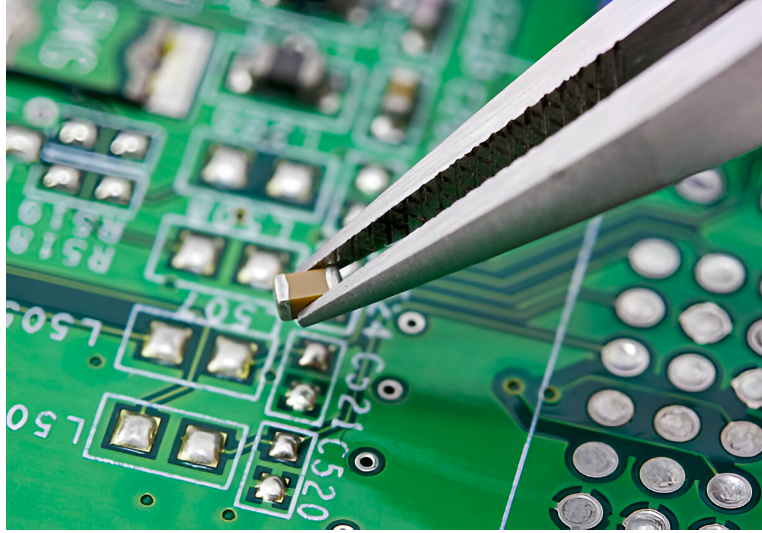
In modern electronics manufacturing, assembling a printed circuit board is only part of the production process. Even when components are placed correctly and soldered according to specifications, manufacturers must verify that the completed assembly functions as intended. This is where PCB Assembly Testing Methods play a critical role. Testing helps identify manufacturing defects, electrical faults, and performance issues before products reach customers, ensuring reliability and reducing the risk of costly failures.
As electronic devices become increasingly complex, the importance of testing continues to grow. Industries such as medical equipment, aerospace, telecommunications, automotive electronics, and industrial automation require extremely high levels of product reliability. To meet these expectations, manufacturers employ various PCB Assembly Testing Methods designed to evaluate assembly quality, electrical performance, and functional operation. Understanding these testing approaches is essential for engineers, product developers, and businesses seeking dependable electronics manufacturing solutions.
Why PCB Assembly Testing Is Important
PCB assembly testing serves as a critical quality assurance step in the manufacturing process. While visual inspection can identify many assembly defects, some electrical problems may remain hidden until functional testing is performed. A board that appears perfect on the surface may still contain open circuits, short circuits, incorrect component values, programming errors, or performance issues.
Testing helps manufacturers verify that the assembled board meets design specifications and performs correctly under expected operating conditions. By identifying defects early, companies can reduce rework costs, improve production yields, and prevent defective products from reaching the market.
In high-reliability applications, testing is especially important because failures can result in safety concerns, operational disruptions, or significant financial losses. Effective PCB Assembly Testing Methods help ensure consistent product quality and long-term reliability.
Visual Inspection as the First Testing Step
Visual inspection is often the first stage of quality verification after assembly. Although it is one of the simplest PCB Assembly Testing Methods, it remains an important part of the manufacturing process.
Inspectors examine the board for visible defects such as missing components, incorrect polarity, solder bridging, insufficient solder, excessive solder, damaged parts, and alignment issues. This process may be performed manually by trained technicians or through automated systems.
Visual inspection provides a quick way to identify obvious assembly problems before more advanced testing procedures are conducted. Detecting defects at this stage reduces unnecessary testing costs and improves overall manufacturing efficiency.
While visual inspection alone cannot verify electrical functionality, it serves as an important foundation for comprehensive quality assurance.
Automated Optical Inspection
Automated Optical Inspection, commonly known as AOI, is one of the most widely used PCB Assembly Testing Methods in modern electronics manufacturing. AOI systems use high-resolution cameras and advanced image-processing software to inspect assembled boards automatically.
The system compares the assembled PCB against predefined design criteria and identifies deviations such as missing components, incorrect placements, polarity errors, solder defects, and damaged parts. AOI can inspect large quantities of boards rapidly while maintaining consistent inspection standards.
One of the major advantages of AOI is its ability to detect assembly defects early in the production process. This allows manufacturers to correct issues before boards proceed to more expensive testing stages.
AOI has become an essential quality control tool for both prototype and high-volume manufacturing environments.
X-Ray Inspection
Certain electronic components contain solder joints that cannot be inspected visually. Ball Grid Arrays, Quad Flat No-Lead packages, and other advanced semiconductor devices often hide critical connections beneath the component body.
X-ray inspection addresses this challenge by allowing manufacturers to examine internal structures and hidden solder joints without damaging the assembly. This method provides detailed images that reveal defects such as voids, solder bridging, insufficient solder, and alignment problems.
Among modern PCB Assembly Testing Methods, X-ray inspection is particularly valuable for high-density and complex assemblies where visual access is limited.
Industries that require exceptional reliability often incorporate X-ray analysis into their quality assurance procedures to ensure assembly integrity.
In-Circuit Testing
In-Circuit Testing, commonly referred to as ICT, is one of the most effective methods for verifying electrical integrity. This testing approach uses specialized fixtures equipped with probes that contact designated test points on the PCB.
ICT evaluates individual components and circuit connections by measuring parameters such as resistance, capacitance, continuity, and voltage levels. The test can identify open circuits, short circuits, incorrect component values, and assembly defects.
One of the key advantages of ICT is its ability to isolate faults to specific areas of the circuit. This makes troubleshooting and repair more efficient.
Because of its accuracy and speed, In-Circuit Testing is widely used in medium- and high-volume production environments where consistent quality verification is required.
Flying Probe Testing
Flying probe testing offers an alternative to traditional fixture-based In-Circuit Testing. Instead of using a dedicated test fixture, movable probes automatically contact various points on the PCB to perform electrical measurements.
This approach is particularly useful for prototype production and low-volume manufacturing because it eliminates the cost and lead time associated with creating custom test fixtures.
Flying probe systems can verify continuity, resistance, capacitance, diode functionality, and other electrical characteristics. They are highly flexible and can accommodate design changes without requiring new tooling.
Although flying probe testing is generally slower than fixture-based ICT, it remains one of the most versatile PCB Assembly Testing Methods for smaller production runs.
Functional Testing
While In-Circuit Testing focuses on individual components and connections, functional testing evaluates the overall operation of the assembled board. This method verifies that the PCB performs according to its intended design and application requirements.
During functional testing, the board is powered and operated under simulated or actual working conditions. Inputs are applied, outputs are measured, and system behavior is analyzed to confirm proper operation.
Functional testing can reveal issues that may not be detected through component-level testing. Software errors, firmware problems, communication failures, and system-level performance issues are often identified during this stage.
Many manufacturers consider functional testing one of the most important PCB Assembly Testing Methods because it closely reflects real-world operating conditions.
Burn-In Testing and Environmental Testing
For products intended for demanding applications, manufacturers may perform burn-in testing and environmental testing to evaluate long-term reliability.
Burn-in testing involves operating the PCB continuously for an extended period under controlled conditions. This process helps identify early-life failures and weak components that might otherwise fail after deployment.
Environmental testing exposes assemblies to conditions such as temperature extremes, humidity, vibration, and thermal cycling. These tests verify that the product can withstand the environments it will encounter during operation.
Although these testing methods require additional time and resources, they provide valuable reliability data for mission-critical applications.
Choosing the Right PCB Assembly Testing Methods
The selection of testing procedures depends on several factors, including product complexity, production volume, reliability requirements, and budget considerations.
Simple consumer products may require only AOI and functional testing, while aerospace, medical, and automotive systems often utilize multiple testing methods to achieve higher reliability levels. Combining visual inspection, AOI, electrical testing, and functional verification provides the most comprehensive quality assurance strategy.
Manufacturers must balance testing costs with product requirements to create an effective and efficient testing program. Early collaboration between engineering and manufacturing teams helps determine the most appropriate testing approach for each project.
A well-planned testing strategy reduces risks and improves product quality throughout the manufacturing lifecycle.
The Future of PCB Assembly Testing
Advancements in automation, artificial intelligence, and data analytics are transforming PCB Assembly Testing Methods. Modern inspection systems can analyze defects more accurately and identify process trends that help prevent future issues.
Machine learning algorithms are increasingly being used to improve defect detection and reduce false inspection results. Real-time monitoring systems provide manufacturers with greater visibility into production performance and quality metrics.
As electronic assemblies continue to become more compact and complex, testing technologies will continue to evolve to support new manufacturing challenges. Future innovations will further improve testing accuracy, efficiency, and reliability.
Conclusion
PCB Assembly Testing Methods are essential for ensuring the quality, functionality, and long-term reliability of electronic products. Techniques such as visual inspection, Automated Optical Inspection, X-ray analysis, In-Circuit Testing, flying probe testing, functional testing, and environmental testing help manufacturers identify defects and verify performance before products reach customers. By implementing comprehensive testing procedures, companies can reduce failures, improve manufacturing yields, enhance customer satisfaction, and meet demanding industry standards. As electronics continue to advance across sectors such as healthcare, telecommunications, automotive systems, and industrial automation, effective testing strategies will remain a cornerstone of successful manufacturing. Businesses seeking dependable electronics production often rely on professional PCBA Assembly and Testing Solutions in China to achieve high-quality manufacturing, advanced inspection capabilities, and consistent product reliability.

