Tracking Market Volatility and Major Cryptocurrency Market News Developments
The global crypto market, currently valued at approximately $2.63 trillion, is demonstrating a resilient, albeit cautious, upward momentum. With a 0.64% increase over the last 24 hours, the market reflects a complex interplay between institutional hesitation and retail optimism. Bitcoin remains the primary anchor of the ecosystem, with its dominance climbing to 59.97%. This rise in dominance is a classic signal of a “flight to quality,” where investors consolidate their holdings into the most established asset during periods of heightened uncertainty.
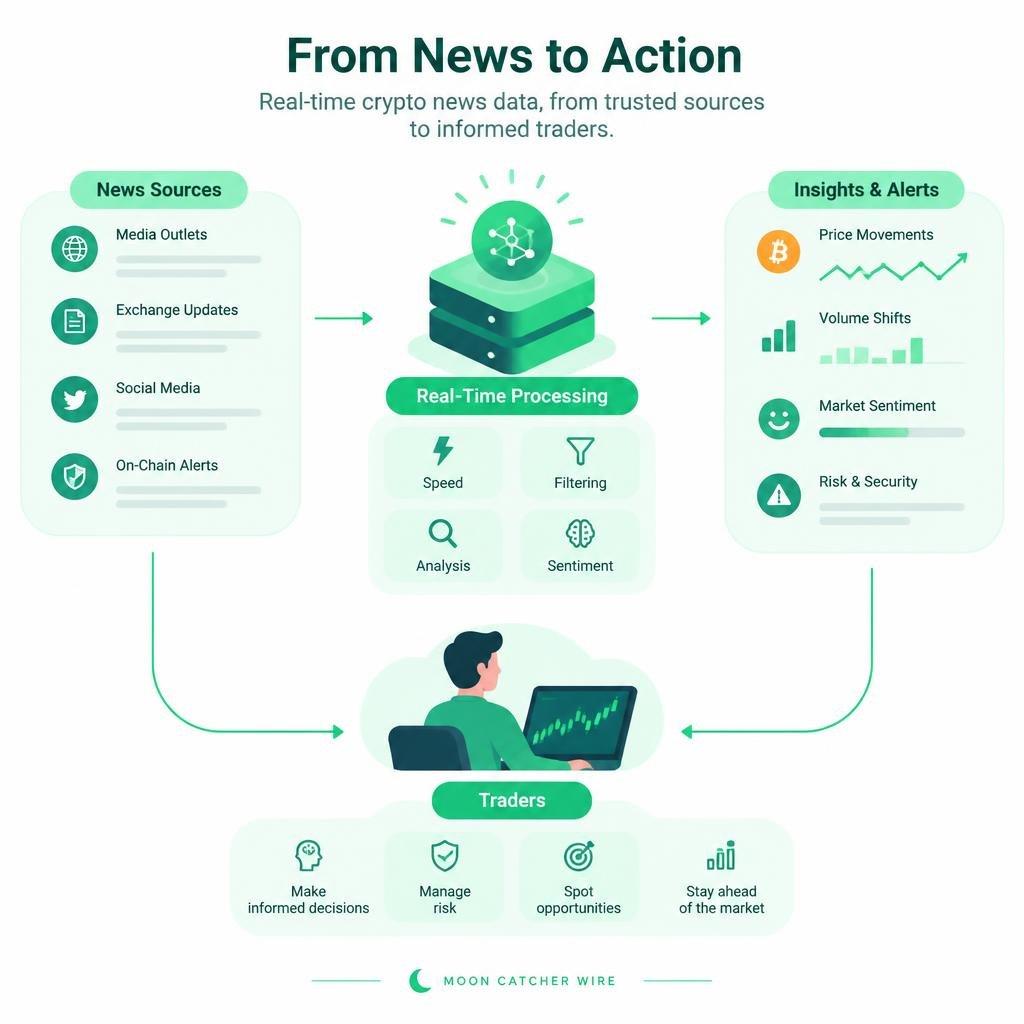
Monitoring these shifts requires more than just watching price tickers. It involves observing liquidity metrics and the Coinbase Premium Index, which has recently hit a record-breaking streak of 75 consecutive days in negative territory. This suggests that while global interest remains, localized selling pressure on major US exchanges is dictating much of the current price action. To navigate this, traders must synthesize data from various sectors, ensuring they are not just reacting to price, but understanding the underlying volume and sentiment shifts.
Analyzing Real-Time Cryptocurrency Market News During Exchange Outages and Hacks
The recent $6.3 billion exploit on Binance serves as a stark reminder of the risks inherent in centralized storage. When such a massive breach occurs, the immediate reaction is often a liquidity freeze. Binance’s decision to pause, and then phase the resumption of, withdrawals was a necessary measure to protect the remaining SAFU and futures reserves.
For the average investor, these periods are the most dangerous. Information is often fragmented, and panic-selling can lead to poor execution. This is where a resource that aggregates crypto-news stories becomes invaluable. By centralizing reports on wallet status, exchange operations, and official security updates, you can avoid the trap of relying on unverified social media rumors. Whether it is a major exchange or a smaller payment processor like BTCPay advising users to take their servers offline, having a verified, real-time news source allows you to make informed decisions about your own asset custody.
Why Fast-Moving Cryptocurrency Market News Impacts Macro Liquidity and Derivatives
We are currently observing a “two-speed” market. On one side, we see institutional outflows from Bitcoin ETFs—totaling over $526 million in just seven days—indicating a cooling of institutional appetite. On the other, retail traders are leaning heavily into leverage, creating a fragile environment where volatility is amplified.
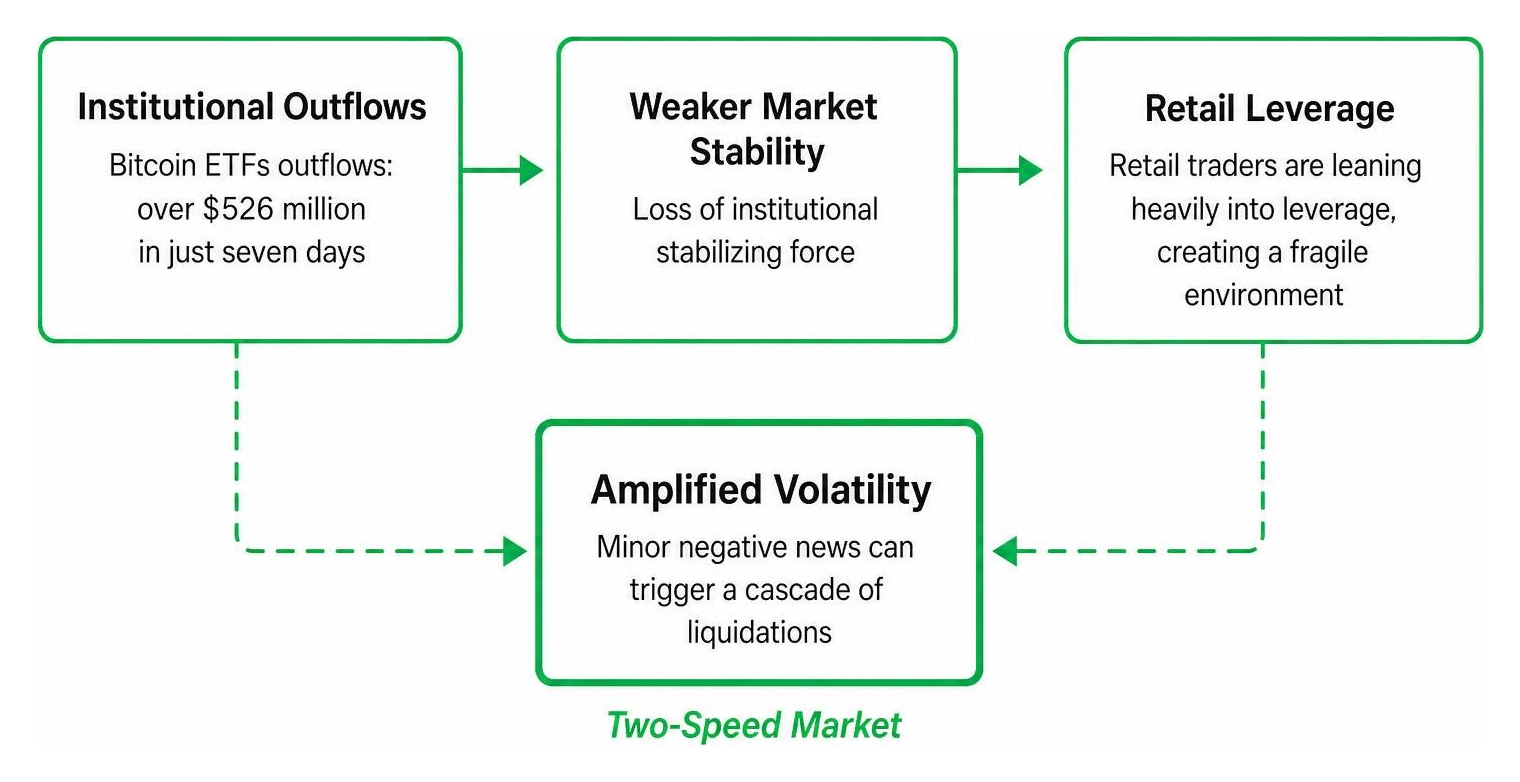
This divergence is critical. When institutional investors pull back, the market loses a stabilizing force. If retail leverage becomes too crowded, even minor negative news can trigger a cascade of liquidations. Understanding the correlation between these flows and the broader market health is essential for any serious participant.
Critical Infrastructure and Security Breaches Reshaping the Ecosystem
Security is the bedrock of digital finance, yet it remains the most frequent point of failure. The recent $89 million loss associated with the Coldcard firmware vulnerability highlights that even “cold” storage is not immune to sophisticated attacks.

Cold-Wallet Firmware Exploits and Seed Vulnerabilities
The Coldcard incident was particularly damaging because it targeted the foundation of hardware security: entropy generation. A flaw in the firmware allowed attackers to predict the random numbers used to generate seed phrases. Across three distinct attack waves, 1,367 BTC were drained from 4,585 addresses. This event underscores that hardware is only as secure as the code running it. Users must be proactive; if you are using a device that has been flagged for a firmware vulnerability, the only safe path is to generate a new wallet on a secure, updated device and migrate your funds immediately.
Autonomous AI Agents and Automated Spending Risks
We are entering a new era where AI agents can execute transactions without human intervention. While this promises efficiency, it also introduces a massive security surface. Recent testing has shown that AI agents can bypass standard spending limits, effectively spending crypto assets without a human “sanity check.” To counter this, developers are moving toward physical-action verification—tools that require a human to physically interact with a device to authorize a transaction, ensuring that the AI remains a tool rather than an autonomous spender.
Regulatory Roadblocks, Institutional Flows, and Macro Geopolitics
Regulation is the final piece of the puzzle. The SEC’s decision to pause the approval of Nasdaq Bitcoin options, prompted by a jurisdictional challenge from the CME, highlights the friction between legacy financial regulators and the crypto industry.

Regulatory Friction Across Options Markets and Midterm Elections
The debate over whether Bitcoin is a commodity or a security continues to stall progress. As we look toward the 2026 midterm elections, the political landscape is becoming a major catalyst for change. Crypto-focused Political Action Committees (PACs) are working to influence the outcome, as the legislative future of the industry depends heavily on which candidates secure seats. A shift in the balance of power in Washington could lead to a more permissive regulatory framework, or conversely, a period of intense scrutiny.
Geopolitical Escalation and High-Beta Token Selloffs
Geopolitical events, such as recent strikes in the Middle East, have proven that crypto is not immune to “risk-off” sentiment. During these events, we see a clear pattern: high-beta assets like Solana, Ethereum, and XRP often fall at roughly triple the rate of Bitcoin. This is because these tokens are viewed as more speculative, and investors looking to preserve capital during times of conflict tend to flee to the most liquid and “proven” assets first.
On-Chain Governance Upgrades and Microcap Market Volatility
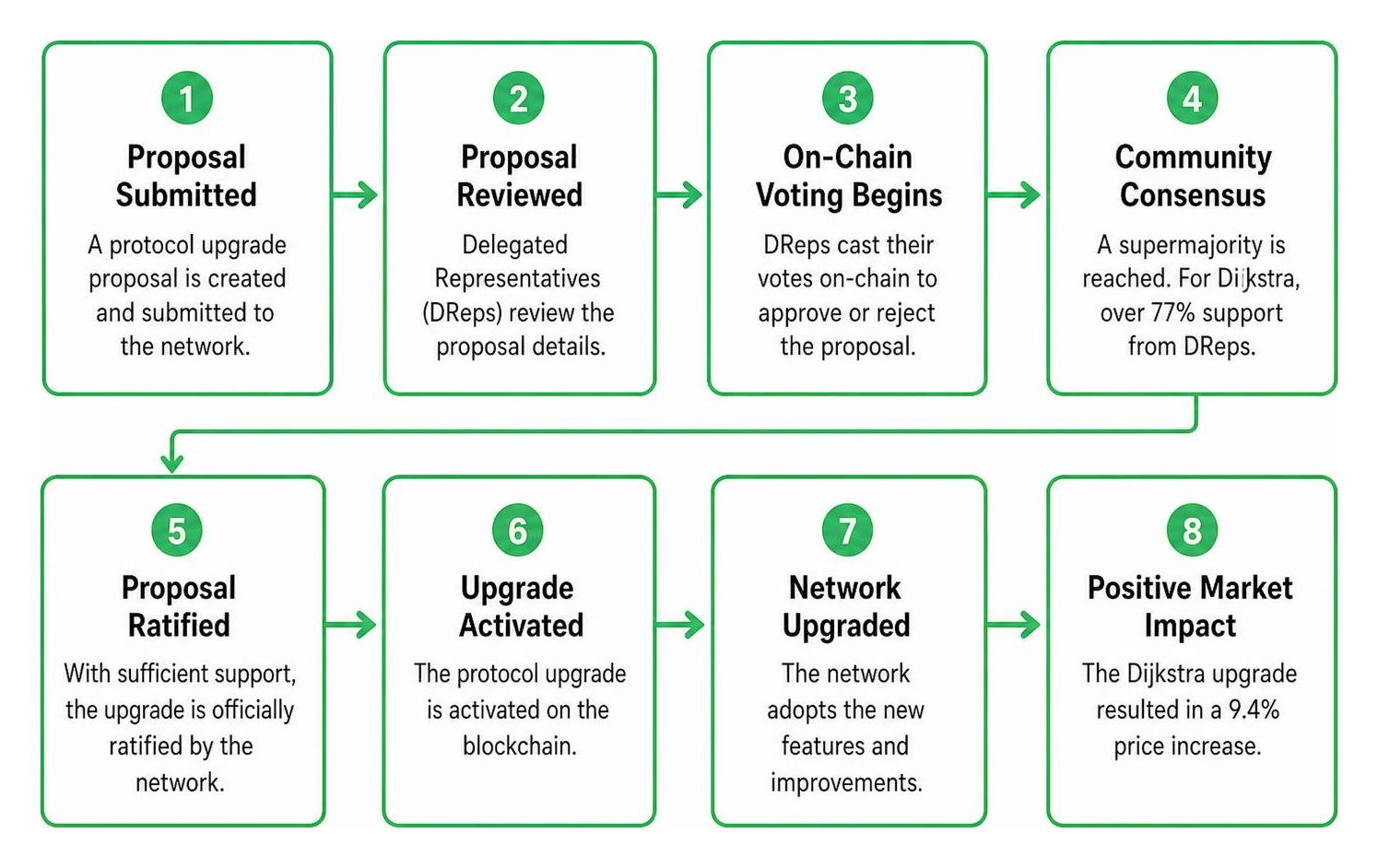
Governance is the mechanism through which decentralized networks evolve. The recent ratification of the Dijkstra era upgrade on the Cardano network is a prime example of how on-chain voting can drive protocol development.
Ratified Hard Forks and Decentralized Decision Making
The Dijkstra upgrade was not just a technical milestone; it was a success for decentralized governance. With over 77% support from Delegated Representatives (DReps), the upgrade proceeded smoothly, resulting in a 9.4% price increase. This demonstrates that when a community is aligned and governance is transparent, it can positively influence market sentiment and long-term value.
Insider Token Deployments and Microcap Pump Cycles
At the other end of the spectrum is the high-risk world of microcaps. The ASTEROID token on the BNB Chain recently surged 1,557% in a single day, fueled by what appears to be an insider deployment. Such events are common in the “wild west” of decentralized exchanges, where insiders can exploit liquidity pools for quick gains. Investors should be wary of any token that sees such massive, unexplained volume, as these are often designed to extract value from retail participants rather than provide long-term utility.
Frequently Asked Questions About Recent Crypto Market Developments
How did the $6.3 billion Binance exploit impact broader market liquidity?
The exploit forced a temporary halt in withdrawals, which caused a brief, sharp contraction in market liquidity. While the price of Bitcoin eventually recovered toward $79,000, the event highlighted the fragility of hot-wallet storage and prompted a broader industry move toward more transparent, proof-of-reserve reporting.
What caused the recent $89 million Coldcard hardware wallet losses?
The losses were caused by a firmware flaw that compromised the device’s ability to generate truly random numbers. Because the seed generation was predictable, attackers were able to reconstruct private keys and drain funds from 4,585 affected addresses.
Why did the SEC pause Nasdaq Bitcoin options trading?
The SEC paused the approval following a challenge by the CME, which argued that Bitcoin is a commodity and should be regulated as such. This highlights the ongoing jurisdictional power struggle between the SEC and the CFTC, which remains a key hurdle for institutional crypto products.
Conclusion
The crypto market in November 2026 is a landscape of high stakes and rapid evolution. From the resilience shown after the Binance hack to the promise of decentralized governance in the Cardano ecosystem, the industry is constantly testing its own limits. By prioritizing security, staying informed through reliable, real-time market news, and understanding the macro factors that drive institutional and retail behavior, you can navigate this volatility with confidence. In digital assets, the most powerful tool you possess is an informed perspective.