
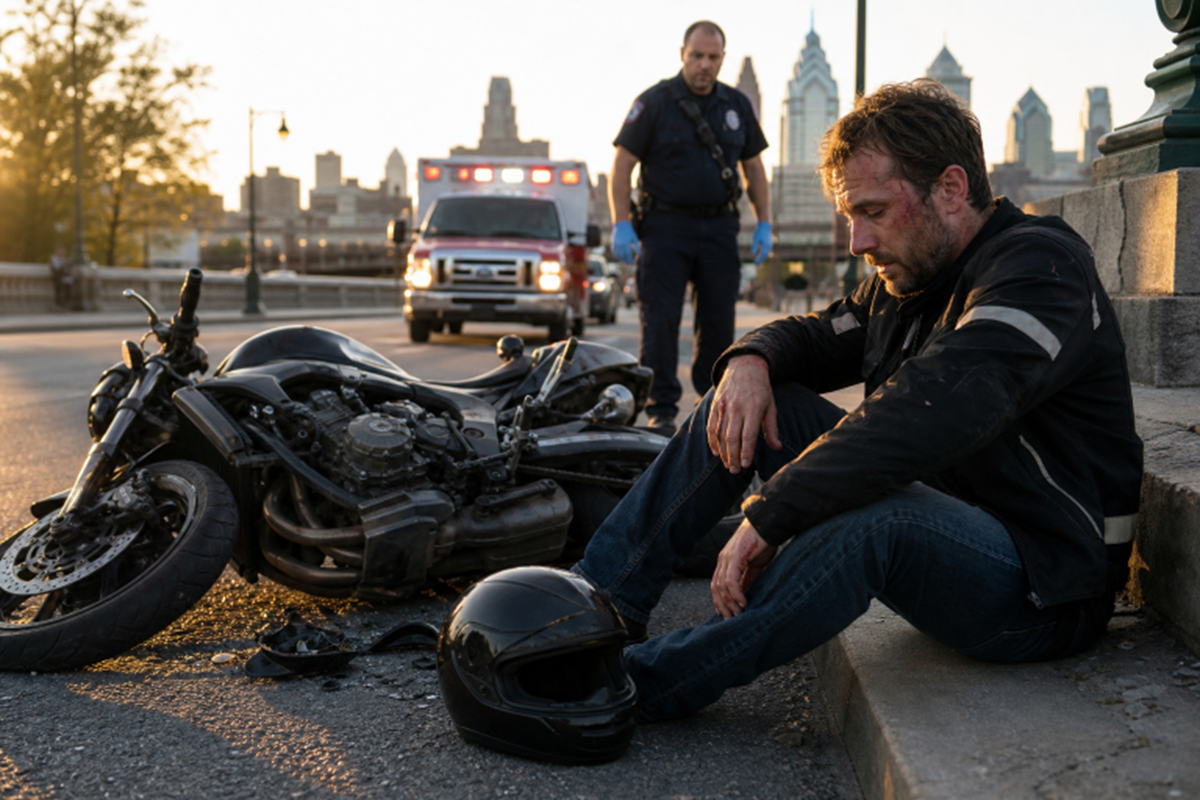
Key Takeaways
- Get emergency help and medical attention before worrying about insurance or evidence.
- Consider legal guidance quickly if you have serious injuries, missed work, disputed fault, or pressure to settle.
- Preserve photographs, damaged gear, witness details, medical records, and insurance communications.
- Provide insurers with accurate basic facts, but do not speculate about fault or minimize your injuries.
- A police report can be useful, though it does not necessarily decide who was at fault.
After a motorcycle accident in Philadelphia, the first priorities are safety and medical care. Once the immediate emergency has passed, you may wonder whether the insurance process is something you can manage alone or whether it is time to speak with a motorcycle injury attorney. The right answer depends on the seriousness of the crash, the injuries involved, the available evidence, and whether anyone disputes responsibility.
Philadelphia riders face busy intersections, sudden lane changes, construction zones, uneven pavement, and dense traffic around Center City, I-95, Roosevelt Boulevard, and neighborhood commercial corridors. A lawyer may be particularly helpful when a collision has created significant medical, financial, or factual questions that an insurer cannot resolve fairly through a routine property-damage claim.
Start With Safety And Medical Care
At the scene, move away from active traffic only if it is safe, and you can do so without worsening an injury. Call 911, request police and emergency medical assistance when needed, and follow first responders’ instructions. Do not remain near leaking fuel, broken glass, unstable vehicles, or moving traffic simply to take photographs.
Medical evaluation matters even when pain seems manageable at first. Adrenaline and shock can mask symptoms after a crash. Headache, dizziness, confusion, numbness, chest pain, neck or back pain, and increasing soreness all deserve prompt attention. Timely care also creates records showing when symptoms began, what treatment was recommended, and how the injury affects daily life.
When It May Be Time To Hire A Personal Injury Lawyer
Not every minor collision requires legal representation. If there is no injury, fault is clear, and the insurer promptly pays for straightforward vehicle damage, a rider may be able to handle the claim directly. The situation changes when the accident involves meaningful losses or uncertainty.
Serious Or Uncertain Injuries
Speak with a lawyer when injuries require emergency treatment, hospitalization, surgery, physical therapy, specialist care, or extended time away from work. It may also be wise to seek advice when a diagnosis is still developing. Settling before the full medical picture is known can leave you responsible for later expenses connected to the crash.
Disputed Fault Or Multiple Parties
Legal help can be valuable when another driver denies responsibility, blames the rider, or gives an account that conflicts with physical evidence. Crashes involving several vehicles, commercial drivers, road hazards, defective parts, or uninsured drivers often require a closer review of records and insurance coverage.
Insurance Pressure Or A Low Settlement Offer
An insurer may request a recorded statement, ask for broad medical authorizations, or offer money early in the process. You should report the accident as required by your policy, but you do not need to guess about details, accept blame, or agree to a final settlement before understanding your injuries, lost income, and property damage.
Document What Happened, Without Creating New Risks
If conditions allow, take photos or video of the motorcycle, all involved vehicles, license plates, roadway layout, lane markings, traffic signals, skid marks, debris, weather, lighting, and visible injuries. Ask a trusted person to help if you need treatment. Record the names, phone numbers, insurance details, and vehicle information of everyone involved.
Witnesses can be important, especially in a crash where drivers disagree about a turn, lane change, traffic signal, or right of way. Collect their contact details before they leave, and write down what they voluntarily observed. Nearby businesses, residences, traffic cameras, and dash cameras may also hold footage, but recordings can be overwritten, so identifying possible video sources early is useful.
Get And Review The Crash Report
An official report can organize basic information about the location, vehicles, people involved, and the responding officer’s observations. For crashes investigated by state police, people involved in the accident, their insurers, and their attorneys may request a report through Pennsylvania’s process for getting a vehicle crash report. Review any report for errors in names, dates, vehicle descriptions, or contact information.
A crash report is useful evidence, but it is not always the final answer on fault. Insurance companies and attorneys may also consider photographs, vehicle damage, witness accounts, video, traffic laws, medical records, and each person’s statement.
Preserve Your Motorcycle, Gear, And Financial Records
Do not repair, sell, discard, or allow an insurer to dispose of the motorcycle before it has been documented. Photograph it from several angles and keep the helmet, jacket, gloves, boots, and other protective equipment in their post-crash condition. Damage patterns on the bike and gear may help explain the direction and force of an impact.
Keep a file containing medical bills, treatment instructions, prescription receipts, repair estimates, towing and storage charges, wage-loss information, claim numbers, emails, letters, and notes from phone calls. Also track the practical effects of the injury, including difficulty sleeping, missed activities, transportation needs, and physical limitations.
Common Mistakes To Avoid
- Skipping medical care because symptoms initially seem minor.
- Posting crash details, photos, or opinions about fault on social media.
- Giving a recorded statement before reviewing the facts and your condition.
- Repairing or throwing away damaged gear too soon.
- Accepting a quick settlement before future treatment needs are clear.
- Ignoring correspondence from your insurer or missing important deadlines.
Use The Experience To Strengthen Future Rides
Recovery comes first, but a crash can also be a reminder to prepare for Philadelphia’s changing road conditions. Federal motorcycle safety guidance emphasizes visibility, protective equipment, proper licensing, sober riding, and checking a motorcycle before each ride. Riders should inspect tires, brakes, lights, signals, and fluid levels while leaving extra room near intersections, driveways, turning vehicles, and blind spots.
Conclusion
Consider hiring a personal injury lawyer after a Philadelphia motorcycle accident when injuries are serious, liability is disputed, evidence needs protection, or an insurer’s offer does not reflect the real impact of the crash. Acting early can help preserve records and give you time to make informed decisions while you focus on treatment and recovery.

