
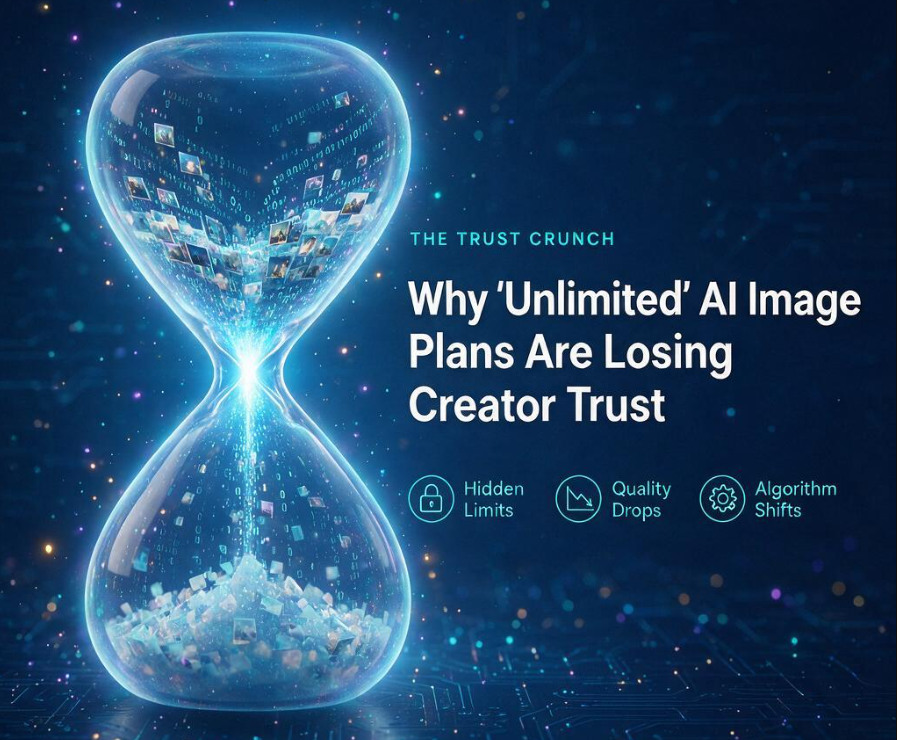
Artificial intelligence has transformed the way creators produce visual content. From social media graphics and digital artwork to marketing campaigns and product illustrations, AI image generators have made professional-looking visuals accessible to almost anyone. Many platforms attract users with the promise of unlimited image generation, suggesting that creators can explore ideas without worrying about usage limits or additional costs.
However, that promise is becoming more complicated. As creators use AI image tools for serious projects, they are paying closer attention to what unlimited really means. Hidden restrictions, slow generation speeds, credit systems, and unexpected limitations can make an apparently generous subscription feel less valuable than expected. This growing gap between marketing claims and actual user experience is contributing to a decline in creator trust.
The Appeal of Unlimited AI Image Generation
The concept of unlimited image generation is easy to understand. Instead of paying for every image or purchasing a fixed number of credits, users expect to create as many visuals as their projects require. This is particularly attractive to designers, marketers, content creators, and artists who may need dozens or even hundreds of images while developing a single idea.
AI image generation often involves experimentation. A creator might produce several versions of a character, adjust the lighting, change the composition, or try different artistic styles before finding the right result. A limited credit system can make this process feel expensive, especially when many generated images are discarded.
Unlimited plans appear to solve that problem by offering freedom to experiment. They can also make monthly budgeting easier and encourage users to integrate AI tools into their regular creative workflows. Yet the real value of such a plan depends on how the platform defines and delivers unlimited access.
When Unlimited Does Not Mean Unlimited
One of the biggest reasons creators lose confidence in AI image subscriptions is the difference between the advertised plan and the practical experience.
A service may describe its image generation as unlimited while applying restrictions such as daily usage caps, queue limitations, or reduced access during busy periods. Some plans may allow unlimited standard generations but charge additional credits for premium models, higher resolutions, or advanced editing features.
These conditions are not necessarily unreasonable. AI image generation requires substantial computing resources, and providers need to manage server capacity. The problem arises when important restrictions are difficult to find or are only discovered after a user has subscribed.
For creators, clarity matters as much as the number of images they can generate. A transparent plan that clearly explains its limits can be more trustworthy than a supposedly unlimited subscription with complicated exceptions.
Hidden Limits Can Disrupt Creative Workflows
Creative projects rarely follow a perfectly predictable schedule. A designer working on a client campaign may need to generate multiple concepts in a short period. An illustrator might spend hours refining a particular image. A social media manager may need a large batch of visuals before a product launch.
When a platform unexpectedly slows down or restricts generation, these workflows can be interrupted.
Imagine a creator preparing a set of promotional images for an upcoming campaign. The subscription promises unlimited generation, but the platform begins placing requests in a long queue after a certain amount of use. The creator may technically still have access, but the delay makes the service far less useful.
This is especially frustrating when users have planned their work around the assumption that unlimited access means reliable availability. The issue is not simply the number of images produced. It is whether the tool can support the creator’s schedule.
The Problem With Credit-Based Pricing
Credits are common in AI image services because they help providers control usage and manage computing costs. However, credit systems can create confusion when they are combined with unlimited subscription language.
A plan might include unlimited access to one model while using credits for another. It may also charge different amounts for different image sizes, generation speeds, or editing features. Users who do not carefully review these details may assume that every feature is included.
This creates an additional layer of uncertainty. Creators must calculate how many credits a task will consume, which features are available, and whether their subscription will cover the entire project.
For casual users, this may be a minor inconvenience. For professionals, it can make costs difficult to predict. A creator who relies on consistent monthly expenses may prefer a straightforward plan with clearly stated usage conditions over a more attractive-sounding unlimited offer.
Image Quality Is Part of the Trust Equation
Access alone does not determine whether an AI image subscription is worthwhile. The quality of the generated images also plays a major role.
Creators increasingly expect AI tools to produce visuals that are consistent, detailed, and suitable for real-world use. A platform may offer unlimited generations, but if the results frequently contain distorted hands, inconsistent characters, poor typography, or inaccurate compositions, users may spend more time correcting images than creating them.
This is particularly important for commercial work. A marketing designer may need a product image that matches a brand’s visual identity. An illustrator may require a character to look consistent across multiple scenes. A business owner may want graphics that are ready to publish without extensive editing.
Unlimited access cannot compensate for unreliable results. Creators want tools that help them achieve their goals efficiently, not simply tools that produce a large number of images.
Transparency Builds Stronger Creator Relationships
The most effective way for AI image platforms to rebuild trust is through clear communication.
Subscription pages should explain what unlimited generation includes, whether any daily or monthly restrictions apply, and how premium features are handled. If generation speeds vary depending on demand, that information should be easy to find before users purchase a plan.
Platforms should also communicate changes to their pricing or usage policies in advance. Sudden changes can be especially damaging for creators who have built their workflows around a particular service.
A transparent approach helps users make informed decisions. It also demonstrates that the platform respects the time and money creators invest in its tools.
Why Creators Are Comparing AI Image Platforms More Carefully
The AI image market has become increasingly competitive. Creators now have access to a wide range of tools, from simple text-to-image generators to advanced platforms with editing, customization, and workflow features.
As competition grows, users are becoming more selective. They are comparing not only subscription prices but also image quality, generation speed, available models, commercial usage rights, and customer support.
This shift means that an unlimited plan is no longer enough to attract or retain users. Creators want to know whether the service provides dependable value over time.
A platform that offers a clear interface, useful creative controls, and honest subscription terms may build stronger loyalty than one that relies primarily on an impressive marketing claim.
What Creators Should Look for in an AI Image Subscription
Before choosing an AI image generator, creators should evaluate several practical factors.
1. Understand the Usage Policy
Read the plan details carefully. Look for information about daily limits, monthly quotas, queue restrictions, and access to different models. If the meaning of unlimited is unclear, contact customer support before subscribing.
2. Test the Generation Quality
Use a trial or free version when available. Generate images that reflect your actual needs rather than relying only on promotional examples. Pay attention to consistency, detail, and how much editing is required.
3. Check Commercial Usage Rights
Creators using AI images for client projects, websites, advertising, or digital products should understand the platform’s licensing terms. Commercial rights may vary depending on the subscription and the type of content generated.
4. Evaluate Speed and Reliability
A tool that produces excellent images but frequently experiences delays may not be suitable for time-sensitive projects. Consider how the platform performs during normal use and whether it offers predictable access.
5. Compare the Complete Value
Look beyond the monthly price. Consider the number of useful images produced, the time saved, available editing tools, and the level of support provided. A lower-cost plan is not necessarily better if it creates additional work.
How Dream Smith AI Generator Fits Into the Conversation
Creators looking for an AI image generation platform can explore options such as Dream Smith AI Generator. When evaluating any AI image tool, the most important considerations are whether it supports the creator’s workflow, provides useful generation capabilities, and clearly explains its subscription terms.
A reliable image generator should help users move from an initial idea to a finished visual without unnecessary friction. Features such as accessible creative controls, image generation flexibility, and a straightforward user experience can make a meaningful difference.
Rather than choosing a platform solely because it advertises unlimited access, creators should consider how well it supports their specific projects. This approach makes it easier to identify a tool that offers practical value and fits long-term creative needs.
The Future of AI Image Subscriptions
The future of AI image subscriptions will likely depend on how well platforms balance affordability, computing costs, and user expectations.
Providers need sustainable pricing models to support powerful image generation systems. At the same time, creators need plans that are understandable, dependable, and aligned with the way they actually work.
This could lead to more clearly defined subscription tiers, better explanations of usage limits, and greater flexibility for different types of users. Some creators may prefer a fixed monthly allowance, while others may value faster generation speeds or access to advanced models.
The key is that subscription promises should match the actual experience. When users understand what they are paying for, they can make better decisions and develop realistic expectations.
Conclusion
Unlimited AI image plans have helped make visual creation more accessible, but the term unlimited is losing its appeal when it comes with unclear restrictions or inconsistent performance. Creators are increasingly focused on transparency, image quality, reliability, and overall value.
For AI image platforms, rebuilding trust means offering clear policies and delivering an experience that supports real creative work. For users, it means looking beyond promotional claims and evaluating what a subscription actually provides.
The strongest AI image tools will not necessarily be those that promise the most. They will be the ones that consistently help creators turn ideas into useful, high-quality visuals.

