
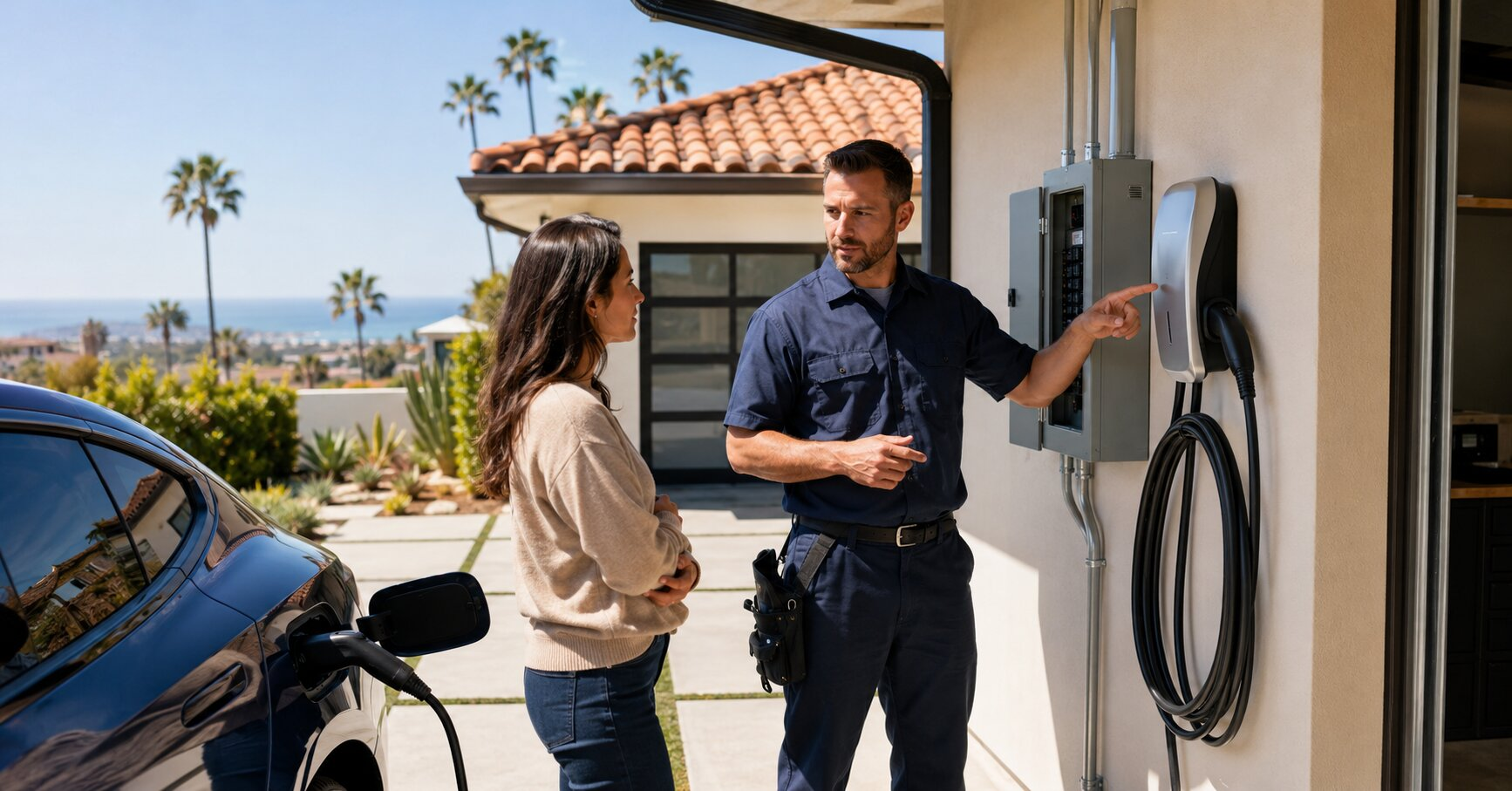
Buying an electric vehicle is exciting, and one of the first things many homeowners think about is home charging. After all, one of the biggest benefits of owning an EV is being able to charge where you already park.
But before ordering an EV charger online, there is an important question to ask:
Should you buy the charger first, or should you call an electrician first?
For many homeowners, the smarter move is to call a licensed electrician before purchasing the charger. The reason is simple: not every home has the same electrical panel, parking setup, available capacity, wiring route, or installation needs. A charger that looks perfect online may not be the best fit for the property once the electrical system is evaluated.
If you are planning EV charger installation San Diego, an electrical assessment can help you choose the right charger, the right location, and the safest installation plan before money is spent on equipment.
Why Homeowners Often Buy the Charger First
Many homeowners buy the charger first because it feels like the natural starting point. They research charger brands, compare features, read reviews, and look for a unit that works with their vehicle.
That makes sense. EV owners want to know:
- Which charger is compatible with their vehicle
- How fast it can charge
- Whether it works indoors or outdoors
- Whether it connects to Wi-Fi
- Whether it has smart charging features
- Whether it can be plugged in or hardwired
- How much it costs
Those are important questions. However, the charger is only one part of the project. The home’s electrical system also has to support the charger safely.
A charger may be compatible with the vehicle but still not be the right choice for the home’s current panel, available amperage, or installation location.
Why Calling an Electrician First Can Save Time
Calling an electrician first can help prevent delays, returns, added costs, or installation surprises. Before choosing a charger, homeowners should understand what the electrical system can realistically support.
A qualified San Diego electrician can review:
- Electrical panel capacity
- Available breaker space
- Existing electrical load
- Charger location options
- Distance from panel to charger
- Whether a dedicated circuit is needed
- Whether the charger should be hardwired or plug-in
- Whether outdoor-rated equipment is needed
- Whether a panel upgrade may be required
- Whether the installation may need permitting
This information makes it much easier to choose a charger that fits the property.
Instead of guessing, homeowners can make a decision based on the actual electrical conditions of the home.
Your Electrical Panel Matters
The electrical panel is one of the biggest factors in EV charger installation. It distributes power to the home’s circuits, including lights, outlets, appliances, HVAC equipment, garage power, outdoor circuits, and other systems.
A Level 2 EV charger can add a significant electrical load. Some homes have enough available capacity to support it. Others may need a panel upgrade, service upgrade, or electrical adjustments before the charger can be installed safely.
Panel questions may include:
- Is the panel large enough?
- Is there room for a new breaker?
- Is the panel already overloaded?
- Are breakers tripping frequently?
- Is the panel outdated?
- Are future upgrades planned?
- Will the home need more capacity later?
If the panel cannot support the charger you buy, the project can become more complicated. Calling an electrician in San Diego first helps you understand the panel situation before selecting equipment.
Not Every Charger Has the Same Electrical Requirements
EV chargers can vary in power output, amperage, connection type, and installation requirements. Some chargers require more electrical capacity than others.
A charger with higher output may charge faster, but it may also require more panel capacity and a larger dedicated circuit. A lower-output charger may be easier for some homes to support, depending on the electrical system.
Charger differences may include:
- Amperage requirements
- Hardwired vs. plug-in design
- Indoor vs. outdoor rating
- Smart charging features
- Cord length
- Mounting requirements
- Compatibility with certain vehicles
- Load management features
This is why buying the biggest or fastest charger is not always the best decision. The charger should match both the vehicle’s needs and the home’s electrical capacity.
Hardwired vs. Plug-In EV Chargers
One of the biggest decisions homeowners face is whether to install a hardwired charger or a plug-in charger.
A hardwired charger is permanently connected to the electrical system. This can create a clean, secure installation and may be preferred for outdoor setups or higher-power chargers.
A plug-in charger usually connects to a dedicated outlet, such as a NEMA 14-50 outlet. This may provide more flexibility, but the outlet still needs to be installed correctly with the proper circuit, breaker, wiring, and protection.
Both options can work, but the best choice depends on the home.
Before choosing, homeowners should consider:
- Where the charger will be installed
- Whether the charger will be indoors or outdoors
- How much charging speed is needed
- Whether the panel can support the charger
- Whether flexibility matters
- Whether local requirements affect the setup
- Whether the charger will be moved later
An electrician can help determine which option makes the most sense for the property.
Charger Location Should Be Planned Before Purchase
The best charger location depends on where the vehicle parks and how power will be routed to that area. Many homeowners assume the charger should go wherever it looks easiest, but placement has a big impact on daily use and installation complexity.
Common charger locations include:
- Garage walls
- Driveways
- Carports
- Exterior walls
- Detached garages
- ADU parking areas
- Multifamily parking spaces
The ideal location should be close enough for the cord to reach comfortably, practical for parking habits, safe for walking areas, and reasonable for the wiring route.
If the charger is installed too far from where the vehicle parks, daily charging can become inconvenient. If it is installed far from the panel, the project may require more conduit, wiring, labor, or underground electrical work.
Calling a residential electrician San Diego homeowners can rely on before buying the charger helps you understand which locations are realistic.
Outdoor Installations Need Extra Planning
Many San Diego homeowners park in driveways, carports, or outdoor spaces. Outdoor EV charger installation can work well, but it requires the right equipment and installation approach.
Outdoor installations may need:
- Weather-rated chargers
- Proper conduit
- Weatherproof electrical components
- Safe mounting
- GFCI protection where required
- Proper cord management
- Protection from physical damage
- Careful placement away from walkways
Not every charger is ideal for outdoor use. If the charger will be exposed to weather, sunlight, moisture, or outdoor activity, it is better to confirm the installation needs before purchasing equipment.
Detached Garages Can Change the Plan
Installing an EV charger in a detached garage can be more involved than installing one in an attached garage. The electrician may need to review how power gets to the detached structure and whether the garage has enough capacity.
Detached garage considerations may include:
- Existing garage power
- Subpanel capacity
- Distance from the main panel
- Underground conduit
- Trenching
- Wiring route
- Charger placement
- Future garage use
If the detached garage does not already have enough electrical capacity, additional work may be needed before an EV charger can be installed.
Buying the charger first does not answer these questions. An assessment does.
ADUs and Rental Properties May Need More Planning
EV charger installation for ADUs, rental units, duplexes, or multifamily properties may require additional planning. These properties may have separate parking areas, shared electrical service, different meter setups, or added electrical demand from the living space.
Before buying a charger for an ADU or rental property, homeowners should think about:
- Who will use the charger
- Where the vehicle will park
- How power will be routed
- Whether the panel has enough capacity
- Whether a subpanel is involved
- Whether future tenants may need access
- Whether additional chargers may be installed later
The right charger choice may depend on the larger property setup, not just the vehicle.
Buying the Wrong Charger Can Create Problems
Buying a charger before reviewing the electrical system can lead to avoidable problems.
Common issues include:
- Buying a charger that requires more power than the panel can support
- Choosing a charger that is not ideal for outdoor installation
- Buying a plug-in charger when hardwired may be better
- Choosing a cord length that does not fit the parking setup
- Buying equipment before knowing if a panel upgrade is needed
- Choosing a charger that does not fit the desired location
- Paying for features that are not needed
- Delaying the project because the installation plan changes
This does not mean homeowners should avoid researching chargers. It simply means the electrical system should be part of the decision.
What an Electrician Can Help You Decide
Calling an electrician first can help answer the most important questions before purchasing equipment.
An electrician can help determine:
- Whether your panel can support an EV charger
- Whether a dedicated circuit is needed
- What amperage may be appropriate
- Whether a panel upgrade is recommended
- Where the charger should be installed
- Whether hardwired or plug-in makes more sense
- Whether the charger should be indoor or outdoor rated
- Whether future EV needs should be considered
- Whether the installation may require permitting
This makes the buying process easier because the homeowner can shop with a clear understanding of what will work.
When It May Be Fine to Buy the Charger First
There are situations where buying the charger first may be fine. Some homeowners already know exactly what charger they want and are prepared to adjust the electrical work around it.
This may make sense if:
- The charger is recommended by the vehicle manufacturer
- The homeowner already confirmed compatibility
- The charger has flexible amperage settings
- The home has a newer electrical panel
- The charger can be returned if needed
- The homeowner still plans to have an electrician evaluate the system before installation
Even then, the charger should not be installed until the electrical system has been reviewed.
The Best Approach: Research First, Buy After the Assessment
A smart approach is to research charger options first, then call an electrician before making the final purchase.
Homeowners can compare brands, features, cord lengths, smart charging options, and prices. Then, during the electrical assessment, they can ask whether the preferred charger works for the home.
This gives the homeowner the best of both worlds: they stay informed, but they avoid buying equipment that may not be ideal.
Questions to Ask Before Buying an EV Charger
Before purchasing a charger, ask these questions:
- Can my electrical panel support a Level 2 charger?
- Do I have room for a new breaker?
- Where should the charger be installed?
- Is the charger location close enough to the panel?
- Will the charger be installed indoors or outdoors?
- Should I choose hardwired or plug-in?
- What charging speed do I actually need?
- Will I add another EV later?
- Will I add an ADU, battery backup, or solar in the future?
- Is a panel upgrade likely?
The answers can help guide the charger purchase and installation plan.
Homeowners Should Think About Future Needs
The best EV charger setup is not only about today’s vehicle. It should also consider future electrical needs.
A homeowner may later add:
- A second EV
- A larger EV
- An ADU
- Battery backup
- Solar-ready electrical upgrades
- Outdoor power
- Garage improvements
- New appliances
- Smart home systems
If the home may need more power in the future, it is worth discussing that during the EV charger planning stage.
Why EV Charger Installation Should Be Professionally Planned
EV charger installation connects directly to the home’s electrical system. It involves more than mounting a charger on the wall.
Professional installation helps address:
- Load capacity
- Breaker sizing
- Wire sizing
- Dedicated circuits
- Conduit routing
- Charger placement
- Safety requirements
- Testing
- Long-term reliability
For homeowners planning EV charger installation San Diego, professional planning can make the difference between a clean, reliable setup and a project that needs to be corrected later.
Frequently Asked Questions
Should I buy an EV charger before calling an electrician?
It is usually better to call an electrician first or at least schedule an electrical assessment before making the final purchase. The electrician can determine what your panel, wiring, and charger location can support.
Can any EV charger work with any home?
No. Chargers have different electrical requirements, and homes have different panel capacities, wiring layouts, and installation conditions. The charger should match both the vehicle and the property.
What does an electrician check before EV charger installation?
An electrician may review the panel size, breaker space, electrical load, charger location, conduit route, wiring needs, and whether a dedicated circuit or panel upgrade is required.
Is a hardwired EV charger better than a plug-in charger?
It depends on the home and the charging needs. Hardwired chargers can provide a clean permanent setup, while plug-in chargers may offer flexibility. An electrician can recommend the better option based on the installation location and electrical system.
Do I need a panel upgrade before installing an EV charger?
Not always. Some homes can support a charger with the existing panel. Others may need a panel upgrade or service upgrade depending on capacity, breaker space, and electrical demand.
Can I install an EV charger outside?
Yes. Outdoor EV charger installation is possible when the correct equipment, weather-rated materials, conduit, and electrical protections are used.
What should I know before choosing a charger location?
Consider where the vehicle parks, the cord length, distance from the panel, weather exposure, conduit route, walking paths, and whether the location will still work for future vehicles.
Final Thoughts
So, should you buy the EV charger first or call an electrician first?
For most homeowners, the best move is to call an electrician before making the final charger purchase. An electrical assessment can confirm panel capacity, charger location, wiring requirements, circuit needs, and whether any upgrades are required.
Researching chargers is helpful, but the final decision should be based on both the vehicle and the home’s electrical system.
If you are planning EV charger installation San Diego, starting with an electrical assessment can help you choose the right charger and avoid unnecessary delays, returns, or installation issues.

