
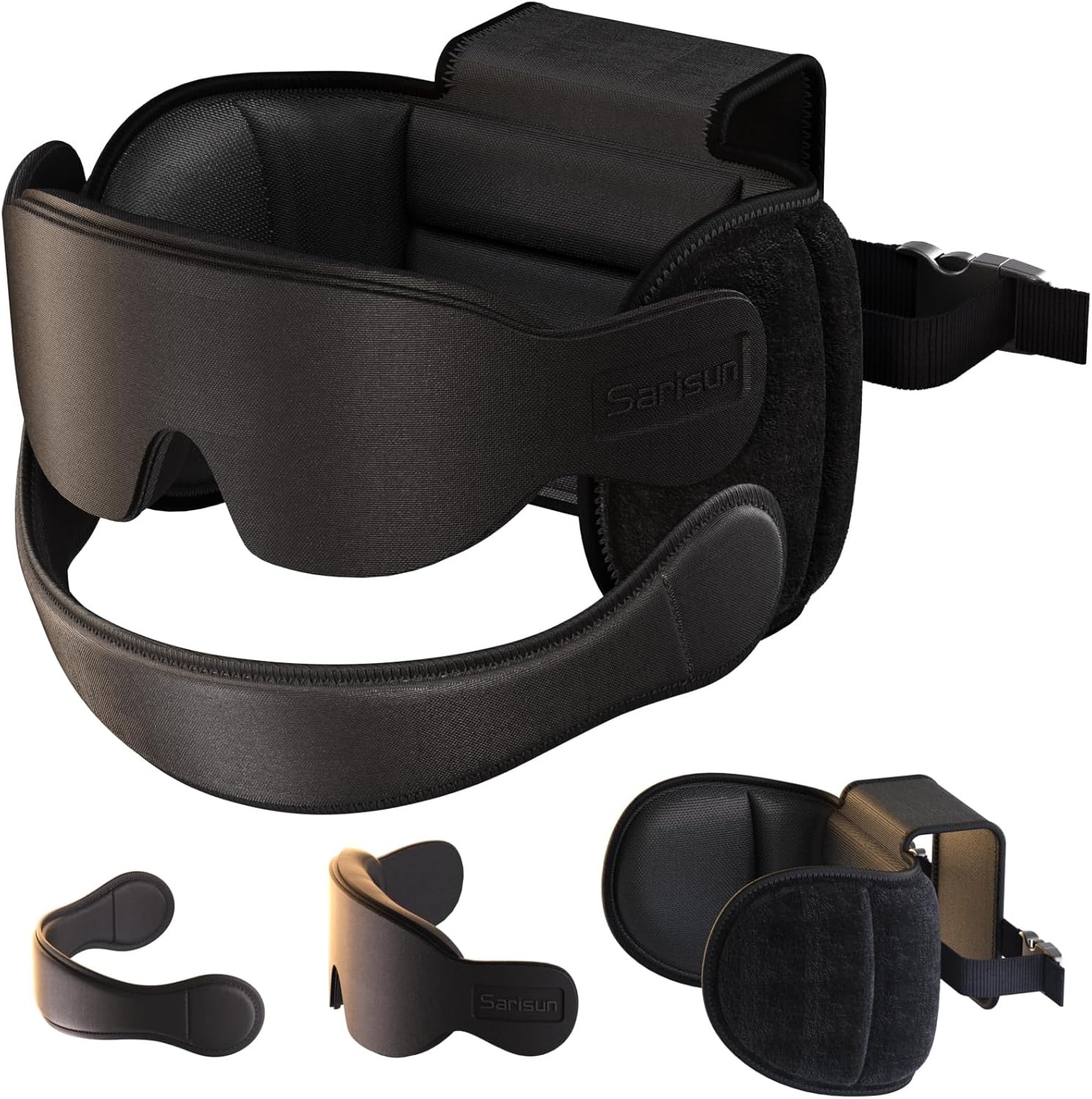
Falling asleep on a plane, train, or bus is one thing. Staying asleep without your head lolling forward or your mouth falling open is another challenge entirely. For side sleepers and anyone who tends to nod off with their chin dropping to their chest, a standard U-shaped cushion often isn’t enough. This is where a travel pillow with a chin strap earns its place in your carry-on. The strap holds your jaw in a neutral position, preventing the sudden jerks awake that come from your head slipping and your neck catching the fall. It also helps reduce open-mouth breathing and quiet snoring, which matters if you’re seated next to a stranger for six hours. Choosing the right one, though, isn’t as simple as grabbing the first option you see. Strap placement, adjustability, and how the pillow interacts with your seating position all affect whether you actually get restful sleep or just an uncomfortable accessory around your face.
Why the Chin Strap Design Matters More Than You Think
Most travelers assume all neck pillows function the same way, but the chin strap changes the entire mechanics of how your head is supported. Without one, your jaw is free to drop the moment your neck muscles relax, which is exactly when you’re trying to fall asleep. A well-designed strap sits under the chin and connects to the sides of the pillow, gently cradling the lower jaw so it can’t swing open or forward. The key word here is gently. A strap that’s too tight will feel restrictive and claustrophobic, while one that’s too loose defeats the purpose entirely. Look for straps with multiple adjustment points rather than a single fixed loop, since this lets you fine-tune the fit based on whether you’re sitting upright, reclined, or leaning toward the window.
Adjustability Across Different Seating Positions
Sleep posture on a flight rarely stays consistent for the full journey. You might start upright, shift toward the window an hour in, and end up slouched forward by the final stretch. A pillow that only performs well in one position isn’t going to carry you through a long trip comfortably. Test whether the strap and the pillow body can adapt as you move, rather than forcing you to sit rigidly to keep the support in place. Pillows with a hinge or flexible core tend to handle these shifts better than solid foam models, since they bend with your neck instead of holding one fixed shape.
Comfort Features That Prevent Drooling and Neck Strain
Beyond the strap itself, the overall build of the pillow determines whether you wake up refreshed or with a stiff neck. A firm inner core paired with a softer outer layer tends to strike the right balance, offering enough structure to hold your head steady while still feeling comfortable against your skin for hours at a time. Breathable, moisture-wicking fabric also plays a bigger role than people expect. If the material traps heat or doesn’t wick away moisture, you’ll end up adjusting constantly just to stay cool, which interrupts sleep even if the support itself is solid. This particular travel pillow with chin strap combines an adjustable strap with a supportive foam core, giving side sleepers a way to stay upright without their head dropping every few minutes.
Packing Size and Weight for Frequent Flyers
Frequent flyers know that every item in a carry-on has to justify its space. A chin strap pillow that doesn’t compress down to a manageable size becomes a burden rather than a comfort tool, especially on trips with tight overhead bin space or personal item restrictions. Memory foam models tend to be bulkier but offer denser support, while inflatable or compressible designs save space at the cost of some firmness. Decide based on your typical trip length and whether checked luggage is usually part of the equation, since that changes how much you’re willing to compromise on packed size.
Who Actually Benefits From a Chin Strap Pillow
Not every traveler needs this level of support. If you tend to sleep flat on your back with your head resting squarely against the seat, a standard neck pillow probably does the job fine. But if you’re a side sleeper, someone who snores when their mouth falls open, or a person who’s been startled awake more than once by their own head dropping, the added strap solves a specific problem that other pillows simply can’t. Business travelers on overnight flights and parents traveling with young kids, who need to actually rest during whatever quiet moments they get, tend to see the most noticeable difference. Sarisun designed this style with exactly that kind of traveler in mind, focusing on adjustability rather than a one-size-fits-all strap that ends up too loose or too tight for most people.
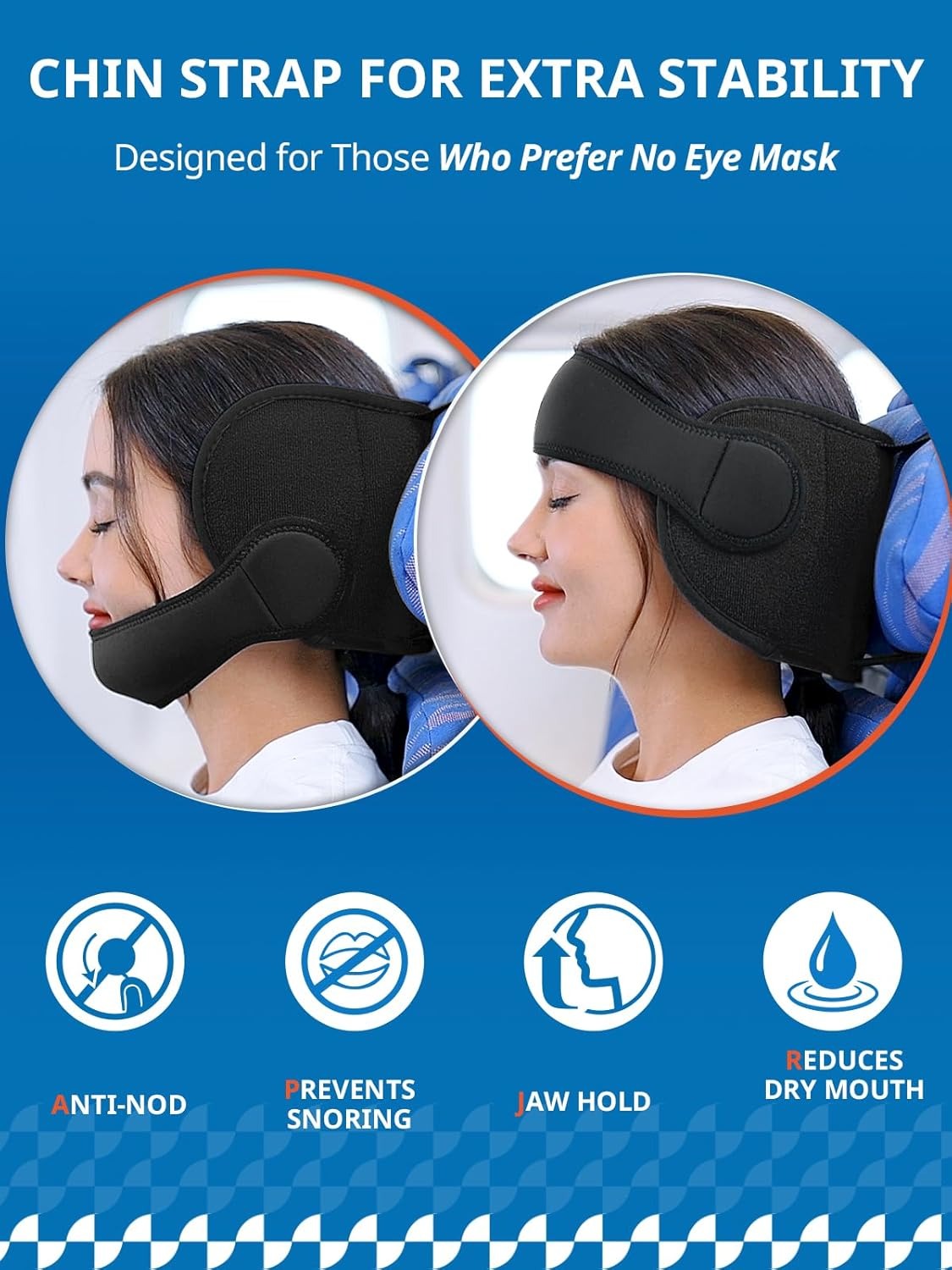
Before buying, think honestly about your own sleep habits on past trips. If you’ve never had an issue with your head dropping forward, the strap might just feel like an unnecessary extra layer. But if you’ve spent flights jerking awake or arriving with a sore neck from an unsupported jaw, this style of pillow addresses that directly instead of just cushioning the same problem you’ve always had.
Getting Real Rest on Your Next Trip
A travel pillow with a chin strap isn’t a gimmick for people who already sleep fine upright. It’s a targeted fix for a specific and common problem: the jaw drop that wakes you up or leaves your neck aching by the time you land. The right one adjusts to your seating position, uses breathable materials that won’t overheat, and packs down small enough to justify the space it takes in your bag. Pay attention to strap adjustability and core support before anything else, since those two factors decide whether you actually sleep better or just end up with a pillow that looks supportive but doesn’t function that way. Frequent flyers, side sleepers, and anyone tired of arriving at their destination already exhausted have good reason to give this design a real try on their next long trip.

