
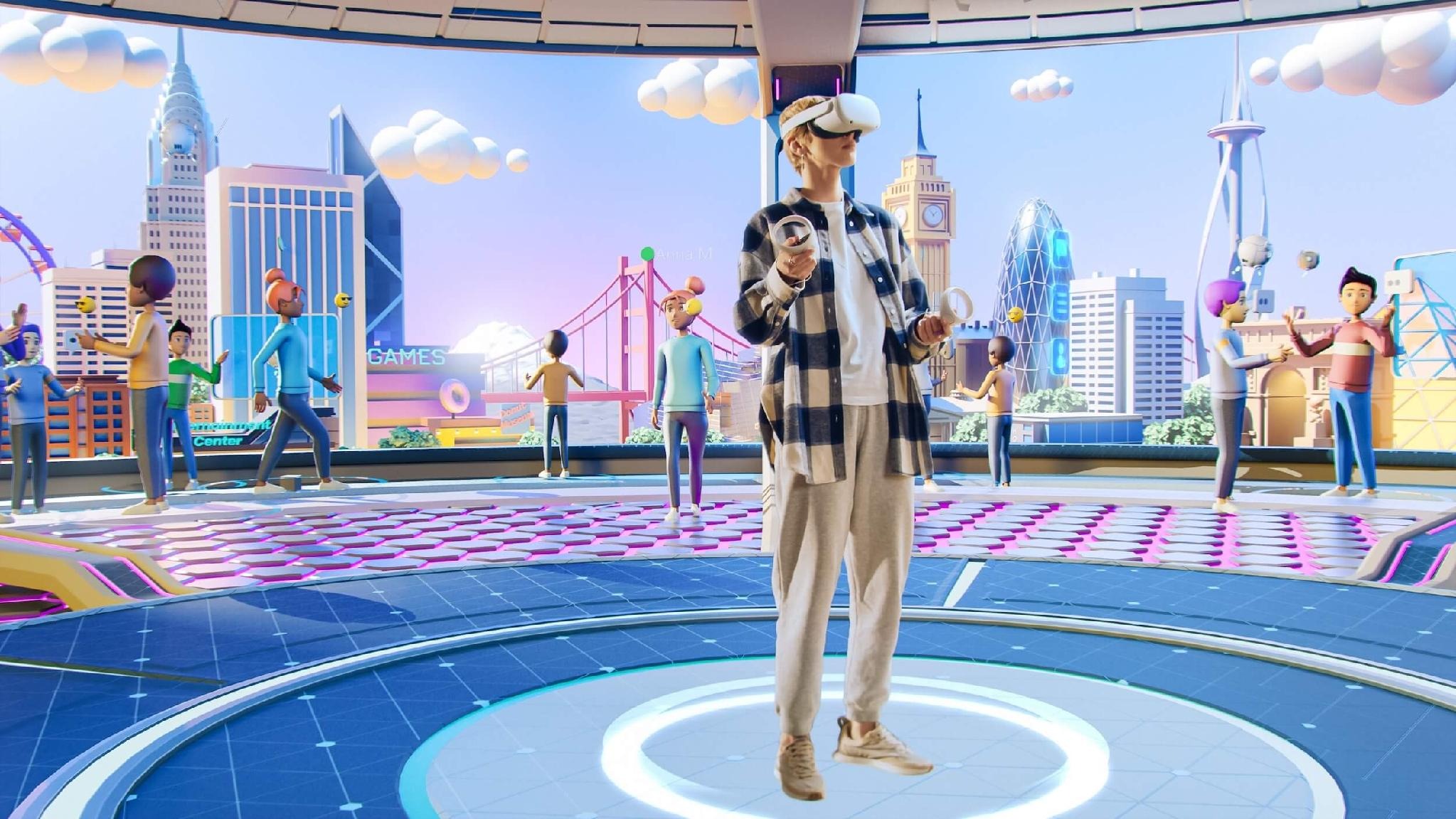
Immersive experiences have always been hungry for content. A single projection mapping show on a large building can need minutes of custom animation rendered at resolutions far beyond a cinema screen. A virtual reality environment needs every surface, object and sound built from scratch. An interactive museum wall needs content that responds to thousands of different visitor movements.
For years, that appetite for content was the main limit on what immersive studios could make. Ideas were plentiful. Time and production budgets were not. Artificial intelligence is now changing that balance, not by replacing the people who design these experiences, but by changing where their time goes. This article looks at where AI is already making a difference, what it cannot do, and what that means for anyone commissioning immersive work.
Why immersive content has always been hard to make
Immersive content is different from ordinary video in three ways. First, it is built for a specific space: a facade, a dome, a room or a headset, each with its own geometry and resolution. Second, it is often enormous, stretched across multiple projectors or rendered in 360 degrees. Third, it increasingly needs to react, changing with movement, sound or audience input in real time.
Each of those demands multiplies the work. A concept that takes a day to sketch can take weeks to model, texture, animate, render and test. That gap between idea and execution is exactly where AI is starting to help.
Where AI fits in the content pipeline
AI is not one tool but a set of capabilities that slot into different stages of production. These are the areas where it is having the clearest impact.
1. Concepts, mood and storyboards
Image generation lets creative teams explore dozens of visual directions in the time it once took to produce a handful. Style frames, colour studies and rough storyboards can be shown to a client early, so everyone agrees on the look before expensive production begins. The final artwork is still designed by people, but the conversation about what it should be happens much faster.
2. Capturing spaces and objects in 3D
Every mapped show starts with an accurate digital model of the surface. AI assisted photogrammetry and newer techniques such as Gaussian splatting can turn photographs or drone footage into detailed 3D scenes far more quickly than manual modelling. For museums and heritage sites, the same tools can digitise artefacts and interiors for virtual tours and AR experiences.
3. Textures, environments and upscaling
Generative tools can create seamless textures, background environments and material variations on demand. AI upscaling helps archival photographs, historical footage and lower resolution assets hold up when they are projected across a building many metres wide. That is especially useful for heritage storytelling, where the source material is often old.
4. Animation and motion
Motion can now be captured from ordinary video rather than a specialist motion capture studio. AI assisted tools help with in between frames, character movement and particle effects, while generative video can produce atmospheric layers such as smoke, water and light. Animators spend less time on repetitive frames and more on the moments that carry the story.
5. Voice, music and language
Narration is a big part of many immersive experiences, from museum guides to light and sound shows. AI voice and translation tools make it easier to produce versions in several languages, which matters in multilingual countries and for international audiences. Used with care and proper consent, they can also help teams prototype soundtracks and scripts before final recording.
6. Previsualisation and testing
Before a show reaches the site, it can be tested on a digital twin of the venue. AI driven tools help simulate how content will look from different viewing positions and under different lighting, spotting problems that would otherwise only appear on the night.
From pre made content to real time experiences
The bigger shift may not be in how content is produced, but in when. Traditionally, immersive content was rendered in advance and played back. AI makes it increasingly practical to generate and adapt content live. Computer vision can track a crowd and let visuals respond to where people stand. Generative systems can react to music, weather or audience input. In AR and VR experiences, AI can personalise what each visitor sees and power conversational guides that answer questions in a museum or showroom.
This turns audiences from viewers into participants, and it makes each visit slightly different, which is a powerful reason for people to come back.
What AI does not replace
For all its speed, AI does not solve the hardest parts of immersive work.
• The story. Deciding what an experience should make people feel, and how it unfolds, is still a human creative judgement.
• Cultural understanding. Shows on national monuments, religious sites or heritage buildings carry meaning. Getting tone, symbolism and history right requires people who understand the audience.
• Precision. Mapping content to a real building still depends on accurate surveys, careful calibration and engineers who know how light behaves on stone, glass and brick.
• Live delivery. On the night, someone has to run the show, solve problems and make decisions in real time. That part of the craft is unchanged.
• Taste. AI can produce endless options. Knowing which one is right is still the job of an experienced creative director.
Using AI responsibly
As AI becomes part of everyday production, studios and clients both need clear standards.
• Rights and licensing. Clients should know which assets were generated, which tools were used and what rights they hold over the final content.
• Historical accuracy. Generative tools can invent convincing but wrong details. Heritage and educational content must be checked against real sources.
• Consent and likeness. Recreating the voice or face of a real person, especially a national figure, needs permission and careful judgement.
• Transparency. Audiences increasingly want to know when content is AI assisted. Being open about it builds trust rather than weakening it.
What this means for clients
For brands, institutions and event organizers, AI changes what to expect from an immersive studio. Concepts and previews should arrive sooner. More options can be explored before a direction is chosen. Budgets can shift away from repetitive production and towards better ideas, richer interaction and stronger delivery. And experiences can be personalised in ways that were not practical a few years ago.
It also changes the questions worth asking. How does the studio use AI, and where does it not? Who checks accuracy and cultural sensitivity? Who owns the final content? A good studio will have clear answers.
The opportunity in Pakistan
Pakistan is well placed to benefit. The federal cabinet approved the National AI Policy 2025, which aims to train one million AI professionals by 2030, and the country already has a large, young pool of designers, developers and animators. Immersive studios are beginning to combine these skills.
Hoola, an immersive technology company with studios in Islamabad, Lahore and Karachi, works across projection mapping, augmented and virtual reality, digital products and applied AI and machine learning. Having those disciplines under one roof reflects where the industry is heading: AI as part of the toolkit, alongside the creative direction, engineering and live delivery that turn content into an experience people remember.
The bottom line
AI is not making immersive experiences less human. It is removing the bottlenecks that kept good ideas on the drawing board. The studios that thrive will be those that use it to move faster and experiment more, while keeping people firmly in charge of story, accuracy and craft. For audiences, that should mean more ambitious, more responsive and more personal experiences than ever before.

