
Solar energy adoption across Southeast Asia is accelerating at a pace that energy analysts and policy observers rarely anticipated a decade ago. In Thailand specifically, the convergence of falling hardware costs, supportive government frameworks, and growing corporate sustainability mandates has created conditions where solar installations are shifting from optional add-ons to core infrastructure decisions. Residential homeowners, commercial property developers, and industrial facility managers are all recalibrating their energy strategies as the economics and technology landscape continue to evolve. This outlook examines where the sector is heading and what each stakeholder group can expect in the years ahead.
Growing Demand for โซล่ารูฟท็อป Installations
Residential solar adoption in Thailand has been climbing steadily, and the trend shows no sign of plateauing. The appeal of โซล่ารูฟท็อป installations lies in their dual benefit: reducing monthly electricity bills while contributing meaningfully to household carbon reduction goals. As grid electricity tariffs continue on an upward trajectory, the payback period for rooftop systems has shortened considerably — in many cases falling below seven years for mid-sized residential setups.
Industry projections suggest that by 2030, more than 15 percent of Thai households with suitable roof space will have some form of solar generation capability. Urbanization patterns combined with rising awareness among younger homeowners are expected to drive uptake in Greater Bangkok and secondary cities including Chiang Mai, Khon Kaen, and Phuket. Government net-metering provisions have further strengthened the investment case, allowing surplus generation to offset future billing cycles rather than simply going unused.
How โซล่ารูฟ Technology Is Evolving
Panel efficiency improvements represent one of the most consequential threads in the solar technology narrative. The average commercial panel available in Thailand today converts roughly 20 to 22 percent of sunlight into usable electricity, compared to approximately 15 percent a decade ago. Over the next five years, heterojunction and back-contact cell architectures are projected to push conversion rates closer to 25 percent, making existing roof space significantly more productive without requiring additional surface area.
Beyond panel efficiency, the intelligence layer of solar systems is advancing rapidly. Monitoring platforms, inverter design, and battery integration are transforming what was once a passive energy source into an actively managed asset. Companies operating in this space, such as SolarEdge, have focused engineering resources on optimizer and inverter technologies that enable module-level monitoring and maximized energy harvest even in partially shaded or geometrically complex roof configurations. The โซล่ารูฟ segment in Thailand is increasingly characterized by buyers who expect real-time data visibility and system diagnostics alongside basic electricity generation — a shift that is reshaping how installers and integrators approach project scoping.
Industrial Solar: The Sector’s Next Major Growth Frontier
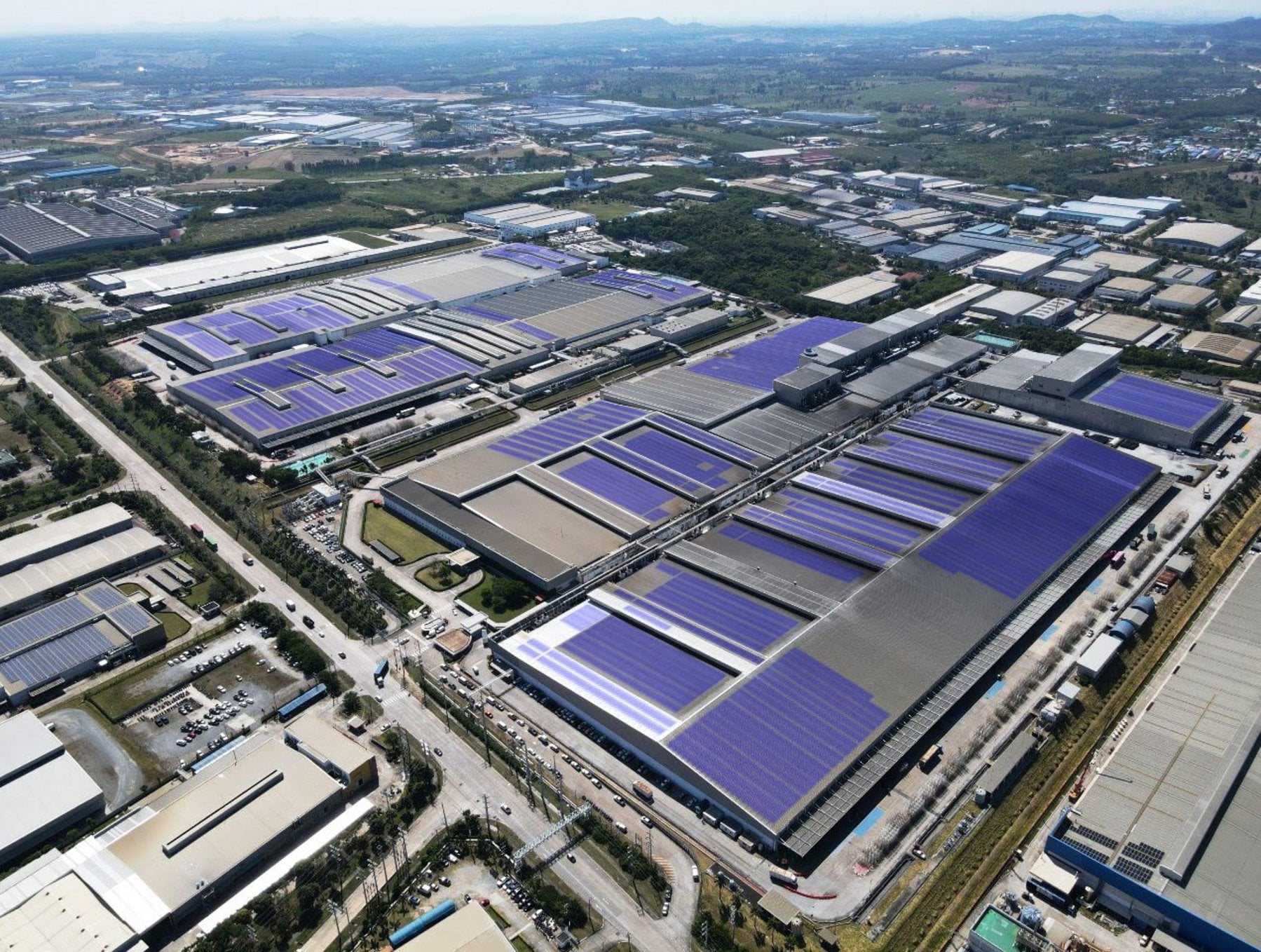
While residential adoption draws considerable media attention, the commercial and industrial segment represents the most substantial volume opportunity in Thailand’s solar market. Large manufacturing facilities, logistics warehouses, and food processing plants consume electricity at scales where even modest solar displacement produces significant cost savings on an annualized basis.
The decision toInstall solar power for the factory has moved from a corporate social responsibility consideration to a straightforward financial calculation for facility managers and procurement teams. Industrial rooftops — typically flat, unshaded, and structurally designed for equipment loads — offer close to ideal conditions for large-scale array deployment. System sizes in the 200 kWp to 2 MWp range have become increasingly common across Thailand’s Eastern Economic Corridor (EEC) industrial estates, where electricity-intensive operations are concentrated and energy cost predictability is a competitive advantage.
Policy support has reinforced this trend. Several major industrial estates are now encouraging or requiring new tenants to integrate solar generation into facility design as a standard condition, reflecting how quickly industrial solar has moved from a differentiator to a baseline expectation.
Grid Integration and Energy Storage as Enabling Infrastructure
A recurring theme in solar sector analysis is the relationship between distributed generation growth and grid stability. As rooftop solar penetration increases across residential and commercial settings, grid operators face new challenges in managing intermittent and variable supply. This dynamic is accelerating investment in battery energy storage systems alongside generation assets, particularly for industrial customers seeking to maximize self-consumption ratios.
In the Thai context, EGAT and provincial electricity authorities have begun updating technical standards for grid-connected solar with a stronger emphasis on voltage and frequency response capabilities. System integrators operating in Thailand will need to stay ahead of these evolving compliance requirements, as grid approval timelines become a more prominent constraint on project delivery schedules.
SolarEdge, among other technology providers in the market, has positioned its platform around inverter intelligence and grid services capability — reflecting a broader industry recognition that future-ready solar systems must do more than generate kilowatt-hours in isolation. The ability to participate in demand response programs or support grid ancillary services is expected to become a differentiating specification for installations commissioned from 2025 onward.
Workforce Development and Supply Chain Readiness
Projecting solar growth in Thailand requires accounting for the workforce and supply chain infrastructure needed to support it. Installation capacity — the pool of qualified technicians, engineers, and project managers capable of commissioning systems safely and to technical code — has historically lagged behind demand spikes in other high-growth solar markets.
Thai vocational and technical institutions have begun expanding solar-specific curricula, and industry associations are developing certification frameworks to ensure installation quality and consistency across both residential and industrial segments. Supply chain localization is also progressing, with panel assembly and racking component manufacturing gaining a footing in Thailand as Southeast Asian demand volumes justify the capital investment.
Conclusion
The trajectory of solar energy in Thailand — from residential rooftop systems to utility-scale industrial deployments — points toward a sector that will be fundamentally more significant and technically sophisticated by the end of this decade. The stakeholders best positioned to benefit are those who invest now in understanding the technology direction, policy environment, and installation quality standards that will define market expectations.
For those evaluating solar solutions across residential, commercial, or industrial applications in the Thai market, further information is available at

