
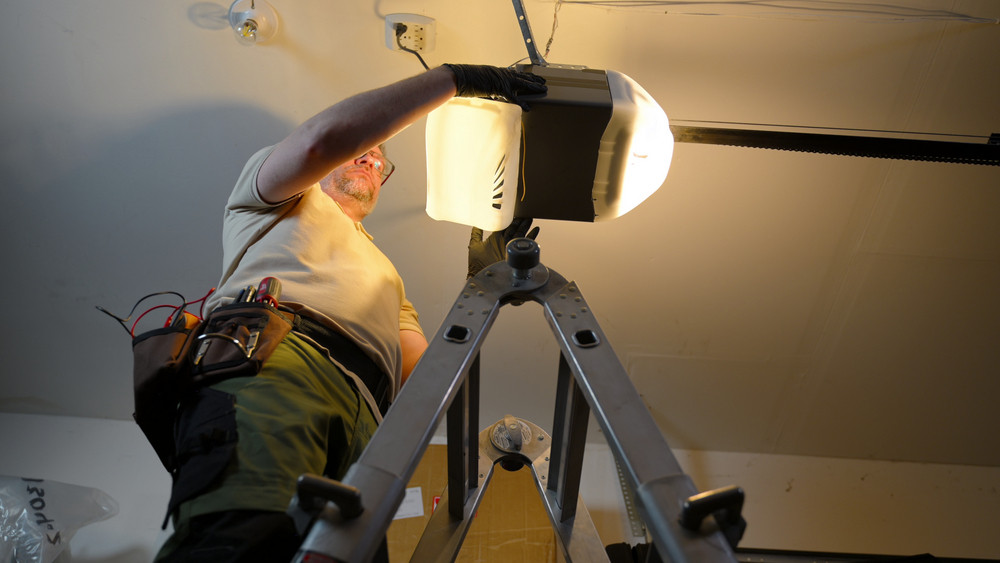
For many households, the garage door is the main entrance to the home. It opens and closes several times a day, and the opener that powers it does most of the work without anyone giving it a second thought. When it’s time to replace an aging or noisy opener, though, the options can feel overwhelming. Choosing the right one depends on your door, your habits, and the condition of the parts that work alongside it.
Start With the Condition of Your Door
Before you shop for a new opener, take a close look at the door it will be lifting. A new opener won’t solve problems caused by a door that’s warped, damaged, or nearing the end of its useful life. If the door itself needs replacing soon, it often makes sense to upgrade both at the same time.
HomeAdvisor reports that garage doors typically last anywhere from 15 to 30 years. Where a door falls in that range depends on the material it’s made from, how often it’s used, the local climate, and how well it has been maintained. Steel doors that are cleaned and lubricated regularly tend to hold up well, while wood doors exposed to harsh weather may wear out sooner.
Check for dents, rust, rot, cracked panels, and gaps along the weatherstripping. Run the door manually with the opener disconnected to see whether it moves smoothly and stays in place when partially open. A door that’s difficult to lift by hand will strain any opener, so address those issues first.
Match the Horsepower to Your Door
Openers come in different power levels, and picking the right one helps ensure smooth, reliable operation. According to Today’s Homeowner, a ½ HP opener is usually plenty for most standard two-car sectional doors. Heavier, single-panel, or oversized doors are better served by a more powerful ¾ HP to 1 ½ HP model.
Choosing an opener that’s too weak forces the motor to work harder, which can shorten its life and lead to slow or jerky movement. Going bigger than necessary isn’t harmful, but it can add to the cost. Consider the door’s material as well, since solid wood and insulated doors weigh more than basic steel or aluminum models.
Horsepower isn’t the only decision. Chain-drive openers are durable and affordable but can be noisy, while belt-drive models run much more quietly, which is ideal if there’s a bedroom above the garage. Many newer openers also offer smartphone control, battery backup for power outages, built-in cameras, and automatic lights that make coming home after dark safer.
Don’t Overlook the Springs
While the opener gets most of the attention, the springs do the heavy lifting. They counterbalance the door’s weight so the opener only has to guide it up and down. When a spring wears out, even the strongest opener will struggle, and the door may refuse to open at all.
Spring problems are common. HomeGuide notes that replacing springs is the most frequent garage door repair, since most springs are rated for just 10,000 to 20,000 cycles. Each time the door opens and closes counts as one cycle, so busy households can reach that limit faster than they might expect.
Warning signs include a loud bang from the garage, a door that feels unusually heavy, uneven movement, or visible gaps in a torsion spring. Because springs are under extreme tension, replacing them is a job for a trained technician. If you’re installing a new opener, ask the installer to inspect the springs and balance the door at the same time.
A Smoother, Safer Garage
The right opener can make daily life more convenient and keep your garage running quietly for years. By checking the condition of your door, matching the opener’s power to its weight, and keeping the springs in good shape, you’ll get dependable performance every time you press the button.

