
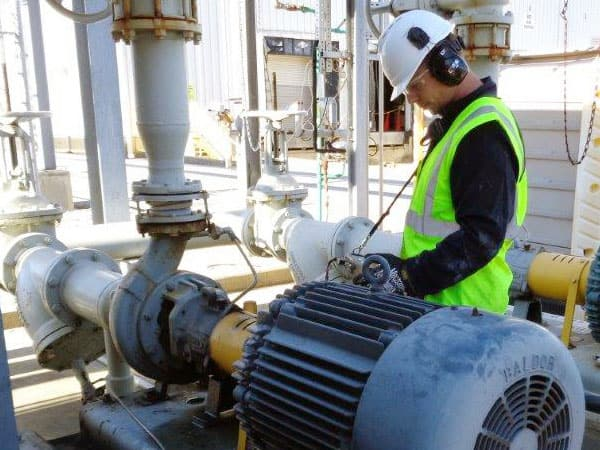
In today’s industrial environment, predictive maintenance is no longer a requirement of convenience but one of necessity. This is due to industrial equipment operating continually, and any downtime results in costly implications for organizations. Companies are therefore increasingly leveraging remote vibration analysis as a fundamental principle of intelligent machine management. This is due to its ability to deliver real-time data and information regarding equipment status, such that proactive measures can be taken to prevent impending problems from becoming major catastrophes.
Reducing Unplanned Downtime
Sudden machine failure is very expensive in terms of repair costs and loss of productivity. Vibration tracking can find the abnormalities that lead to a breakdown, such as bearing wear or imbalance in rotating machinery, well in advance. The real-time analytics of the vibration pattern give maintenance teams ample time to undertake necessary repairs or replacements during scheduled downtime, long before sudden failures cause snowballing effects. This predictability allows companies to ensure no interruption to production, minimize disruption to operations, and retain labor resources. Over time, as a company continues to use this technology, it will start moving from a totally reactive maintenance philosophy toward a more proactive, reliability-centered philosophy.
Enhancing Condition-Based Monitoring
The use of condition-based monitoring involves tracking equipment performance parameters to determine early indications of potential failure. Remote oscillation tracking is an improved way of condition-based monitoring that involves monitoring information about equipment-related vibration, rotational imbalances, and equipment misalignments. Organizations that invest in reliable remote vibration monitoring services often benefit from a holistic view of machine health, enabling maintenance teams to prioritize interventions based on actual conditions rather than fixed schedules. By identifying subtle anomalies early, businesses can reduce unplanned downtime, improve safety, and extend the life of critical assets. This data-driven approach ensures that resources are deployed efficiently, focusing on machines that truly require attention.
Optimizing Maintenance Schedules
Conventional maintenance patterns tend to conform to strict time intervals. In this way, there may be inspections that are unnecessary, or the critical aspect may be overlooked. Vibration measurement technologies allow for optimized scheduled maintenance. In this way, the machine will be repaired based on the actual condition it is in. Through continuous machine performance measurement, such a system will trigger notifications only when the critical threshold has actually been surpassed. In this way, the machine will be repaired only when it is actually needed. Additionally, this technology may merge information from the business resource planning systems to allow for spare parts inventory accuracy.
Supporting Data-Driven Decision Making
The information generated from remote oscillation analysis is useful for purposes beyond routine maintenance. For instance, by pooling data on the overall vibration trend of an organization at different times in the past, an organization can develop insights on how to proceed based on the data. Moreover, advanced analysis can be done based on the data collected from vibration analysis, enabling management to budget based on the failure risks predicted by the analysis. Remote analysis brings oneness in the analysis between the operators in the field and the analysts in other parts of the world.
Enabling Scalability Across Industrial Operations
As businesses grow, it becomes increasingly complex to ensure consistency in machine health across multiple sites. Remote oscillation monitoring enables businesses to scale their coverage across the organization without having to scale their direct presence. The centralized dashboards ensure a single point of observation across machines and sites, and engineers are able to track critical machines from anywhere and everywhere, and in real time, too. This scalability further helps businesses operate across multiple sites and still ensure high levels of machine reliability within acceptable costs. Through IoT, businesses today have the capability to create an integrated environment to have standardized predictive maintenance across all sites, and make the beginning of an intelligent industrial operation.
Remote vibration tracking is changing the face of how companies manage machine maintenance. The technology is ideal for optimizing condition-based monitoring, unplanned downtime, maintenance schedules, and even decision-making. For this reason, industries that incorporate intelligent maintenance systems will find remote oscillation monitoring a revolutionary technology that not only maintains but also advances the future of the industry in a smarter and more resilient manner.

