
Key Takeaways
- Real estate agents are increasingly adopting artificial intelligence (AI) and digital tools to improve client services.
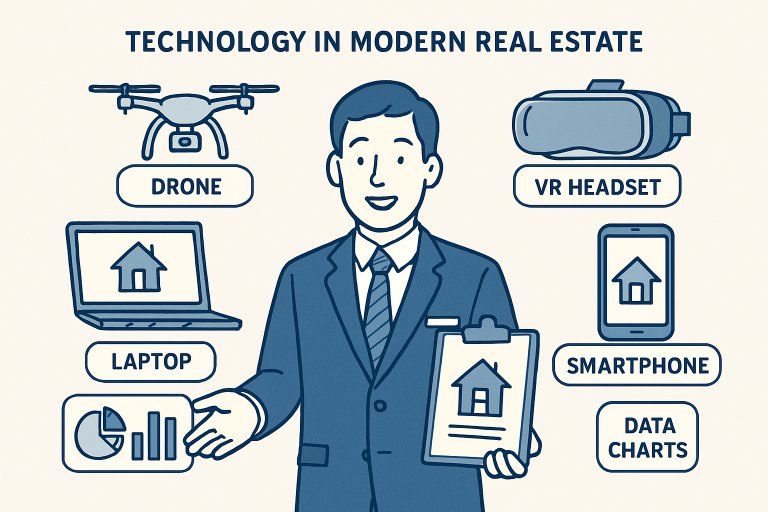
- Technologies like virtual reality (VR), drone photography, and AI-driven marketing are revolutionizing property showcasing and marketing strategies.
- Embracing these digital tools can lead to increased efficiency, better client engagement, and a competitive edge in the market.
Table of Contents
- AI in Real Estate
- Virtual Reality Tours
- Drone Photography
- Social Media Marketing
- Blockchain Transactions
- Data Analytics
- Conclusion
As the real estate industry rapidly evolves, agents are leveraging the power of advanced digital tools not only to stay competitive but also to deliver superior experiences for buyers and sellers. Denver CO real estate agent Elise LoSasso exemplifies how top-tier professionals meet the demands of modern clients by adopting these groundbreaking solutions. Technology is transforming the real estate industry, from AI to immersive tours. Clients expect seamless service, quick info, and transparency. Agents who adopt digital tools, such as virtual reality and analytics, boost efficiency, market reach, and client satisfaction. The industry’s digital shift enhances marketing, engages audiences, and improves listing presentation. Homeowners and buyers gain clarity, excitement, and access. Understanding these key technologies is vital for agents to excel and stand out in a competitive market.
AI in Real Estate
Artificial intelligence is fundamentally transforming how real estate agents operate. By harnessing AI-powered platforms, agents can automate routine tasks, personalize communication, and provide data-backed recommendations rapidly. Chatbots answer inquiries around the clock, while machine learning tools generate compelling property descriptions, analyze changing market conditions, and identify future opportunities based on vast datasets. AI’s capacity to predict buyer behaviors allows agents to target marketing efforts with unprecedented precision and to allocate resources more effectively for each listing.
Virtual Reality Tours
Virtual reality (VR) technology is making house hunting more immersive and accessible than ever before. Prospective buyers—regardless of their location—can experience high-definition, interactive walkthroughs of properties from their own devices. These 3D tours, powered by advanced platforms like Matterport, offer stunning visualizations that provide a true sense of space and layout. This not only benefits out-of-town clients but also streamlines the sales cycle by allowing more informed, confident decisions earlier in the process. VR is especially valuable in luxury and new construction markets, where decision-makers often need remote access before visiting a site in person.
Drone Photography
Capturing a property’s unique features requires an eye for detail—and a vantage point that traditional ground-level photography can’t offer. Drones have revolutionized listing presentations by delivering breathtaking aerial views, revealing everything from architectural details to sweeping landscape and neighborhood context. High-resolution imagery and cinematic video footage help highlight spacious lots, waterfronts, or proximity to desirable amenities, setting listings apart in a crowded marketplace. Drone imagery has quickly become a standard for agents seeking to capture buyers’ attention online.
Social Media Marketing
Digital-savvy real estate professionals rely on social media platforms—such as Instagram, Facebook, and TikTok—to amplify their reach and humanize their brand. Today’s agents create engaging listing videos, host live virtual tours, and post educational content to attract and retain followers. Social media interaction fosters authentic connections with prospective clients and provides a powerful forum for Q&A sessions, testimonials, and real-time market updates. Additionally, sophisticated advertising tools enable hyper-targeted campaigns, allowing agents to reach specific demographics or geographic regions most likely to be interested in their properties, thereby significantly boosting lead generation.
Blockchain Transactions
Transparency and security are crucial in real estate, and blockchain supports this by enabling smart contracts that reduce the need for intermediaries, paperwork, and fraud risk. Automated execution of agreements, escrow, and payments enhances trust and accelerates closings. As adoption grows, the industry is expected to transform, offering faster and safer transactions.
Data Analytics
Real estate agents are leveraging the power of big data and analytics tools to uncover actionable insights, understand consumer behavior, and forecast market trends. By processing data from sources such as MLS, social media, and public records, agents can more accurately estimate home values, set appropriate listing prices, and develop targeted marketing strategies. Predictive analytics enables the more accurate identification of emerging neighborhoods or investment opportunities, equipping agents with the knowledge needed to counsel clients on timing and pricing. These insights, combined with ongoing advances in AI and automation, ensure that agents remain nimble and responsive, even as market conditions shift.
Conclusion
The digital revolution is reshaping every facet of the real estate industry. Agents who embrace innovative technologies—such as artificial intelligence, virtual reality, drone photography, social media marketing, blockchain, and data analytics—are providing an unmatched level of service for modern clients. By integrating these digital tools, real estate professionals not only streamline their own workflows but also deliver superior outcomes, ensuring success in a highly competitive landscape.

