
A Shift in How We Work
An office container does not appear as the dawn of a workplace revolution. A wall of steel, a door, maybe a window—it sounds prosaic. But step in there and you will see how these little rooms are defying office. They are dynamic, sustainable and agile. Most importantly, they resonate with the repositioning of the rhythm of modern work, where malleability is superior to inflexibility and design is there to serve people, rather than the contrary.
Flexibility Without Fuss
Traditional offices make people stay immobile. Containers break that chain. They can be discarded in urban trash dumps or accumulate in construction sites or the off-site of remote projects. When businesses change and teams are evolving or shifting, they can be begged to be moved. It is some kind of liberation that could not be provided by old office buildings. The workplace is where the work is done and not the other way round.
Quick to Deploy
Time is precious. A normal office may take months of construction and approvals to construct. A container is, however, ready to use. Assemble insulation, furniture and hook-ups, and a working place within days. This speed is beneficial in a world where projects fail overnight and businesses change directions.
Space That Works Smarter
A small container may have a small footprint, but its design potential can be large. The place is accommodative to many activities yet not congested.
Multi-Use Layouts
It has a folding wall, which can be a conference table. Benches double as storage. Individual areas or free working areas are created by movement of walls. It is an enigma in which every one of the pieces plays several roles. With this type of flexibility, the container becomes more productive as compared to the old-fashioned layouts, where the square footage is ignored and goes to waste.
Color and Light as Tools
Color psychology is in small areas. The average tones are calming, and they make the mind focused, but the bright colors are thought-provoking and energetic. Natural lights are also used to light interiors with huge windows or skylights, and thus less electricity is used. Workers are less fatigued and more active; they reason better, feel better and consume less energy in fighting exhaustion. Light and paint may be tiny, but they weigh enormously.
Sustained Design
Workplaces do not exist in vacuums. They are tested through their environmental influence just like functionality. Containers are more natural and greener.
Recycling at Scale
Reuse of a container in an office will save tons of steel that would be sitting and scrapping. New resources are not used by companies, but the old ones are reused. It recycles in big houses, not the dimensions of household bins.
Lower Energy Use
The less power is needed to warm or cool small shells. Outfit and install solar panels and energy-efficient windows, and the office is a low-demand environment. It means that utility payments and the load on power grids are less. The green benefit is not abstract; it is something that can be quantified on a monthly basis.
Climate and Airflow
The systems of the modern generation regulate the temperature with minimum efforts of workers. Spaces are too small, and ventilation systems and open windows are extremely significant. A container that is well ventilated is cooler and not stuffy. Employees who breathe easy work better—it is that easy.
Bringing Nature Inside
Plants reduce the hard walls and improve the level of indoor air. Vertical gardens could be a source of decoration as well as insulation. The presence of a few potted plants on desks would change the feel, thereby making the container less industrial and more human. Humans do not sit in some office; they belong to a living environment.
Mobility as a Strategic Edge
There is seldom work in the same gig. Projects move. Teams relocate. Markets shift. Office containers are assembled after that.
Relocation Without Waste
Containers transport and relocate rather than discard a lease or demolish a temporary structure. Firms can operate the same workspace in numerous sites, which is resource- and time-saving. The flexibility in it eradicates waste and the expense of starting afresh in each new location.
Expansion Made Simple
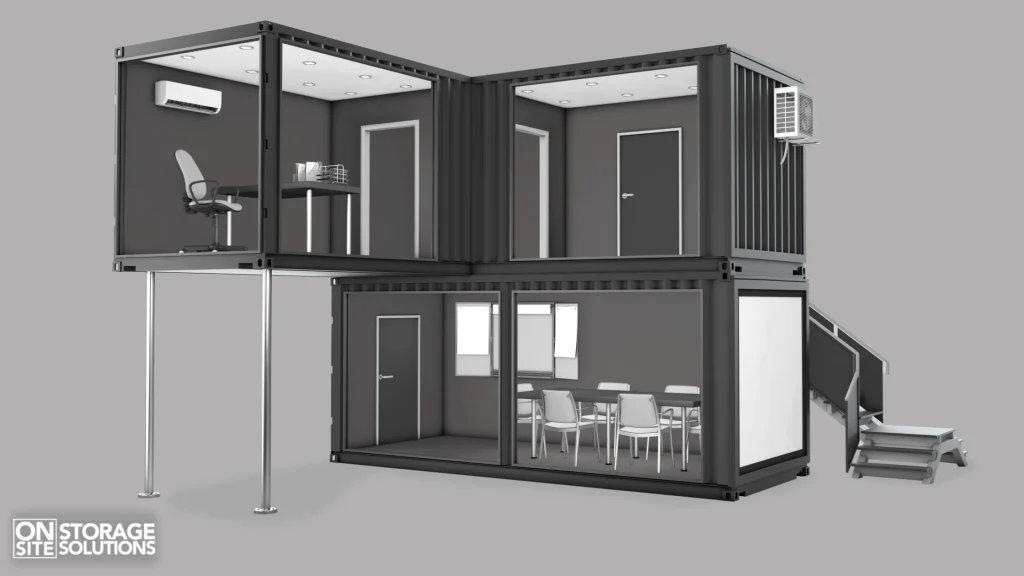
Need more space? Add another container. Stack vertically. Connect units with walkways. Growth is modular. Teams can expand or contract space without the need to remove a wall or rebuild. This elasticity is concomitant to the uncertainty of a contemporary work.
Why Containers Matter Now
There is a rapid transformation in the working environment. Flexibility, sustainability and mobility are not luxuries anymore; they are necessities. The valuables are made in physical form in office containers. They too are reusing the existing ones, which is adapting to the emerging requirements, and they carry with them the teams, which are dependent on them. These are not edge cases for businesses that are aiming to stay agile. They are practical and mighty tools to redefine the manner in which we think about where the work is done.

