
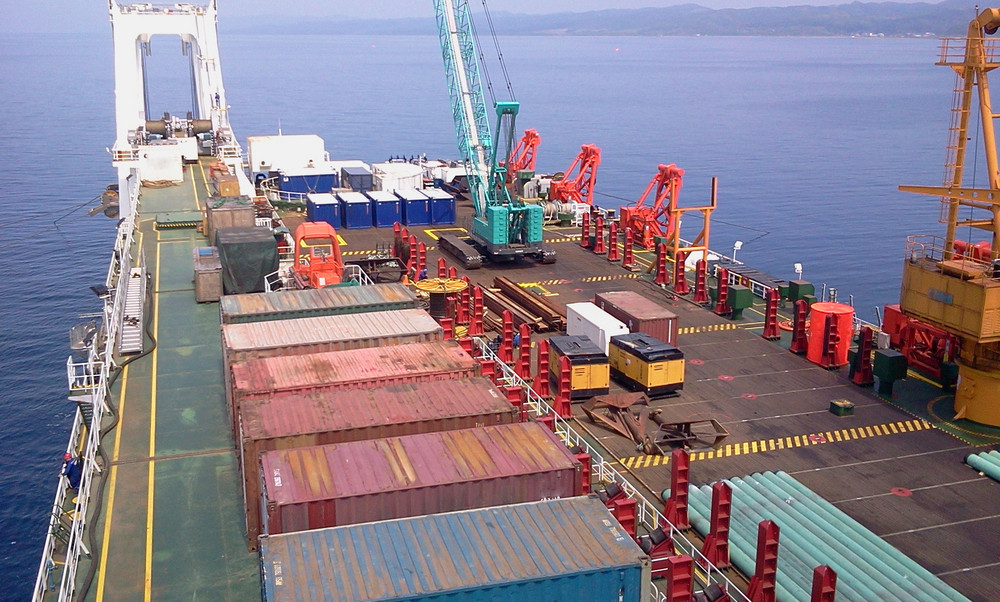
Global commerce depends on systems that are reliable, scalable, and efficient. Few innovations meet all three criteria as effectively as shipping containers. From international trade lanes to domestic storage solutions, container businesses quietly support the movement of goods, stabilize supply chains, and enable economic growth. Their influence extends far beyond ports, shaping how modern economies operate day to day.
The Hidden Infrastructure Behind Global Trade
Standardized shipping containers form the backbone of international logistics. Their uniform design allows cargo to move seamlessly between ships, trains, and trucks, reducing handling time and costs. This consistency supports just-in-time manufacturing and global sourcing strategies that many industries rely on to remain competitive.
Despite their visibility at ports, a large share of containers function as reserve capacity rather than active assets. Port Technology International reports that there are roughly 17 million shipping containers worldwide, yet only 6 million are currently in circulation. This imbalance highlights how container businesses help economies absorb fluctuations in trade demand. During periods of disruption, such as supply chain congestion or sudden surges in consumer demand, idle containers can be deployed quickly to restore flow and reduce bottlenecks.
By maintaining this buffer, container providers help stabilize trade networks. Manufacturers, retailers, and distributors benefit from a system that can scale without requiring entirely new infrastructure. In economic terms, containers act as flexible capital assets that support resilience across multiple industries.
Expanding Maritime Capacity and Economic Scale
The growth of container shipping has gone hand in hand with globalization. As trade volumes increased, shipping container businesses adapted by supporting larger vessels and more efficient port operations. This evolution enabled economies to move higher volumes of goods at lower per-unit costs, reinforcing international trade relationships.
Statista data shows just how dramatic this expansion has been. Between 1980 and 2022, the deadweight tonnage of container ships rose from about 11 million metric tons to approximately 293 million metric tons. This growth reflects more than bigger ships. It signals deeper integration between container manufacturers, leasing companies, and shipping lines.
Larger vessels depend on standardized containers to maximize capacity and minimize turnaround time. In turn, this efficiency lowers transportation costs for exporters and importers alike. For modern economies, the result is broader market access, more competitive pricing, and stronger participation in global supply chains. Container businesses make this scale possible by ensuring equipment availability, maintenance, and compatibility across borders.
Containers Beyond the Port and Into Local Economies
While maritime shipping often gets the spotlight, container businesses also play a vital role closer to home. Portable storage containers support construction projects, retail operations, disaster recovery efforts, and small business logistics. Their versatility allows companies to respond quickly to changing space and storage needs without long-term real estate commitments.
This segment is poised for steady growth. Business Research Insights estimates that the portable storage container market will expand by 4.1% by 2028. That projection reflects increasing demand from businesses seeking flexible, cost-effective solutions. As urban development intensifies and supply chains become more decentralized, portable containers help bridge gaps between fixed facilities.
For local economies, this translates to faster project timelines, reduced overhead, and improved operational efficiency. Container businesses serve the role of supplying the infrastructure that allows companies to remain agile in uncertain market conditions.
Shipping container businesses are foundational to modern economic systems. They support global trade, enable massive maritime scale, and provide flexible solutions for local industries. Although often overlooked, their standardized design and widespread availability allow economies to adapt, grow, and recover in the face of change. As trade patterns evolve and businesses seek greater resilience, the role of shipping container companies will remain central to economic stability and progress.

