
Hotel guests don’t usually describe a stay as “great”, because a property has technology. They describe it as great because everything feels effortless: getting into the room, figuring out what’s on, ordering what they need, controlling comfort, and getting help instantly, without friction or waiting in line. The newest wave of hospitality tech products is finally aligning around that idea: remove steps, reduce uncertainty, and make service feel immediate and personal.
Here are the most notable recent hospitality tech products (and product-style rollouts) that are actively enhancing the guest experience right now.
1) Wallet-based room keys: “your phone is the key” finally goes mainstream
Digital keys aren’t new, but the latest shift is meaningful: keys moving from “download our hotel app” to native smartphone wallets. That reduces the biggest adoption barrier, guests don’t want another app for a two-night stay.
- Mews Digital Wallet Hotel Key Integration (Aug 2025): Mews announced an integration that places hotel keys directly into a guest’s smartphone wallet, positioning wallet-based keys as a more seamless alternative to app-based access.
- Apple Wallet room key deployments (Sep 2025): Multiple hotel groups have publicized enabling “room key in Apple Wallet,” letting guests tap iPhone/Apple Watch to unlock rooms and sometimes other access points on property. Examples include Lore Group properties and easyHotel rollouts.
- Hotelbird + Vingcard NFC wallet keys case study (Dec 2025): Vingcard highlighted an implementation combining Hotelbird and Vingcard to launch NFC-enabled digital wallet room keys at a German property, another signal that major lock ecosystem players are treating wallet keys as a real channel, not a pilot.
- Canary + OpenKey assets move (Feb 2026): Canary’s addition of OpenKey assets reflects consolidation around end-to-end “mobile access + check-in + identity + messaging” rather than standalone mobile key tools.
Why guests feel it: fewer steps at arrival, fewer front-desk bottlenecks, and less “tech confusion.” The best implementations also support sharing keys with companions and simplify access to elevators/amenities.
2) AI guest messaging (and AI voice): faster answers, fewer queues, more personalization
The guest experience is often defined by the little questions: “Can I check in early?”, “What time is breakfast?”, “Can I get extra towels?”, “Can I book a late checkout?” Modern guest messaging platforms are evolving from simple chat inboxes into AI-assisted service and sales systems.
- Canary AI Guest Messaging: Canary positions its AI guest messaging as automating a large share of routine conversations while delivering personalized recommendations and timed upsell offers.
- Canary AI Voice suite (announced 2025): Canary also introduced an AI voice product line designed to answer calls and handle common guest needs, important because many guests still default to calling rather than texting.
Why guests feel it: responses become instant (24/7), language support improves, and requests get routed correctly. The best systems keep the “human handoff” smooth, AI handles routine, staff handles nuance.
3) In-room AI concierge on hotel tablets: a modern replacement for the binder
In-room tablets have existed for years, but the newest differentiator is AI concierge experiences layered into those devices, turning a static menu into an interactive assistant.
- HCN “human-looking” AI concierge on in-room tablets (Jun 2025): HCN announced an AI concierge experience available to guests via its in-room tablet platform, framing it as a more engaging, always-on in-room help layer.
Why guests feel it: the “how do I…?” moments get solved from the room, immediately, ordering amenities, learning property info, and discovering offers without calling or walking downstairs.
4) Streaming and in-room entertainment gets a major upgrade: built-in casting and personalized TV
Nothing breaks immersion like a clunky hotel TV. The newest hospitality TV platforms emphasize casting without extra hardware, brand customization, and (in some cases) account-based personalization with automatic wipe at checkout.
- LG Hotel TVs with built-in Google Cast (ISE 2025): LG showcased hotel TVs with integrated Google Cast, signaling a shift to native casting experiences in hospitality-grade displays.
- LG Cast expansion via firmware for existing hotel TVs (Hospitality Show 2025): LG also announced extending Cast functionality to earlier Pro:Centric webOS 5 hotel TVs and set-top boxes via firmware, important because it lowers costs and speeds adoption across existing fleets.
- Google TV + DirecTV Advanced Entertainment Platform (planned 2026): Reporting indicates Google TV will power DirecTV’s hospitality platform with personalization and guest-friendly account linking, with privacy protections like data clearing on checkout.
Why guests feel it: guests can watch what they actually want, quickly, without logging into sketchy apps on shared devices or dealing with laggy interfaces.
5) Smart rooms that optimize comfort (and sustainability) automatically
Many smart-room systems were built for energy savings first. The new products are increasingly designed to make comfort feel effortless, while still helping hotels reduce waste.
- Honeywell INNCOM Direct (Aug 2024): Honeywell launched INNCOM Direct as an easier-to-install energy management system for mid-market hotels, using automation to improve efficiency. While the headline is sustainability, the guest-facing benefit is consistent comfort and fewer HVAC oddities.
Why guests feel it: rooms recover to comfortable temperatures faster, occupancy-based adjustments become less intrusive, and properties can reinvest savings into service and upgrades.
6) “Choose your exact room” with digital twins: reducing uncertainty before arrival
A huge part of guest satisfaction is whether the room matches expectations, view, layout, proximity to elevator, floor height, noise exposure. A standout category here is digital twin booking, which lets guests explore a property in 3D and (in some cases) request a specific room.
- Hotelverse digital twin approach (coverage and partnerships): Hotelverse has been widely discussed as a platform enabling immersive 3D exploration and room-level selection experiences that can boost direct bookings and personalization.
Why guests feel it: fewer surprises (“this isn’t the view I expected”), more control, and a stronger sense of “I got exactly what I wanted,” which is a powerful satisfaction driver.
7) Robots and automation in guest-facing service: less waiting, more consistency
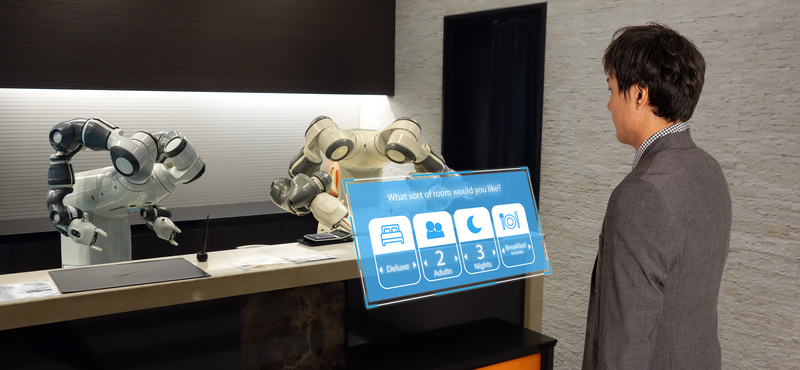
Robots aren’t replacing hospitality, at least not in well-run hotels. They’re showing up in specific “last mile” moments: delivery runs, repetitive logistics, and occasional cleaning tasks. The guest benefit is speed and consistency, especially during peak staffing pressure.
Coverage of this trend is increasingly mainstream, including examples of robots supporting hotel service and operations.
Why guests feel it: quicker delivery of essentials (towels, toiletries), fewer missed requests, and staff freed up for genuinely human interactions.
What ties these products together: the “friction audit”
If you’re evaluating hospitality tech for guest experience, the best question isn’t “is it innovative?” It’s:
Which guest friction does this remove, right now?
A simple friction audit helps you prioritize:
- Arrival friction: wallet keys, mobile check-in, identity verification linked to access.
- Communication friction: AI messaging + AI voice to cut wait time and missed calls.
- In-room friction: casting, modern TV UX, tablet concierge, smart comfort controls.
- Expectation friction (pre-arrival): digital twins and room-level transparency.
The near-future guest experience: tech that feels invisible
The direction of travel is clear: guests want more control with fewer steps, and hotels want systems that connect (keys + check-in + messaging + upsells + TV + service workflows). That’s why you’re seeing consolidation moves around access and guest platforms, wallet-native key rollouts, AI assistants that work over both text and voice, and in-room entertainment that behaves like home, without compromising privacy.
If you’re writing about “the latest hospitality tech,” don’t just list features. Anchor every product to a guest moment: arrival, questions, comfort, entertainment, and service recovery. That’s where the experience is won, or lost.
If you want, tell me what segment you’re targeting (luxury, limited service, resorts, extended stay), and I’ll tailor a tighter “top 7 products to watch” version for that hotel type.

