
Key Takeaways
- Safety, emergency care, and medical follow-up should come before insurance or legal decisions.
- Photos, witness information, damaged gear, medical records, and crash reports can preserve important facts.
- Motorcycle injuries can worsen or become more apparent after the initial shock of a collision.
- Insurance adjusters need accurate information, but riders should not guess about fault or accept a fast settlement without understanding their losses.
- Legal representation may be valuable when injuries are serious, liability is disputed, or evidence needs prompt protection.
Why Motorcycle Crashes Require Prompt Attention
A motorcycle crash in Rockford can leave a rider dealing with pain, damaged equipment, missed work, medical appointments, and difficult questions about fault. The first priority is always physical safety, but the actions taken in the hours and days after a collision can also affect an insurance claim or possible legal case. A rider considering motorcycle accident legal representation in Rockford may benefit from reviewing the resources available on the website to better understand the steps that may follow a collision.
Motorcycle collisions often involve facts that are not obvious at the scene. A driver may claim they did not see the motorcycle. A rider may be blamed for speed, lane position, or visibility before the evidence is fully reviewed. Photographs, roadway markings, vehicle damage, witness accounts, camera footage, and medical documentation can provide a more complete account than a brief roadside conversation.
What to Do in the First Minutes After a Crash
Move away from traffic only if safe and it won’t worsen injuries. Riders with severe pain, numbness, confusion, head trauma, or suspected neck/back injuries should usually wait for emergency personnel unless there’s immediate danger like fire, fuel leaks, or approaching traffic.
Call 911 if someone is injured, traffic is blocked, a vehicle is unsafe, or the situation is unclear. Provide the location, nearest intersection, number of people involved, visible injuries, and hazards. Don’t remove helmets or move injured persons unless immediate danger requires it.
After police arrive, ask how to get the report and keep the report number with crash records. Illinois riders can follow Illinois State Police guidance for traffic crash reports to understand reporting rules and how to request a report.
Seek Medical Care, Even When Symptoms Seem Manageable
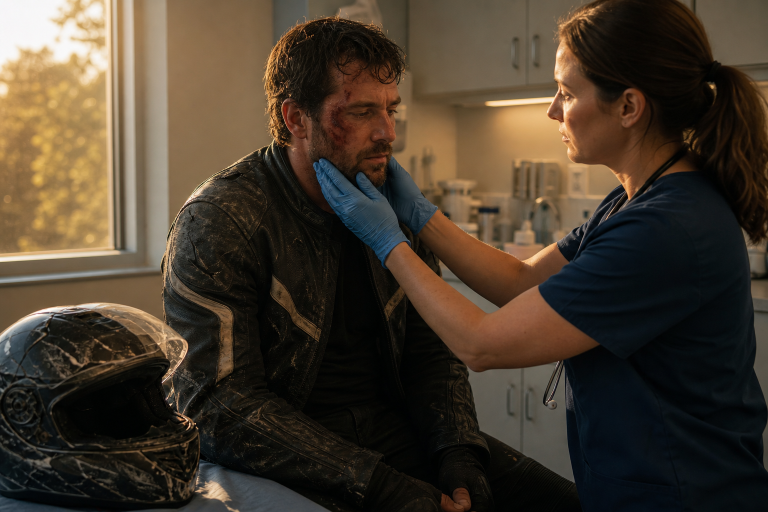
Adrenaline can hide pain after a crash. Headaches, dizziness, nausea, shoulder pain, numbness, weakness, abdominal pain, and stiffness may develop later. A medical evaluation can identify injuries that are not immediately visible, including concussion, fractures, soft-tissue damage, nerve injuries, or internal injuries.
Follow discharge instructions, attend recommended appointments, and explain every symptom honestly to healthcare providers. This is important for recovery and also creates a clear record of how the crash affected daily life. Keep copies of bills, prescriptions, therapy notes, appointment summaries, mileage records, and any work restrictions.
Document the Scene and Preserve Evidence
Gather evidence only after addressing safety. If safe, take wide and close photos of the intersection, vehicles, motorcycle, debris, skid marks, signs, signals, lighting, weather, and injuries. Capture details that can change quickly, like construction zones, potholes, damaged pavement, or obscured signs. Ask witnesses for names, phone numbers, and emails. Nearby cameras in homes, stores, parking lots, or intersections may have recorded the collision. Video might be overwritten soon, so identify footage early. Write your recollection as soon as possible, noting travel direction, lane, signals, traffic, and others’ statements.
Keep the Motorcycle and Protective Gear
Do not throw away a damaged helmet, jacket, gloves, boots, clothing, or motorcycle parts. These items may help explain impact forces, visibility, contact points, or the sequence of events. Photograph everything before repairs or cleaning. If the motorcycle must be repaired or moved, retain towing records, repair estimates, invoices, and photographs from before any work begins.
Communicating With Insurance Companies
Notify your own insurer within the time required by your policy, but keep communications factual and concise. Provide identifying information and basic crash details without guessing about speed, distances, what another driver saw, or who was at fault. It is reasonable to say that you are still receiving medical care and do not yet know the full extent of your injuries.
Be cautious about recorded statements, broad medical authorizations, and early settlement offers. A settlement may require a release of claims, even when future medical needs, lost earnings, or long-term limitations are not yet known. Avoid posting about the crash, your activities, or your recovery on social media, since isolated photos or comments can be misunderstood.
Facts That May Affect Fault
The fault in a Rockford motorcycle crash can depend on many details. Investigators and insurers may look at traffic signals, turning movements, lane changes, driver distraction, impairment, speed, road design, vehicle maintenance, lighting, weather, and whether either party had a clear opportunity to avoid the collision. A police report can be useful, but it is not always the final word on responsibility.
Motorcycles can be harder for other motorists to notice, but that does not excuse careless driving. Likewise, a rider’s protective choices or actions may be reviewed alongside all other facts. A careful investigation should focus on evidence rather than assumptions about motorcycles or riders.
Helmet Use and Ongoing Recovery
Helmets and protective clothing cannot prevent every injury, but they remain important safety tools. Riders choosing replacement gear should look for helmets that meet federal safety requirements. The National Highway Traffic Safety Administration explains that a compliant helmet carries the DOT marking associated with Federal Motor Vehicle Safety Standard 218. Replace a helmet after a significant impact rather than assuming it remains protective.
Recovery also includes emotional health. Fear of riding, sleep problems, anxiety, depression, irritability, and difficulty concentrating can follow a traumatic collision. Discuss these concerns with a qualified medical or mental health professional, particularly when symptoms disrupt work, family responsibilities, or everyday activities.
When Legal Representation May Help
A legal review may be helpful when a rider has serious injuries, substantial medical expenses, lost income, a disputed claim, multiple vehicles involved, or questions about an uninsured or underinsured driver. It may also be important when evidence needs to be preserved, a commercial vehicle was involved, or a roadway defect may have contributed to the collision.
Before choosing representation, ask who will communicate with insurers, how evidence will be collected, what records you should preserve, how fees and costs are explained, and what deadlines may apply. The goal is not to rush into a decision. It is to understand the available options while protecting the information needed to evaluate the case.
A Practical Post-Crash Checklist
- Get to safety if movement is safe.
- Call 911 and request medical help.
- Give police accurate facts without guessing or admitting fault.
- Take photographs and collect witness details when safe.
- Seek medical evaluation and follow treatment instructions.
- Preserve the motorcycle, helmet, gear, repair estimates, and receipts.
- Create one file for medical records, insurance letters, bills, and missed-work documentation.
- Review settlement documents carefully before signing.
Conclusion
After a motorcycle accident, recovery should remain the central focus. Getting medical care, preserving evidence, keeping organized records, and avoiding rushed insurance decisions can make the aftermath more manageable. When the facts or injuries are complex, informed legal guidance can help a Rockford rider understand the process and make decisions with greater confidence.

