
Adding a radio to a product changes its shielding problem overnight. A design that comfortably passed emissions testing with only digital electronics inside can start failing once Wi-Fi, Bluetooth, cellular or a GNSS receiver joins the board. The transmitter adds its own energy, the receivers become sensitive victims, and higher frequencies expose weaknesses in the enclosure that were harmless before. Effective RF shielding begins with understanding why.
The key concept is wavelength. Radio energy passes through an opening far more easily when that opening is a meaningful fraction of a wavelength, and a slot approaching half a wavelength behaves almost like an antenna. A common rule of thumb keeps the longest dimension of any aperture or unsealed seam below about one-twentieth of the wavelength at the highest frequency of concern. At 2.4 GHz that is roughly 6 mm; at 5.8 GHz it shrinks to about 2.6 mm; at 28 GHz, used by millimeter-wave 5G, it is close to half a millimeter. A seam that was invisible to a 900 MHz radio can be a wide-open door at 5.8 GHz.
That is why fastener spacing and gasket continuity matter so much in wireless products. Screws placed every 50 mm leave unsealed spans that may be several times the safe aperture size at Wi-Fi frequencies. Continuous conductive gaskets along the joint, whether fabric-over-foam for thin plastic-and-metal housings, conductive elastomer where environmental sealing is also needed, or wire-based gaskets for durable metal-to-metal joints, close those spans electrically without relying on extra fasteners.
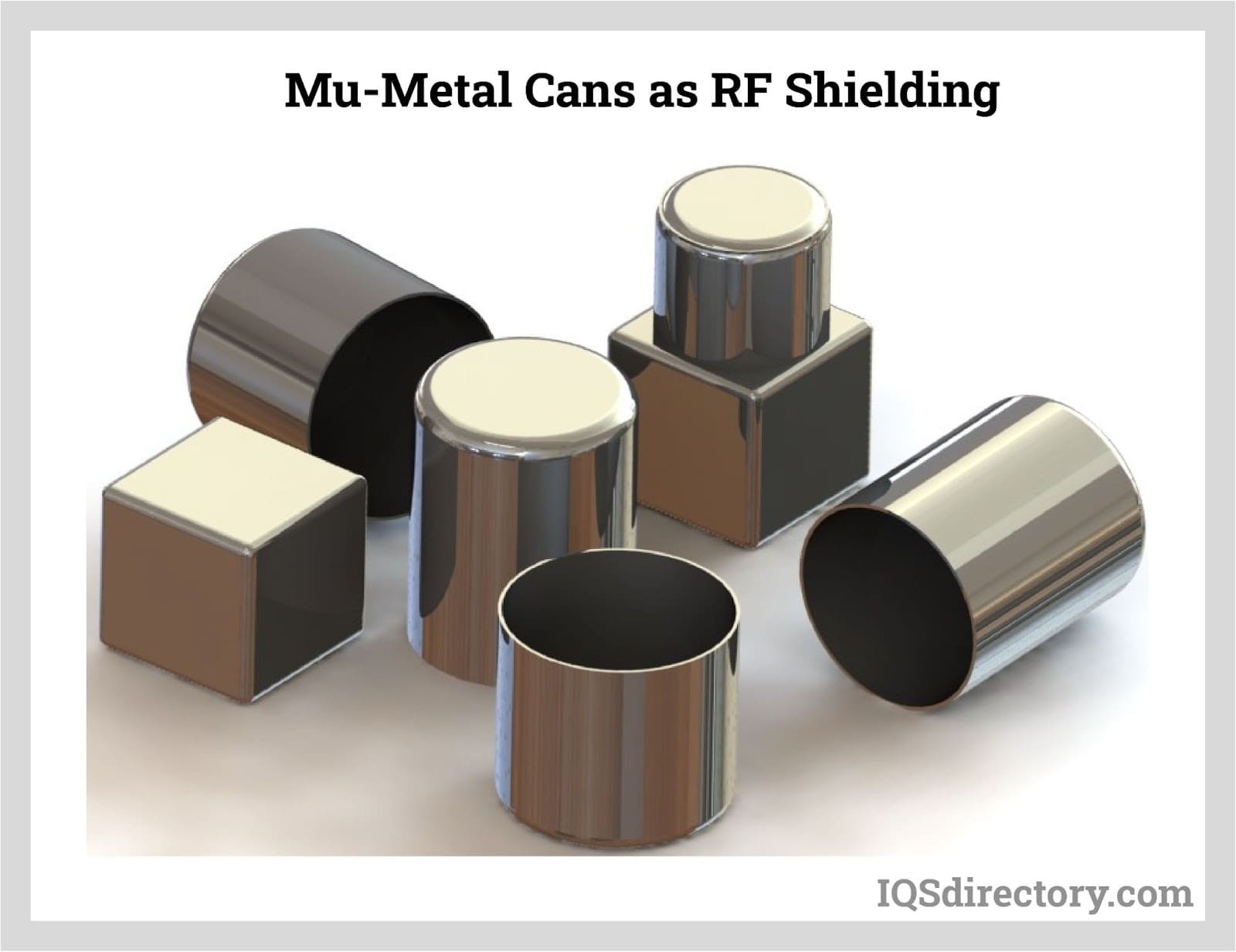
Inside the product, the board itself needs partitioning. Power amplifiers, low-noise amplifiers, processors and memory each deserve their own space, ideally under separate shield cans grounded to a continuous copper ring on the PCB. Two-piece frame-and-cover designs allow technicians to tune and rework RF circuits without desoldering, and multi-cavity frames isolate several blocks under one cover while saving board area. Planning those footprints before layout is frozen is far easier than retrofitting them later.
Then there is the surprise many teams meet only in testing: cavity resonance. A closed metal can or housing resonates at frequencies set by its internal dimensions, and a simple rectangular can about 30 by 20 millimeters has its first mode close to 9 GHz. If a clock harmonic or radio band lands near that frequency, energy builds up inside instead of being contained, and adding more metal makes no difference. The fix is loss. A thin magnetically loaded absorber on the inside of the lid damps the resonance, while broadband foam absorbers suit larger cavities where there is room.
Material choice follows the frequency band. Tin-plated steel is the standard shield-can material for indoor products, with nickel silver preferred where corrosion resistance is required outdoors or in military hardware. Low-frequency magnetic interference from power conversion and motors needs a different answer altogether, typically layout and filtering first and high-permeability alloys where true magnetic shielding is required.
A practical RF checklist is short. List every transmitter, receiver and fast digital source with its harmonics. Size apertures, vents and fastener spacing against the one-twentieth rule. Reserve shield-can footprints early. Estimate cavity resonances and plan absorbers where a source lands near one. Seal seams with a gasket matched to gap, closure force and environment. Then validate with real samples and a pre-compliance scan before committing to tooling.
For a deeper walkthrough of RF shielding materials and methods by frequency band, including aperture sizing tables and absorber selection, engineering teams can consult the design resources and free sample programs offered by specialist manufacturers such as 3G Shielding Specialties.

