
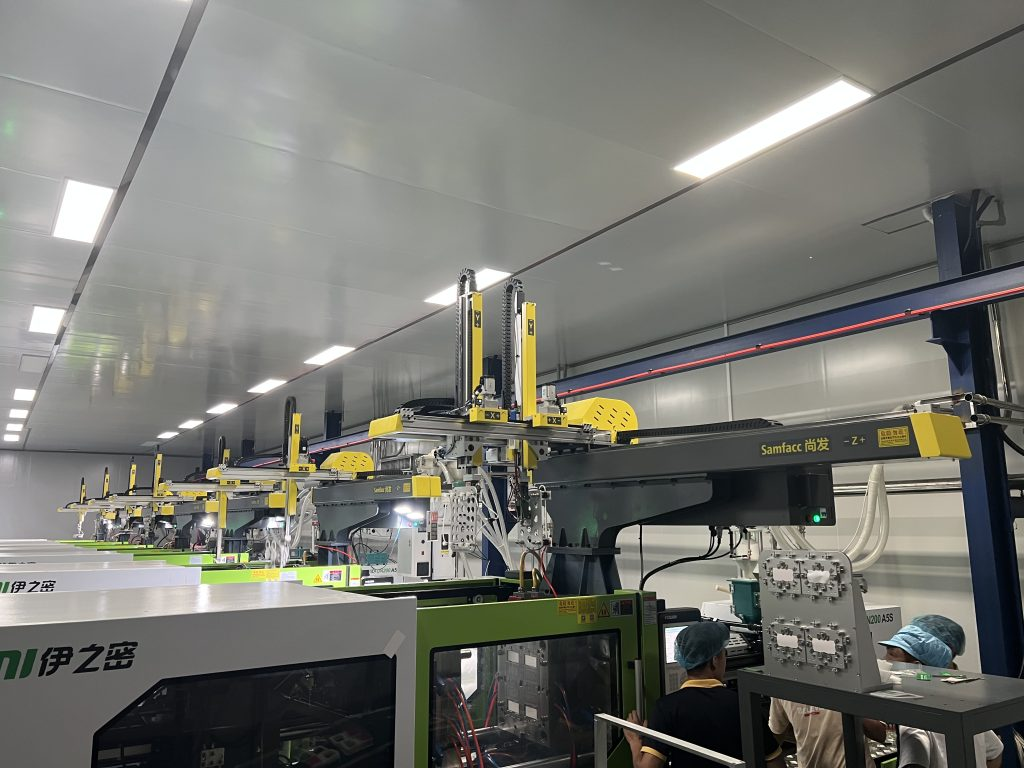
Buying a robot for a molding machine is a decision that affects your daily production for years. A well chosen robot makes work smoother, while a poorly matched one can become an expensive disappointment. This guide gives a clear, step by step way to think about the choice if you work with a vertical injection molding machine, and it separates what a manufacturer states from what you should verify yourself.
Step 1: Define the Job
Start by describing exactly what you want the robot to do. In most cases, it takes the finished product, or the attached material head, out of the mold area and places it on a conveyor or in another position. Samfacc, a manufacturer of robots for injection molding machines, describes its arm robots in just this way.
Write down what comes out of your mold each cycle, how big and heavy it is, how delicate it is, and where it needs to go next.
Step 2: Choose the Arm Type
The manufacturer states that its arm robots come in single arm and double arm versions. A single arm design is generally simpler, while a double arm design may allow two items to be handled in one cycle. Ask the supplier to explain how each design works for your own product, and do not assume.
Step 3: Check the Fit With Your Machine
A robot must work with the machine it is attached to. Check the machine size, the mold height, the way the mold opens and the space around the machine. The manufacturer mentions an “IMM fixed hole information” download on its site, which suggests that mounting details are available for reference. Ask the supplier for the exact data you need for your machine model.
Step 4: Think About Space
Vertical machines are often chosen for compact workshops. The manufacturer says that its vertical robots are meant to take the finished product or material head from the end of the machine and help save placement space. Draw your floor plan and make sure the robot, conveyor and walkways all fit comfortably, with room for maintenance.
Step 5: Put Safety First
Safety should never be an afterthought. Look for guards, stop buttons and clear warnings, and ask how the robot is intended to protect operators. The manufacturer says it follows industry standards and uses approved and tested processes. That is a claim to confirm: ask which standards apply in your country and what documents the supplier can provide.
Step 6: Estimate the Full Cost
The price of the robot is only part of the budget. Add installation, conveyors, layout changes, training, spare parts and maintenance. Compare offers fairly by listing the same items for each one. Be honest about your production volume, and avoid planning around savings that you cannot confirm.
Step 7: Ask About Customization
The manufacturer states that its robots can be customized for specific applications. If your product is unusual, ask exactly what can be changed, how long it takes and what it costs. Request every agreement in writing.
Step 8: Check Support and Documents
A good robot needs good support. Ask about manuals, training, spare parts, delivery time and how technical problems are handled. The manufacturer’s site lists a user manual among its downloads, which is worth reading before you buy so you know what operation and care will involve.
A Short Checklist
- Job clearly defined, including product size, weight and destination.
- Arm type chosen with the supplier’s explanation.
- Fit with the machine and mold confirmed in writing.
- Floor plan checked for space and walkways.
- Safety features and standards reviewed.
- Full cost estimated.
- Customization needs discussed.
- Manuals, training and spare parts agreed.
Questions to Take to Your Supplier
- What is the maximum weight and size of product the robot can handle?
- How fast can it work, and under what conditions?
- What power supply does it need?
- How is it mounted, and how long does installation take?
- What safety devices are included?
- What is the warranty, and how are spare parts supplied?
Write down the answers. Written details make comparison easier and protect both sides.
Where to Begin
If you are still comparing options, start by reading the manufacturer’s page for a vertical injection molding machine, which describes its vertical robot range, and then compare it with your checklist.
Final Thoughts
The right robot is one that suits your product, your machine, your space and your budget. By defining the job clearly, checking claims with the supplier and planning for safety and support, you can make a confident decision and build a more reliable, safer production line.

