
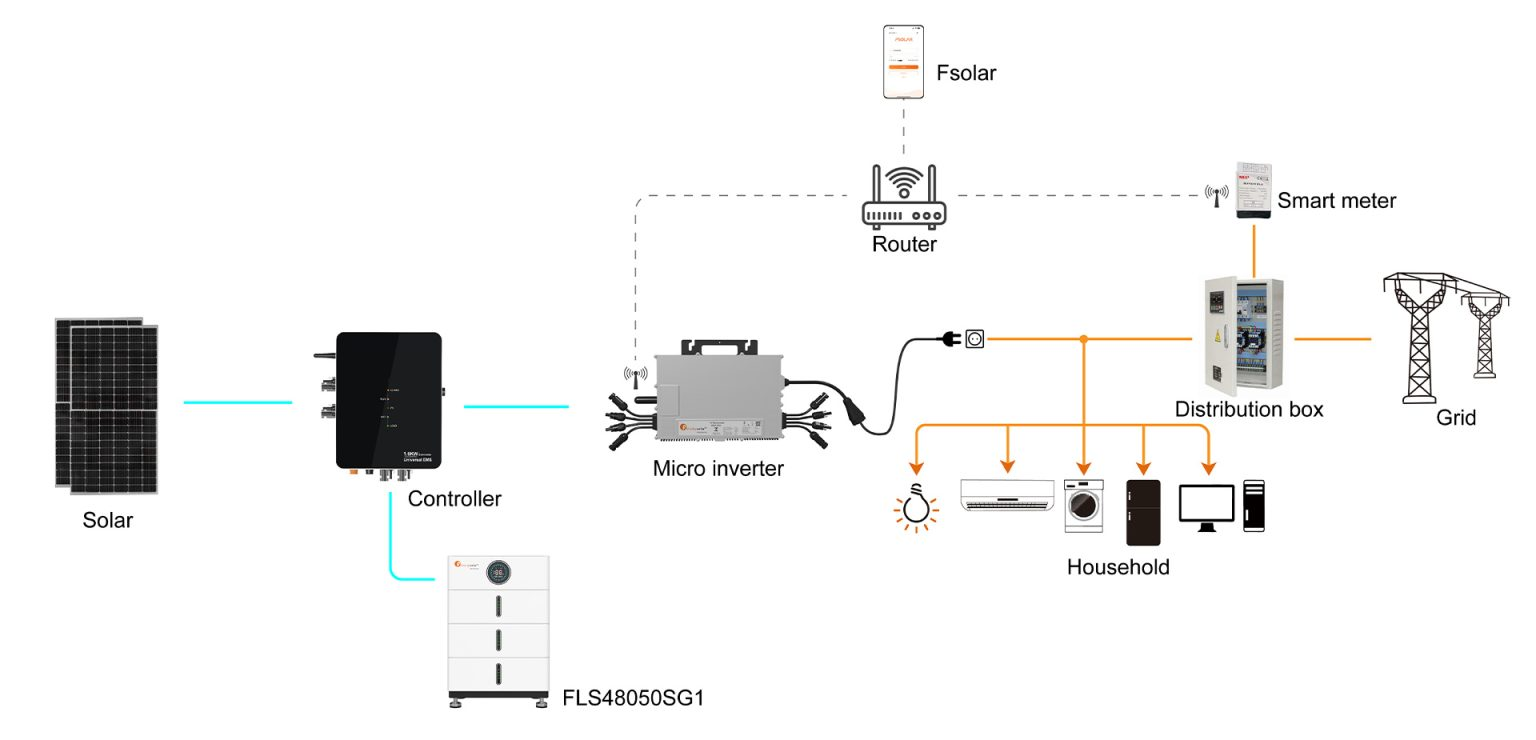
Once you decide that solar power on your balcony makes sense, the next step is planning. Good planning prevents most of the problems people run into later, such as poor output, wasted money or safety worries. This checklist walks through the main steps for setting up a balcony solar storage system in a careful and sensible way.
Step one: measure your space
Start with the physical space. Measure the railing or wall where panels might go. Check whether the surface can safely carry the weight of panels and their mounting hardware. Balconies are exposed to wind, so panels must be fixed firmly. If you are not sure about the strength of your railing or wall, ask a professional before attaching anything.
Also decide where the inverter and the battery will sit. Batteries should be kept in a place that is dry and has some ventilation, and away from direct heat. Read the manufacturer’s instructions for the exact working conditions rather than guessing.
Step two: understand the numbers on the product page
Felicitysolar describes a balcony solution that it calls the 2.56kWh Balcony System. It combines an 800W micro inverter with a 2.56kWh lithium battery. The inverter number is about power at a given moment. The battery number is about stored energy.
To plan well, write down the devices you want to run, check each one’s wattage on its label, and add up what would run at the same time. If the total goes above 800 watts, you will need to run some devices at different times. Then estimate how many hours you want to run them in the evening. Multiply the watts by the hours and divide by one thousand to get kilowatt hours. For example, a 50 watt fan and a 10 watt light running together for five hours use 0.3 kilowatt hours, which is well inside a 2.56kWh battery. Remember that real systems have conversion losses, so leave some margin.
Step three: check the rules
Before you buy, check two things. First, your landlord or building management must allow panels on the balcony. Second, check local electrical rules on connecting small solar devices to home wiring, since these differ between regions. A short phone call now can save a lot of trouble.
Step four: plan the installation with safety first
Electrical work can be dangerous. Panels produce electricity whenever light falls on them, so wiring should never be handled carelessly. Felicitysolar’s page lists easy installation and safety features among the benefits of its balcony solution, but it does not describe the details of each. That is why it is wise to read the full manual and datasheet before you begin, and to have a licensed electrician help with any connection to household wiring.
The company’s website also has a video gallery that includes installation, commissioning and operation videos. Watching these before you begin helps you understand the steps and spot any part you are unsure about.
Step five: think about monitoring
A system you cannot see is a system you cannot improve. Check how you will watch production and battery level. Felicitysolar lists smart management among the features of its balcony system, and it has a separate platform called Fsolar that it describes as a way to monitor and manage solar energy from anywhere. Ask which monitoring options work with your exact setup, so you know what to expect.
Step six: confirm authenticity and warranty
Make sure that the product is genuine and that you understand the warranty. Felicitysolar has an anti counterfeiting page where a 16 digit code can be used to verify a product. Keep your invoice and any serial numbers in a safe place. Read the warranty terms carefully, including what is covered and how a claim is made.
Step seven: use your system wisely
After installation, build good habits. Clean the panels gently when they get dusty, using the method that the manufacturer recommends. Check the connections now and then for signs of wear. Watch how your battery behaves over the first few weeks, and note whether your estimates were right. Adjust which devices run at which times to make better use of the stored energy.
Step eight: plan for the future
If your needs grow, you may want more capacity. The balcony solution page lists scalability as a feature, so ask the supplier how expansion works for your model and what limits apply. It is far easier to plan this early than to change a system later.
Keep expectations realistic
A balcony system is a modest tool. It will help with lighting, small appliances and electronics, and it can give you some control over when you use your solar energy. It is not meant to replace a full home system. With realistic expectations, careful planning and attention to safety, it can be a useful and rewarding addition to apartment living.

