
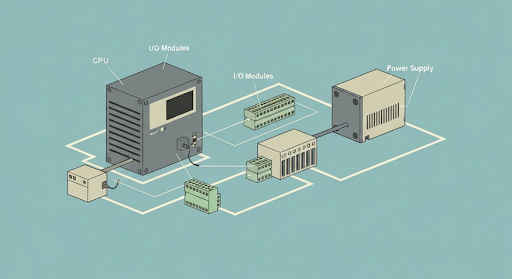
Growth rarely happens in a straight line, especially on a production floor. Equipment is added, processes change, and expectations rise faster than many control systems were designed to handle. PLC system integration creates a foundation that allows expansion to happen smoothly instead of becoming a constant source of disruption.
Seamless Machine Communication Grows with Your Operations
As operations expand, machines must share information quickly and reliably. Without proper integration, added equipment often operates in isolation, creating delays and manual workarounds. Integrated PLC networks allow machines to communicate status, commands, and production data automatically. This communication becomes more valuable as the system grows. A well-planned PLC programming structure ensures that new machines plug into existing logic without disrupting current workflows. A skilled PLC system integrator designs communication paths that scale, rather than forcing a redesign every time capacity increases.
Adding New Lines Without Rewiring Old Controls
Expansion often fails when new production lines require major changes to existing control panels. Hardwired systems make growth expensive and time-consuming because every addition demands physical rewiring. Integrated PLC architectures reduce that dependency.
By relying on networked I/O and standardized control logic, new lines can be added with minimal physical changes. Custom PLC strategies allow existing systems to remain intact while new equipment joins the network. This approach protects previous investments and shortens installation timelines.
Standardized Data Flow Makes Future Upgrades Simple
Data consistency matters more as systems become larger. Without standard structures, each upgrade introduces compatibility issues and data mismatches. Standardized PLC programming ensures that signals, tags, and data formats remain consistent across all equipment.
This consistency simplifies future upgrades and reporting. Engineers can expand monitoring, analytics, or automation features without reworking core logic. A PLC programming company focused on scalability builds data structures that support long-term system growth instead of short-term fixes.
Integrating PLCs Avoids Costly Standalone Systems
Standalone machines often arrive with their own controllers, HMIs, and logic. While they function independently, they create silos that complicate operations and maintenance. Integration brings these systems into a unified control environment.
Unified PLC systems reduce duplicate hardware and software. Operators interact with a single control language instead of learning multiple interfaces. Over time, integrated systems cost less to maintain and adapt, making expansion more predictable and manageable.
Modular Programming Supports Step-by-step Expansion
Expansion rarely happens all at once. Modular PLC programming allows systems to grow in stages without disrupting production. Each module handles a specific function, making it easier to add capacity incrementally.
This structure also simplifies testing and commissioning. New modules can be validated independently before being activated. Custom PLC design built around modular logic supports controlled growth while maintaining system stability.
Real-time Monitoring Scales with Added Equipment
Visibility becomes harder as operations grow. Without integration, monitoring each machine requires separate tools and screens. Integrated PLC systems centralize real-time data across all equipment.
As new machines come online, monitoring expands naturally within the same framework. Operators gain immediate insight into performance, alarms, and downtime. PLC system integrator teams often design monitoring layers that grow alongside production rather than lag behind it.
Common Control Language Cuts Training Time Later
Training challenges increase with system complexity. Multiple control platforms force operators and technicians to learn different logic styles and interfaces. A common PLC programming standard reduces that burden.
Standardized logic, alarms, and interfaces shorten onboarding time for new staff. Maintenance teams troubleshoot faster because behavior remains consistent across equipment. This consistency becomes more valuable as operations scale and staffing needs grow.
Flexible Architecture Adapts to Changing Workflows
Expansion does not always follow original plans. Product changes, process adjustments, and layout shifts are common. Flexible PLC architectures support these changes without requiring a full system redesign.
Integrated systems separate control logic from physical layout whenever possible. This allows workflows to change while core automation remains stable. Custom PLC development anticipates change and builds adaptability into the system from the start.
Centralized Logic Keeps Production Consistent As You Grow
Consistency is difficult to maintain across expanding operations. Decentralized logic leads to variations in timing, quality, and responses. Centralized PLC logic aligns behavior across all machines.
This alignment ensures that standards remain consistent regardless of scale. Production quality improves because every line follows the same rules. A PLC programming company experienced in integration focuses on maintaining consistency while supporting growth.
RL Consulting helps manufacturers plan and implement scalable PLC integration strategies that support long-term expansion. Their team designs control systems that grow alongside operations instead of limiting them. Through structured PLC programming and thoughtful system architecture, they help organizations expand with confidence and control.

